How to Cope with Anticipatory Grief as a Pet Owner
Learn how to cope with anticipatory grief, support your dog’s comfort, and prepare for a peaceful goodbye with calm, practical guidance.
Guides14 min read
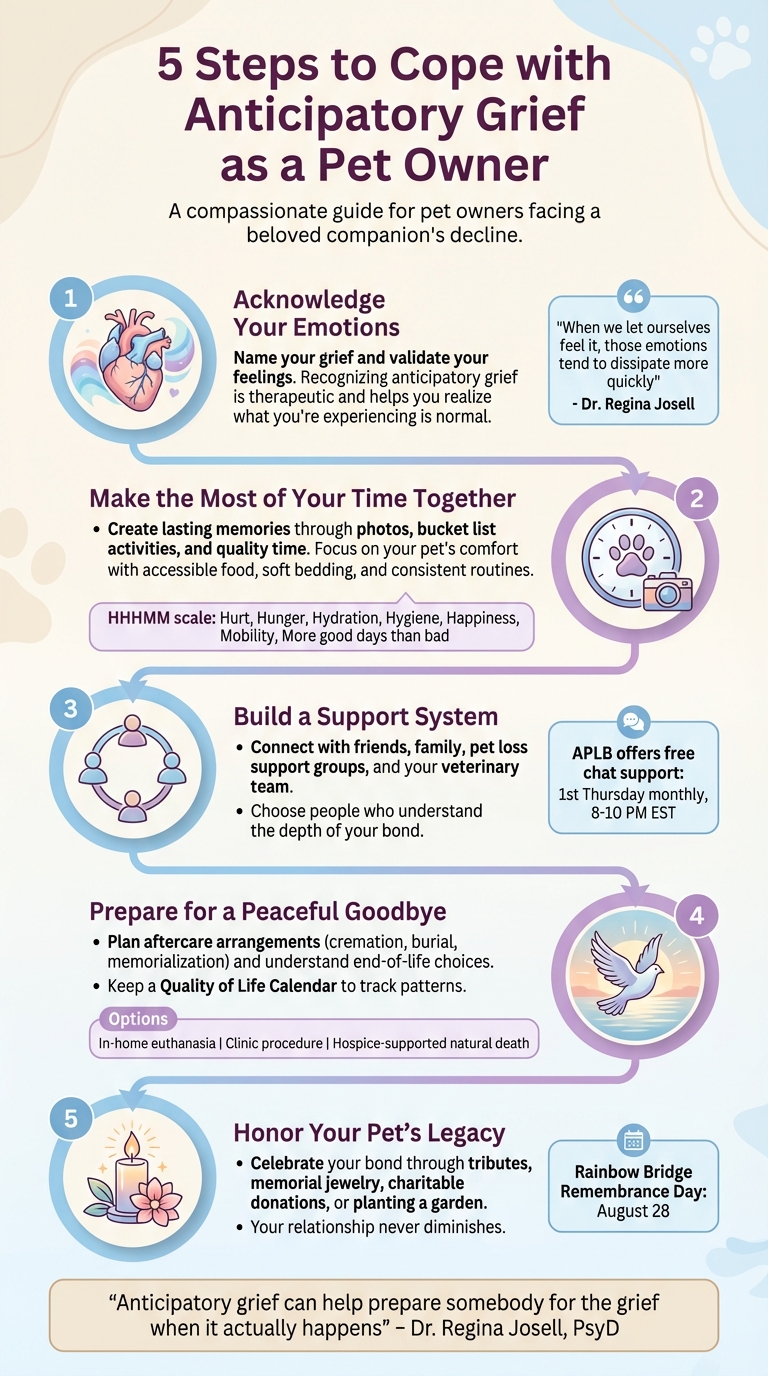
When you know your pet’s time is limited, the emotional toll can feel overwhelming. This is called anticipatory grief - the sadness, anxiety, and stress you feel before a loss. It’s normal, and recognizing it is the first step to managing it. Here’s how to navigate this difficult time:
Acknowledge your emotions: Understand that your feelings are valid and part of the process. Naming your grief can help ease the burden.
Focus on your pet’s comfort: Prioritize their happiness and well-being with small adjustments like soft bedding, accessible food, and consistent routines.
Create memories: Spend quality time together, take photos, or make keepsakes to cherish later.
Build a support system: Seek friends, family, or pet loss groups who understand what you’re going through.
Prepare for the goodbye: Make aftercare decisions ahead of time and consider your pet’s quality of life to ensure a peaceful farewell.
Anticipatory grief is hard, but it allows you to make the most of your remaining time with your pet while preparing emotionally for the future.
5 Steps to Cope with Anticipatory Grief as a Pet Owner
Acknowledge and Accept Your Emotions
Why Recognizing Your Grief Matters
The first step in navigating anticipatory grief is giving it a name. By identifying your emotions as "anticipatory grief", you validate your experience and remind yourself that what you're feeling is completely normal. Dr. Tyler Carmack, Director of Hospice and Palliative Care at Caring Pathways, emphasizes, "Recognizing and naming these feelings can be therapeutic for pet owners, who may not realize that the heavy emotions they're experiencing are both normal and valid." [3]
Allowing yourself to feel these emotions can actually lighten the load. Dr. Regina Josell, a psychologist at Cleveland Clinic, explains, "When we let ourselves feel it, those emotions tend to dissipate a lot more quickly than if we try to hold them back or ignore them." [2] Acknowledging your grief not only helps ease feelings of isolation but also clears the path for making thoughtful, compassionate decisions about your pet's care.
It's important to remember that the depth of your grief reflects the strength of your bond with your pet. As Queen Elizabeth II once said, "Grief is the price we pay for love." [5] Accepting this truth can help you begin to process your emotions in a meaningful way.
Ways to Process Your Emotions
Once you've acknowledged your feelings, finding ways to process them can be incredibly healing. Consider journaling - whether it's writing letters to your pet, creating a memory book, or simply jotting down your thoughts.
Mindfulness practices can also help you stay grounded. Focusing on the time you have with your pet right now, rather than worrying about the future, can bring a sense of peace. Animal communicator Judy Ramsey shares, "Being in anticipatory grief kept me from really treasuring each minute that we had together. Being in the moment is so important to the dying process." [6]
If your grief starts to feel overwhelming, don't hesitate to reach out for help. Whether it's talking to a veterinary social worker, consulting a pet loss specialist, or seeking professional support, allowing yourself to process your emotions is a vital part of healing. This not only helps you but also ensures you can continue caring for your pet with love and compassion.
Make the Most of Your Remaining Time Together
Create Lasting Memories
When time is limited, every moment becomes precious. Instead of letting grief take over, focus on creating meaningful experiences you’ll hold close forever. Think about making a bucket list of your pet’s favorite activities - whether it’s a trip to the beach, a playful visit to the dog park, or even a drive-thru stop for a special treat.
Preserving these moments can bring comfort long after your pet is gone. Professional pet photographer Jenna Regan shares, “My clients tell me that having these photos of happy moments together means a lot to them, and the experience plus the resulting images help them through the grieving process.” [9] Consider capturing these memories through photos or keepsakes, like paw prints or a shadow box filled with mementos.
You might also want to host a small farewell gathering with close friends and family who share a bond with your pet. It’s a chance for everyone to say their goodbyes and celebrate the joy your pet has brought into their lives. Journaling is another meaningful way to honor your pet - write down funny stories, cherished memories, or heartfelt reflections to keep their legacy alive in your own words.
While these memories are invaluable, it’s equally important to focus on your pet’s comfort during this time.
Focus on Your Pet's Comfort and Happiness
As you create lasting memories, make sure your pet’s comfort and well-being come first. Use the HHHHHMM quality of life scale to guide your decisions - this framework helps you monitor Hurt, Hunger, Hydration, Hygiene, Happiness, Mobility, and whether there are More good days than bad. [1]
Simple adjustments can make a big difference. Lay down rugs over slippery floors, add extra padding to their bed to prevent pressure sores, and ensure essentials like water bowls and litter boxes are easy to access. If your veterinarian approves, you might even treat your pet to something special, like a cheeseburger or a scoop of ice cream, to brighten their day. [10]
Sticking to a routine can also provide a sense of security. Keeping daily schedules as consistent as possible helps reduce stress and offers familiarity during uncertain times. As Best Friends Animal Society puts it, “Enjoy the moment, cherish others, and live each day to the fullest together.” [4] These thoughtful acts of love ensure your pet feels safe, comfortable, and deeply cared for in their final days.
Build a Support System
Connect with Family, Friends, and Support Groups
You don't have to navigate anticipatory grief on your own - lean on those who truly understand. Unfortunately, society often underestimates the depth of the bond between people and their pets. As UC Davis Veterinary Medicine explains:
"Some people will not understand the depth of your relationship with your pet and will minimize your feelings. Choose who you share your loss with to get the maximum support you need." [7]
It's important to be thoughtful about who you turn to for support. Seek out friends or family members who recognize how much pets mean to us or connect with others who have gone through similar experiences. Knowing there are others who share your feelings can be a huge source of comfort.
You might also consider joining a support group specifically for anticipatory grief. The Association for Pet Loss and Bereavement (APLB) offers a free, chat-based support group on the first Thursday of every month from 8:00 PM to 10:00 PM EST. This provides a safe, anonymous space to express your emotions before your pet passes. [3] Additionally, don't hesitate to ask friends or loved ones for specific help, whether it's administering medications, taking your pet for a walk, or simply being there with you during tough moments. This kind of support can work hand in hand with the guidance from your veterinary team.
Work with Your Veterinarian
Your veterinary team can be an invaluable source of support during this difficult time. Building a strong partnership with your vet can help you approach decisions with more clarity and less fear. If needed, request longer appointments to allow for detailed discussions rather than feeling rushed. [12]
Ask your veterinarian to explain your pet's condition in simple terms, including what to expect as the illness progresses. This can help ease the uncertainty that often comes with not knowing what's ahead. Dr. Erica Dickie, a Certified Hospice and Palliative Care Veterinarian, highlights the importance of this approach:
"The unit of care for the vet team is no longer the animal alone, but also includes the person or people caring for the pet who are equally involved, and also need support and care." [1]
Some veterinary practices go beyond medical care by offering emotional support. For example, Caring Pathways, an end-of-life veterinary service, has a grief support specialist on staff who provides families with counseling and resources for anticipatory grief. [3] Similarly, the Ohio State University Veterinary Medical Center runs the "Honoring the Bond" program, led by social worker Joelle Nielsen, which has been helping pet owners navigate the emotional challenges of end-of-life care since 2009. [8] If you're feeling overwhelmed, ask your vet for a referral to a veterinary hospice provider who specializes in both medical and emotional support.
Prepare for a Peaceful Goodbye
Plan Aftercare Arrangements
Making aftercare decisions ahead of time can help reduce stress during an already emotional moment. Bioethicist Jessica Pierce, Ph.D., emphasizes the importance of preplanning:
"Preplanning means thinking about what will happen immediately after death and can include decisions about handling and disposition of the body, as well as decisions about memorialization." [14]
There are several options to consider. Cremation is a popular choice, and you’ll need to decide between private cremation, where your pet’s ashes are returned to you in an urn, or group cremation, where multiple pets are cremated together and ashes are typically not returned. Some facilities also offer alkaline hydrolysis, a water-based cremation process that’s considered more eco-friendly.
Burial is another option. This might take place in a pet cemetery, your own yard (if local laws allow), or even in a human cemetery that permits adjoining plots for pets. Alternatively, you could donate your pet’s body to a veterinary school, where it could contribute to education and research.
Take the time to research cremation or burial facilities to find one that aligns with your preferences. Also, think about who you’d like to have present during your pet’s final moments, whether you’d like to include rituals such as lighting candles or playing music, and how you’d like to memorialize your pet afterward. Having these details sorted in advance allows you to focus on being fully present during your pet’s final moments, rather than being distracted by logistics.
Understand End-of-Life Choices
Once you’ve planned for aftercare, turn your attention to deciding the most compassionate end-of-life option for your pet. This is one of the hardest decisions pet owners face, and it’s natural to worry about making the choice too soon. However, Joelle Nielsen, MSW, LSW, who coordinates the "Honoring the Bond" program at Ohio State University Veterinary Medical Center, points out:
"Overwhelmingly, more people feel like they wait too long. Use available resources to plan the death that suits you and your pet." [8]
To help guide your decision, consider monitoring your pet’s quality of life. Keeping a daily log or a "Quality of Life Calendar" can help you spot patterns and subtle signs of decline, such as changes in sleep habits, withdrawal from family interactions, or disinterest in favorite activities like car rides.
You’ll also need to decide between in-home euthanasia and a clinic procedure. Your veterinarian can walk you through what to expect, including the fact that the process typically takes just 10–20 seconds after the injection. [11]
If you’re unsure about euthanasia, hospice-supported natural death is another option. This involves ensuring your pet is comfortable and pain-free through intensive pain management and care provided by a veterinarian. Dr. Sarah Wallace, DVM, offers reassurance about euthanasia, saying:
"Euthanasia is a tool we can use to end suffering when nothing else can be done to help the pet. Although many of my clients often feel guilty about choosing euthanasia for their pet, it is considered an act of compassion, mercy, and love." [13]
No matter which path you choose, the goal is to provide your pet with as much comfort and dignity as possible during their final moments.
Honor Your Pet's Legacy
Celebrate the Bond You Shared
Honoring your pet’s memory can help transform feelings of grief into moments of reflection and celebration. Creating meaningful tributes allows you to cherish the joy your pet brought into your life while processing your loss. Writing a heartfelt note - whether on social media or in a private journal - can bring back vivid memories. Maybe it’s recalling how your dog always seemed to know when you needed a cuddle or a quirky habit your cat had that never failed to make you smile.
Physical mementos can provide a lasting source of comfort. Consider planting a garden or tree in your pet’s favorite spot, commissioning a portrait, or creating a shadow box filled with keepsakes. Memorial jewelry is another option, offering a way to carry a piece of your bond with you every day.
You can also honor your pet by giving back. Donating to an animal charity or shelter in their name, or even organizing a charity walk, extends the love you shared to others. And don’t forget, August 28 is Rainbow Bridge Remembrance Day - a day set aside to reflect on the unconditional love our pets bring into our lives. As UC Davis Veterinary Medicine beautifully puts it:
"Your relationship with your pet never diminishes; your pet lives on in your thoughts, heart, and memories." [7]
These acts of remembrance can ease anticipatory grief and help you embrace both the pain of loss and the enduring connection you’ll always share. If you’re looking for more ways to process your emotions, consider exploring supportive resources.
For deeper insight and comfort, To Lose A Dog by Isaac H offers a blend of personal storytelling and practical advice. This touching memoir chronicles Isaac’s bond with his English Bulldog, Franki, while providing science-backed perspectives on the human-animal connection, tips for navigating grief, and ideas for honoring your pet’s memory.
The hardcover edition is available for pre-order at $22 (a $6 discount) and is set to ship in Q1 2026. Pre-ordering also grants access to a private grief support community, where you can connect with others who truly understand what you’re going through. For more details, visit toloseadog.com.
How To Navigate Palliative Senior Dog Care & Anticipatory Pet Loss Grief
Conclusion
Facing anticipatory grief is a deeply personal journey for every pet owner, but it’s important to remember - you don’t have to go through it alone. By recognizing and accepting your emotions, you allow yourself the space to grieve while still treasuring the time you have with your pet. As psychologist Regina Josell, PsyD, explains:
"Anticipatory grief can have benefits. It can help prepare somebody for the grief when it actually happens" [2].
Once you’ve acknowledged your feelings, consider channeling them into meaningful actions. Focus on creating moments that matter - whether that’s through a bucket list of cherished activities or simply sharing quiet, heartfelt moments together. Use this time to express love and gratitude, ensuring nothing is left unsaid.
Don’t be afraid to lean on others for support. Connecting with those who understand the depth of your bond can help validate your emotions and ease the loneliness that often comes with pet loss. Seeking support isn’t a sign of weakness - it’s a step toward healing and finding comfort.
Taking proactive steps to prepare emotionally can make a world of difference. Planning ahead allows for closure and ensures a peaceful farewell. And remember, the connection you share with your pet doesn’t end when they’re gone - it evolves into a lasting legacy. As Dr. Mary Gardner, DVM, wisely puts it:
"When families have a better end of life experience with their pets, they heal more quickly from debilitating emotional loss" [1].
So, take this time to prepare your heart, cherish the moments you have left, and embrace the healing process that follows.
FAQs
What is anticipatory grief and how do I know if I’m experiencing it?
Anticipatory grief is the heartache you feel when you realize your pet’s time with you is limited - whether due to age, illness, or a terminal diagnosis. It’s a natural response to the thought of losing a cherished companion and can be just as overwhelming as the grief that comes after their passing.
You might find yourself experiencing deep sadness, frequent tears, or even a sense of emptiness, all while your pet is still by your side. It’s also common to feel anxiety, guilt, or denial. On top of that, physical symptoms like difficulty sleeping or a loss of appetite may creep in. These emotions often surface when your pet is no longer able to enjoy their favorite activities or after hearing difficult news from the vet.
During this time, it’s crucial to recognize and honor your feelings. Focus on creating special, meaningful moments with your pet while you can. Sharing your emotions with close friends, family, or even a counselor can provide comfort and guidance as you navigate this emotionally challenging period.
How can I cherish my pet's final days and create lasting memories?
Spending quality time with your pet during their final days is a meaningful way to honor your bond and cope with the emotional challenges of anticipatory grief. Start by talking to your veterinarian to make sure your pet is comfortable and that any activities you plan are appropriate for their condition. Focus on gentle, simple moments - like sharing a cozy nap, taking a short, leisurely walk, or playing with a favorite toy. Even quiet time spent together can become a treasured memory.
You might also consider capturing these moments through photos, videos, or keepsakes, such as a paw print or a scrapbook. Writing down your favorite memories or creating a personal tribute can be another way to hold onto the special connection you share. For additional support during this challenging time, To Lose A Dog offers heartfelt insights and practical advice to help you navigate your journey.
How can I ensure my pet’s final moments are peaceful and meaningful?
Saying goodbye to a cherished pet is one of the hardest things a pet owner can face. But with a bit of preparation, you can help ensure their final moments are peaceful and filled with love. Start by consulting your veterinarian to evaluate your pet's quality of life and determine when euthanasia might be the most compassionate choice. Opting for a quiet, familiar setting - like the comfort of your home - can make the experience less stressful for both you and your pet. Surround them with things they love, whether it's a soft blanket or a favorite toy.
You might also want to create keepsakes to honor their memory. A paw print or a special photo can serve as a lasting reminder of the joy they brought into your life. Some people find comfort in planning a simple goodbye ritual, such as offering a favorite treat or reciting a meaningful poem. It's important to allow yourself to feel and process the emotions that come with this loss - there's no "right" way to grieve. If you find it overwhelming, consider reaching out to a grief counselor or turning to resources like To Lose A Dog, a memoir that provides both comfort and practical advice during this difficult time. These thoughtful steps can help you say goodbye in a way that truly reflects the deep bond you shared with your pet.
Frequently Asked Questions
Is it normal to grieve a pet before they've actually died?
Yes, and the intensity can equal the grief that comes after the loss itself. Anticipatory grief is a recognized psychological response to impending loss, not a sign of overreacting. Naming it as such — rather than dismissing it as worry or sentimentality — is one of the most effective ways to begin managing it.
How do I know when it's time to consider euthanasia for my dog?
Quality-of-life frameworks like the HHHHHMM scale — which tracks Hurt, Hunger, Hydration, Hygiene, Happiness, Mobility, and whether good days outnumber bad — give you a structured, less emotionally chaotic way to assess your dog's experience. Veterinary social workers and hospice vets can walk you through this; most families, in hindsight, report they waited longer than they needed to, not that they acted too soon.
What's the difference between in-home euthanasia and a clinic procedure, and does it matter?
In-home euthanasia allows your dog to be in a familiar environment without the stress of travel or a clinical setting, which many veterinarians consider less distressing for both the animal and the family. The medical process is the same in both settings, but the surroundings — a favorite blanket, family present, no car ride — can meaningfully affect how peaceful the experience feels for everyone involved.
How do I find grief support specifically for pet loss, not just general bereavement?
General grief counselors don't always understand the particular social dismissal pet owners face — the "it's just a dog" minimizing that compounds the loss. The Association for Pet Loss and Bereavement (APLB) offers a free, chat-based support group on the first Thursday of each month, and many veterinary schools run dedicated pet loss support programs staffed by social workers trained in human-animal bond grief.
How do I help a friend going through anticipatory grief over their dog without saying the wrong thing?
The most common mistake is minimizing — comparing pet loss to human loss, offering timelines for when they should feel better, or pivoting too quickly to "at least they had a good life." Instead, follow their lead: ask about the dog by name, acknowledge that the waiting period before a loss is its own distinct kind of pain, and offer concrete help like accompanying them to a vet appointment or simply sitting with them.
Will grieving before my dog dies make the loss harder when it actually happens?
Research suggests the opposite can be true — anticipatory grief, when acknowledged rather than suppressed, can help prepare you emotionally for the loss and may ease some of the acute shock afterward. The key is staying present with your dog during the time you have left, rather than letting pre-grief pull you so far into the future that you miss the moments still available to you.
Reserve the paperback at the pre-order price, with clear shipping and cancellation terms.
Pre-order price: $24.99 (save $5 off retail price)
First copies out of the print run, estimated to ship December 2026, shipped directly to you
Email updates on the book's progress until it reaches you
$24.99$29.99
Save $5
Charged today · Cancel any time before it ships
US shipping is $4.90. Other countries are calculated at checkout.
Estimated to ship December 2026US shipping is $4.90. Other countries are calculated at checkout.
Not today?
If the timing is wrong, or you are buying for someone who is not ready yet, leave your email. I will write once, when copies start shipping, and that is the only time you will hear from me.