Find a pet loss grief counselor with vetted directories, hotlines, and key questions so you can get real grief support after losing your dog.
Guides11 min read
Losing a pet can be one of the hardest experiences you’ll face. It’s not just about saying goodbye to an animal - it’s about losing a companion who was there for your best and worst moments. While society often downplays pet loss, the grief is real and valid. A pet loss grief counselor can help you process your emotions, work through guilt, and honor your pet’s memory.
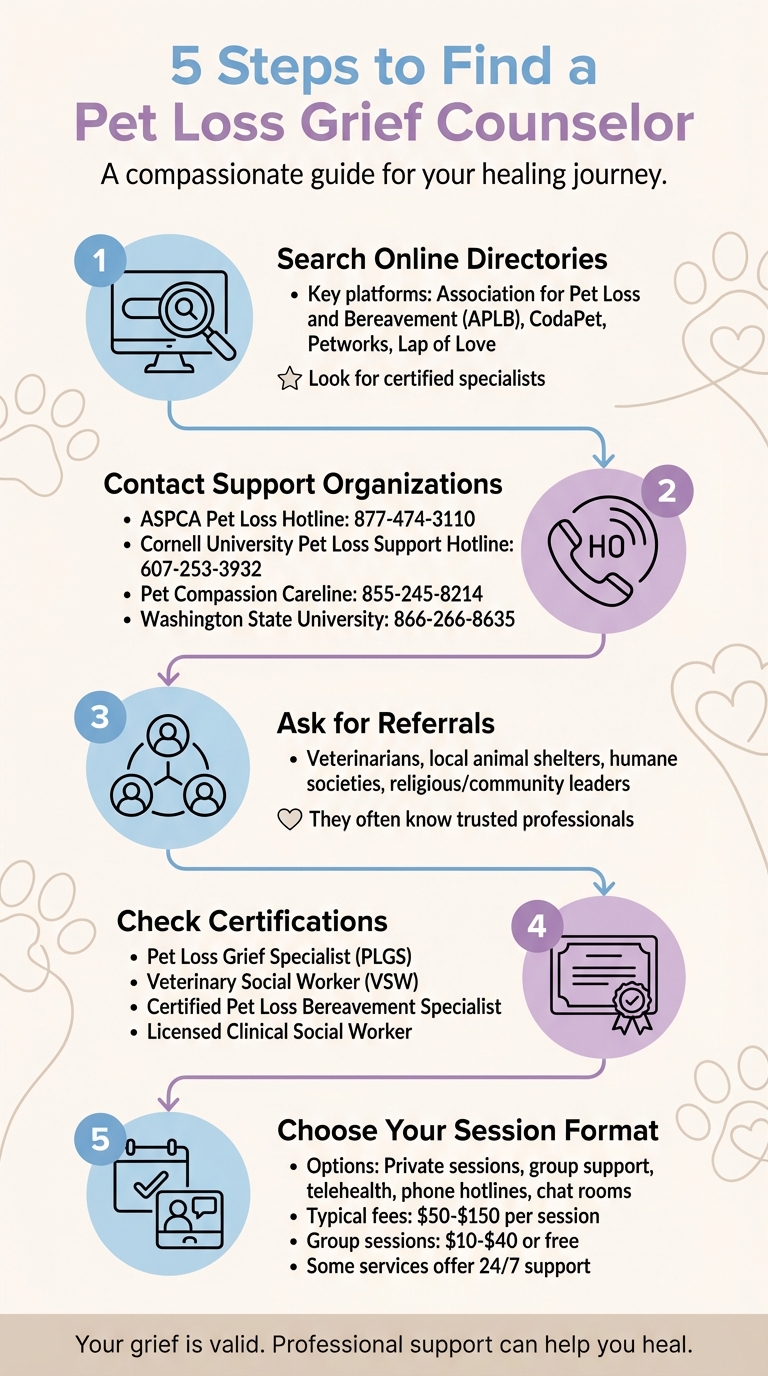
Contact Support Organizations: Reach out to resources like the ASPCA Pet Loss Hotline (877-474-3110) or Cornell University’s Pet Loss Support Hotline (607-253-3932).
Ask for Referrals: Your veterinarian, local animal shelters, or community leaders may recommend trusted professionals.
Consider Certifications: Look for credentials like Pet Loss Grief Specialist (PLGS) or Veterinary Social Worker (VSW).
Explore Session Formats: Options include private sessions, group support, or telehealth, with fees ranging from $50 to $150.
Grieving is a personal journey, and professional support can make a difference. Whether through one-on-one counseling or group sessions, these services provide a safe space to heal and remember your pet with love.
5 Steps to Find a Pet Loss Grief Counselor
EP 52: The Pet Loss Grief Counselor
What Pet Loss Grief Counselors Do
Pet loss grief counselors provide a compassionate, judgment-free environment where you can openly grieve the loss of your beloved companion. They understand that the bond you shared with your pet is deep and meaningful, deserving of acknowledgment and care. As the American Veterinary Medical Association (AVMA) puts it:
"The relationship you shared with your pet is a special and unique bond, and some people might find it difficult to understand" [3].
These counselors are trained to help you navigate the overwhelming emotions tied to pet loss - whether it's guilt, anger, numbness, or even physical symptoms like fatigue and trouble concentrating. They address specific challenges such as coping with euthanasia decisions, adapting to an emptier home, and finding ways to live without your pet. To help you process your grief, they might suggest memorial activities like writing a letter to your pet, creating a memory box, or planting a tree in their honor.
How Pet Loss Counseling Differs from General Counseling
While general counselors deal with a wide range of grief experiences, pet loss specialists focus exclusively on the unique dynamics of the human-animal bond. They understand that pets are often seen as family members, and their loss can bring about distinct emotional hurdles. General counselors may not always have the expertise to handle specific issues like anticipatory grief for a terminally ill pet or supporting other pets in a multi-pet household. Pet loss counselors, however, are trained to address these unique situations, offering a level of care tailored to the experience of losing a cherished animal companion.
Why Certified Counselors Help
Certified pet loss grief counselors undergo specialized training, such as PESI's six-hour module, designed to prepare them for the complexities of animal-related grief. These professionals are skilled at guiding individuals through anticipatory grief, sudden losses, and the emotionally taxing decisions surrounding euthanasia. PESI, Inc. explains:
"The grief that accompanies a pet's death can be overwhelming. Guilt-inducing decisions surrounding euthanasia are common; and friends and family may minimize the loss, isolating the griever and prolonging their symptoms" [1].
Certified counselors also provide tailored support for diverse situations. For example, they help parents explain the loss of a pet to children in an age-appropriate way, assist seniors in rediscovering purpose after losing a companion, and offer advice on supporting other pets in the household that may show signs of depression. This specialized care ensures that the counselor you choose is equipped to meet your specific needs during such a difficult time.
How to Find a Pet Loss Grief Counselor
Looking for a pet loss grief counselor? Here are some reliable ways to start your search.
Use Online Directories and Databases
Online directories can help you find certified professionals who specialize in pet loss support. The Association for Pet Loss and Bereavement (APLB), with over 25 years of experience, offers a detailed "Directory of Services" that includes certified pet loss counselors, specialists, and animal chaplains. Their chatrooms alone have provided comfort to more than 20,000 people dealing with pet loss and anticipatory grief [6][7].
Other platforms, like CodaPet, feature a nationwide, searchable database of professionals, many of whom offer end-of-life care and telehealth services. Petworks allows you to locate and book pet bereavement counselors by location, while Lap of Love, a veterinary hospice network, also provides a dedicated search for pet loss support resources.
When browsing these directories, pay attention to credentials such as Pet Loss Grief Specialist (PLGS), Veterinary Social Worker (VSW), or Certified Pet Loss Bereavement Specialist. Many directories also indicate whether counselors offer online or telehealth sessions. Fees for these services typically range from $50 to $150, depending on the counselor’s qualifications and session format [4].
If online searches don’t yield the right fit, support organizations can provide immediate help and additional resources.
Reach Out to Pet Loss Support Organizations
Pet loss support organizations not only maintain directories but also offer direct emotional support. For immediate help, you can contact the ASPCA Pet Loss Hotline at 877-GRIEF-10 (877-474-3110) or the Pet Compassion Careline at 855-245-8214 [8].
Many veterinary colleges, like Cornell University (607-253-3932) and Washington State University (866-266-8635), offer hotlines that provide emotional support and referrals to qualified counselors [8]. The BirchBark Foundation even offers free one-on-one Zoom sessions with grief experts, though this service is currently limited to California residents [8]. As the BirchBark Foundation explains:
"Losing an animal companion can be an isolating experience and one that is not well understood." [8]
These organizations also frequently host group support sessions, which are often free or cost between $10 and $40 per session [4][8]. The APLB, for instance, provides a free "Bronze" membership that grants access to moderated chatrooms and their extensive service directory [6].
If these resources don’t meet your needs, personal referrals can often lead to more tailored and immediate support.
Get Recommendations from People You Trust
Your veterinarian or hospice provider can be a great resource for finding grief specialists who understand the deep connection between humans and their pets [8]. Local animal shelters and humane societies may also host support groups or recommend professionals in your area. Additionally, religious or community leaders at places of worship may offer bereavement support or have pastoral counselors trained to help with pet loss [2][9].
For those using professional directories, look for tags like "Rapid Responders" or "Petworks Picks" if you need urgent assistance [9]. Many counselors also offer virtual sessions, making it easier to access specialized support no matter where you are [5][9].
How to Choose the Right Counselor
Once you’ve compiled a list of potential counselors, the next step is finding the one who fits your needs. Focus on professionals with the right expertise - licensed counselors with specialized training in pet loss and proven experience in offering support. Here’s how to narrow down your options.
Check Qualifications and Certifications
Start by verifying the counselor’s credentials. Look for professionals with specific training in pet loss, such as Licensed Clinical Social Workers or certified pet loss grief counselors/coaches. It’s also worth checking if they have experience with particular challenges, like helping clients navigate euthanasia decisions or managing anticipatory grief when a pet is terminally ill.
Consider Availability and Session Format
How and when sessions are offered can make a big difference in your experience. You’ll find a variety of formats, including private one-on-one sessions, group support, video calls, phone hotlines, or live chat rooms. Some services provide 24/7 support, while others stick to fixed schedules. If you’re considering telehealth options, make sure the counselor is licensed in your state.
Choose a session format that matches your comfort level and schedule. For example, phone hotlines and chat rooms offer immediate, private help, while video sessions allow for a more personal connection. An example of round-the-clock support is the Pet Compassion Careline, which provides access to trained pet grief counselors anytime you need it [2].
Once you’ve sorted out the logistics, take the time to explore client feedback to help finalize your decision.
Read Reviews and Client Feedback
Client reviews can reveal a lot about a counselor’s approach and effectiveness. Look for feedback that highlights their understanding of pet loss grief and their ability to honor the deep bond you shared with your pet.
Pay attention to reviews that discuss a counselor’s empathy, dependability, and skill in addressing sensitive topics like euthanasia or anticipatory grief. Platforms like Petworks, for instance, showcase reviews and ratings - Petworks holds a 4.9/5 rating on Trustpilot from 59 reviews. Designations like "Rapid Responder" or "Petworks Pick" can indicate reliability, and a high number of completed sessions often signals experience. Many clients praise counselors for their compassion and their ability to acknowledge the unique connection between humans and animals [4].
Honoring Your Pet's Memory While Healing
Personal tributes can be a powerful way to honor your pet's memory and help you navigate the grieving process. These heartfelt acts not only keep the connection alive but also provide a creative outlet for your emotions. When combined with professional counseling, they can offer a balanced approach to healing, reinforcing the strategies you’ve already explored.
Share Stories and Write About Your Pet
Writing about your pet can be deeply cathartic. Whether you jot down your favorite memories, pen a heartfelt letter to your pet, or even write from their perspective, these activities let you channel your emotions in a safe and meaningful way. They also serve as a cherished record of the bond you shared.
If you feel comfortable, you could share your pet's story more publicly - perhaps through a social media post or an online tribute. This not only honors your pet but also invites support from friends and loved ones who understand your loss.
Organizations like Best Friends Animal Society have supported grieving pet owners through workshops such as "Love Lives On: Pet Loss Journaling." Led by grief counselors like Patty Hegwood and Coleen Ellis, these sessions use structured prompts to help participants reflect on their memories and create personalized tributes. As Coleen Ellis, Founder of Two Hearts Pet Loss Center, poignantly puts it:
"Grief exists because you loved your pet. You never get over it, but you do get through it."
Explore Grief Support Through Books and Memoirs
Books and memoirs can offer both comfort and practical tools for coping with your loss. For instance, To Lose A Dog by Isaac H combines the author’s personal journey of losing his English Bulldog, Franki, with advice on understanding the unique grief that comes with losing a pet. It’s a heartfelt companion for anyone navigating this difficult time.
Other titles like The Pet Loss Companion by Ken Dolan-Del Vecchio and Nancy Saxton-Lopez or Goodbye, Friend: Healing Wisdom for Anyone Who Has Ever Lost a Pet by Gary Kowalski provide compassionate insights and validation for your feelings. These resources remind us that grieving a pet is a profound experience deserving of understanding and support.
Conclusion
Losing a pet can be one of the most heart-wrenching experiences, and seeking specialized counseling can help validate your grief and pave the way for healing. The American Veterinary Medical Association offers a comforting reminder: "Your grief is normal, and the relationship you shared with your special friend needs to be mourned."[3]
Professional counselors provide a safe and understanding space where the unique bond you shared with your pet is fully acknowledged. They recognize that grief is not linear - it’s messy, unpredictable, and often accompanied by feelings like guilt over euthanasia decisions or the overwhelming quiet that fills your home. Acknowledging these emotions is an essential step toward healing.
If you're ready to take that step, there are resources to help. Reach out to the Cornell Pet Loss Support Hotline at 607-218-7457, contact the 24/7 Pet Compassion Careline, or connect with a support group to actively work through your grief. As the Humane Society wisely states, "Healthy grieving does not mean that you forget or 'get over' your friend. It simply allows you to accept that they're gone and eventually smile at their memory."[2]
FAQs
What should I consider when choosing a pet loss grief counselor?
When choosing a pet loss grief counselor, it's important to consider their professional qualifications, specialized training, and hands-on experience. Start by ensuring the counselor has a valid state license in a mental health field, such as psychology, social work (LCSW), marriage and family therapy, or psychiatry. Most professionals in this area also hold at least a master’s degree, which ensures they meet the ethical and legal requirements for providing therapy in the United States.
Certifications specific to grief counseling, particularly those focusing on pet loss, add another layer of expertise. Look for credentials like Certified Grief Informed Professional (CGP) or Certified Pet Loss Grief Support Specialist. These indicate the counselor has undergone targeted training to address the unique emotional challenges of losing a beloved pet.
Experience matters, too. Don’t hesitate to ask how many pet loss cases they’ve worked on and whether they participate in ongoing education in grief counseling. Professionals who specialize in this area often belong to organizations dedicated to grief support and have years of experience helping pet owners navigate their loss. These qualifications can provide reassurance that the counselor understands the profound connection you had with your pet.
How can I find virtual support for pet loss grief counseling?
If online sessions are more your style, you're in luck - many licensed grief counselors now offer virtual support specifically tailored for pet loss. Websites like Petworks and the Association for Pet Loss and Bereavement (APLB) feature directories of professionals who focus on this unique area of care. All you need to do is browse their listings, pick a counselor that feels right for you, and schedule a remote session that works with your schedule.
Before your session, make sure you have a stable internet connection and a device equipped with a webcam and microphone. During the session, your counselor will help you explore coping strategies and create a safe space for you to process your feelings. For an extra layer of comfort, you might also check out resources like To Lose A Dog, a heartfelt memoir filled with practical advice and insights to help you work through the loss of your cherished pet.
What resources are available to help children cope with losing a pet?
Helping children navigate the loss of a pet can be tough, but there are several helpful resources available to guide families through this emotional time. The U.S. Substance Abuse and Mental Health Services Administration (SAMHSA) provides a comprehensive guide with age-appropriate suggestions, such as creating memory boxes, along with access to crisis support. They also offer tools to connect families with online support groups and counselors who specialize in helping children cope with grief.
The Association for Pet Loss and Bereavement (APLB) features a directory of certified pet loss counselors. These professionals often offer services tailored for children, including in-home or virtual therapy sessions. Additionally, resources from Cornell University’s College of Veterinary Medicine include child-friendly articles, printable worksheets, and access to grief counselors based in veterinary hospitals to support families directly.
For families looking for a personal touch, the memoir To Lose A Dog by Isaac H. combines a heartfelt story with practical advice. Many parents find it especially helpful for children, as it provides emotional comfort and actionable ways to help kids process their feelings in a meaningful way.
Frequently Asked Questions
Is pet loss grief counseling worth it, or will I feel better on my own?
Professional support is especially useful when grief is complicated by guilt over euthanasia decisions, social dismissal from people who say 'it's just a dog,' or the physical symptoms of loss like fatigue and inability to concentrate. A counselor who specializes in pet loss won't ask you to justify your pain—they start from the premise that the bond was real and the loss matters.
How much does a pet loss grief counselor typically cost?
Private sessions with certified pet loss counselors generally run between $50 and $150, depending on credentials and format. Group support sessions, when available, are often free or cost between $10 and $40, and some organizations like the APLB offer free access to moderated chatrooms with no session fee at all.
What's the difference between a pet loss hotline and ongoing counseling?
Hotlines like the ASPCA Pet Loss Hotline (877-474-3110) or university-based lines offer immediate, short-term emotional support during acute moments of grief—useful in the first raw days after a loss. Ongoing counseling with a certified specialist is better suited for working through prolonged grief, anticipatory loss, or emotionally complex decisions like euthanasia over multiple sessions.
Can a pet loss counselor help me before my dog dies, not just after?
Yes—anticipatory grief, the pain of watching a dog decline toward death, is a recognized and distinct experience that pet loss specialists are trained to support. A counselor can help you process the weight of end-of-life decisions, understand what palliative care looks like, and prepare emotionally without feeling like you're giving up on your dog.
What credentials should a legitimate pet loss grief counselor actually have?
Look for a valid state license in a mental health field—such as Licensed Clinical Social Worker (LCSW) or licensed counselor—combined with pet-loss-specific credentials like Pet Loss Grief Specialist (PLGS), Certified Pet Loss Bereavement Specialist, or Veterinary Social Worker (VSW). The specialized certification matters because general grief training doesn't always cover the particular dynamics of human-animal bonds or euthanasia guilt.
Reserve the paperback at the pre-order price, with clear shipping and cancellation terms.
Pre-order price: $24.99 (save $5 off retail price)
First copies out of the print run, estimated to ship December 2026, shipped directly to you
Email updates on the book's progress until it reaches you
$24.99$29.99
Save $5
Charged today · Cancel any time before it ships
US shipping is $4.90. Other countries are calculated at checkout.
Estimated to ship December 2026US shipping is $4.90. Other countries are calculated at checkout.
Not today?
If the timing is wrong, or you are buying for someone who is not ready yet, leave your email. I will write once, when copies start shipping, and that is the only time you will hear from me.