Grief after losing a dog can unsettle every part of your day. Learn practical ways to handle tasks, work, and routines while you heal.
Guides14 min read
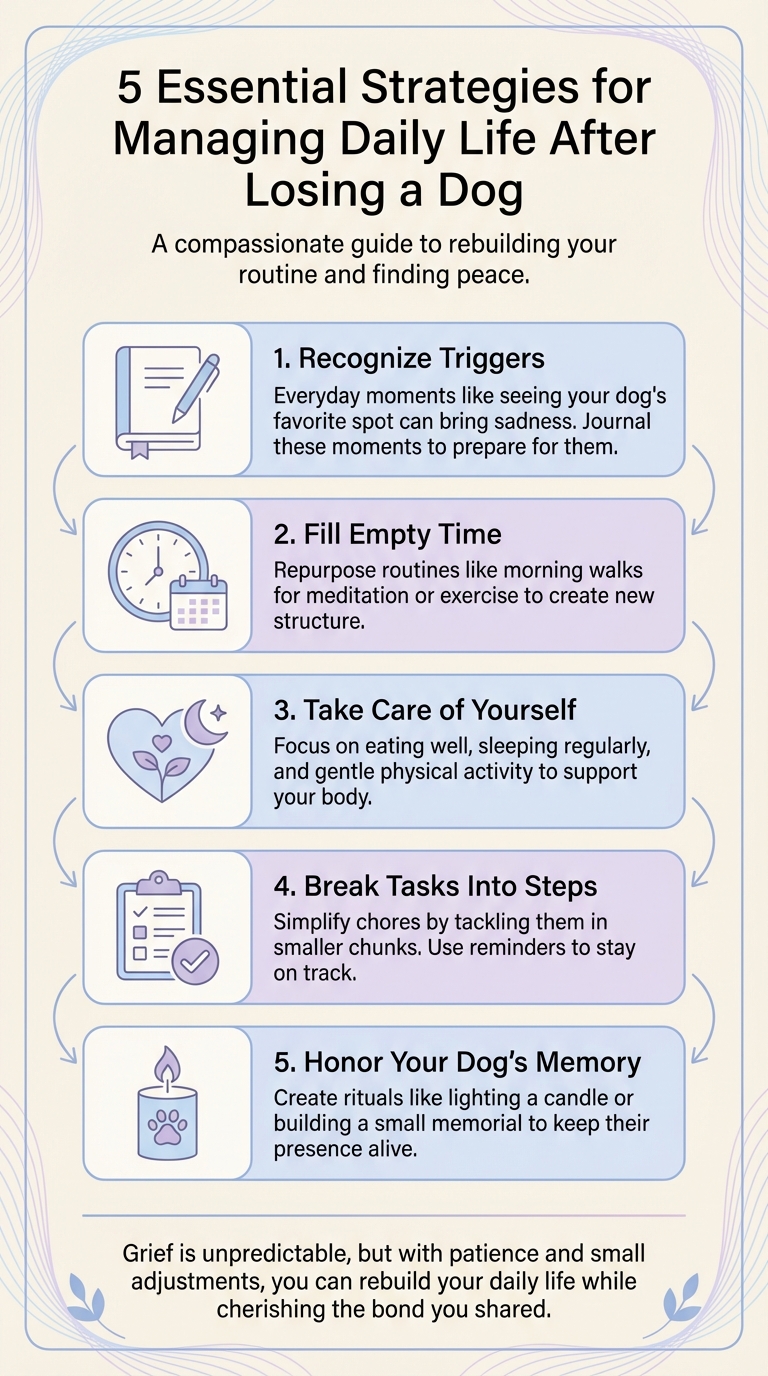
Losing a dog can disrupt your daily life in profound ways. The routines you built around feeding, walking, and caring for your pet leave an empty space, both emotionally and practically. This guide offers simple strategies to help you manage daily responsibilities while processing your grief:
Recognize triggers: Everyday moments like seeing your dog’s favorite spot or hearing a bark can bring sadness. Journaling these moments can help you prepare for them.
Fill empty time: Repurpose routines, like morning walks, for activities like meditation or exercise to create structure.
Take care of yourself: Focus on eating, sleeping, and gentle physical activity to support your body during this tough time.
Break tasks into steps: Simplify chores by tackling them in smaller chunks, and use reminders to stay on track.
Honor your dog’s memory: Create rituals, like lighting a candle or building a small memorial, to keep their presence alive in your heart.
Grief is unpredictable, but with patience and small adjustments, you can start to rebuild your daily life while cherishing the bond you shared with your dog.
5 Essential Strategies for Managing Daily Life After Losing a Dog
How to cope with losing a pet
How Loss Changes Your Daily Routine
Your dog shaped your day in countless ways - feeding times, walks, and play sessions gave your life rhythm and purpose. When those routines disappear, it’s easy to feel unmoored. As Sandra Barker, a psychologist specializing in human-animal relationships, explains:
"When we no longer have to feed the cat, walk the dog, clean the rabbit's cage, or give medications, it can open up a void in our schedules and our lives." [8]
This void isn’t just about time - it’s about the sense of purpose those daily tasks provided. Whether it was administering medication, heading out for long walks, or simply making sure their needs were met, these responsibilities gave structure to your day. Without them, time can feel aimless.
For many, particularly older adults, pets are often the reason to leave the house, stay active, and connect with others. Without those interactions, feelings of social isolation can creep in.
Next, let’s consider how even the smallest moments can stir up unexpected emotions.
Spotting Emotional Triggers in Everyday Tasks
Grief has a way of sneaking up on you. Everyday moments - like walking by the pet food aisle, hearing a bark in the distance, or instinctively reaching for your keys - can bring a wave of sadness.
These moments can also bring what experts call "intellectual symptoms." Sensory triggers - like the sound of a jingling collar, catching sight of a favorite spot, or imagining their presence - are common and deeply tied to the grieving process.
During the rawest phase of grief, even minor mishaps - spilling your coffee, getting stuck in traffic - can feel heavier than usual. Eric Richman, a clinical social worker at Cummings Veterinary Medical Center, captures this sentiment well:
"The connection you have with a pet is almost so deep in your soul that it's hard to express. People often feel an emptiness. They have a loss in their life that they can't fill." [3]
One way to manage these emotional triggers is through journaling. By noting when and where these moments occur, you can start to recognize patterns. This awareness can help you prepare, whether it’s asking a friend to accompany you on errands or taking a different route to avoid a painful reminder.
Finding the Empty Spaces in Your Day
The absence of your pet can feel most acute during the times once dedicated to them. Mornings might feel hollow without preparing their food, evenings might lack the joy of their excited greeting, and bedtime may seem incomplete without the comfort of their presence.
Even physical spaces in your home can amplify their absence. You might find yourself glancing at their favorite spot, half-expecting to see them there. Some people even describe a "phantom presence", a lingering sense that they’re still nearby.
If you have other pets, they might be grieving too. Surviving pets may spend time in the favorite spots of the one you’ve lost, eat less, or seem unusually sluggish. Maintaining consistent routines - feeding times, play sessions, and bedtime rituals - can help both you and your other pets find stability during this time.
To begin addressing these empty spaces, take a closer look at your current routine. Identify habits that no longer serve a purpose and think about introducing new ones. For instance, if you used to take morning walks with your dog, consider using that time for a short meditation or another form of exercise. The goal isn’t to replace the memory of your pet but to slowly rebuild a structure that supports your healing. By recognizing these gaps, you can start to reshape your day in a way that nurtures both your emotional and physical well-being - a topic we’ll explore further in the next section.
Taking Care of Yourself While Grieving
When grief enters your life, it can feel like it drains every ounce of your energy. That’s why taking care of yourself isn’t just helpful - it’s necessary. The University of Florida College of Veterinary Medicine emphasizes this point:
"Grief can deplete your energy and make you extremely susceptible to illness and disease." [9]
Your body is working overtime to process the emotional toll of loss. It’s important to recognize this and give yourself the care and support you need, rather than trying to push through or ignore the pain.
Meeting Your Basic Physical Needs
Start with the essentials: eating well, staying hydrated, and getting enough sleep. Even if your appetite is low, your body still craves nutrients to recover. Adam Clark, a clinical social worker, explains:
"Grieving is a lot of hard work, and can be taxing on the body. Consume nutrient-rich foods to help your body process." [10]
Focus on fresh, whole foods that provide real nourishment, and try to stick to regular meal times, even if you’re only eating small portions. A consistent sleep schedule can also help stabilize your body’s rhythm, giving you a better foundation to heal. Avoid turning to substances like alcohol or drugs - they might seem like a temporary escape but can disrupt your sleep and slow your natural recovery.
Incorporating Gentle Physical Activity
Exercise doesn’t have to be intense to be effective. A short 10-minute walk around your neighborhood can do wonders for your mood by releasing endorphins. Activities like yoga, light stretching, or simply spending time in nature can help ease tension and support your overall well-being without overwhelming you.
Allowing Time to Process Your Emotions
Set aside 20–30 minutes each day to focus on your feelings. This could mean journaling, writing a heartfelt letter to your dog, or creating a memory scrapbook. These creative outlets offer a way to express your emotions while gradually shifting toward gratitude for the time you had together. By establishing this self-care routine, you’ll find it easier to approach daily responsibilities with a clearer mind and renewed energy.
Managing Household Tasks While Grieving
Grieving can make even the simplest tasks feel insurmountable. It’s not uncommon for grief to disrupt your ability to plan or manage daily routines. To ease this burden, here are some practical ways to adjust household responsibilities while navigating your emotions.
Breaking Tasks into Manageable Steps
Instead of trying to tackle an entire house-cleaning session, break tasks into smaller, more manageable chunks. Spend 10–15 minutes on one specific job - like washing a few dishes, folding a single load of laundry, or vacuuming one room. These small steps can help you avoid feeling overwhelmed and give you a sense of accomplishment. If a particular chore, like organizing your pet’s area, feels too daunting, it’s okay to put it off or ask someone for help[2].
Using Reminders and Alarms
Grief can throw off your sense of time and make it harder to stay on top of daily tasks. To work around this, rely on external tools like phone alarms or a written schedule to keep track of chores, appointments, and self-care activities. Setting reminders for specific tasks or commitments can help ensure nothing important gets overlooked[1][2].
Creating a Memorial Space
Having a dedicated space to honor your loved one can help you process grief while maintaining focus on other parts of your home. This could be a small corner with photos, a favorite toy, or a shadow box displayed on a shelf. A tangible memorial allows you to channel your emotions into one area, making it easier to navigate your daily responsibilities without constant emotional triggers[11][12].
Handling Work Responsibilities During Grief
Managing your professional life while grieving the loss of a beloved dog can feel like an uphill battle. At work, your mind is still processing the weight of your loss, which can make it harder to focus on tasks. In fact, grief can cut your concentration by as much as 50% to 70% and may affect productivity for anywhere from 6 to 24 months [13]. Understanding these hurdles can help you set realistic expectations for yourself and communicate effectively with colleagues. The key lies in finding strategies that balance your emotional needs with your work responsibilities.
Communicating Your Needs at Work
One of the first steps is to identify someone you trust - a supervisor or coworker - who can act as a go-between for you and your team. This person can share a brief update about your situation, sparing you from having to answer the same questions repeatedly. For instance, they might send an email explaining that you're not ready to discuss your loss and would appreciate simple greetings like "Nice to see you" instead of inquiries about your emotions.
It’s also a good idea to have an early conversation with HR or your supervisor to avoid misunderstandings about any changes in your performance. You can request adjustments that make it easier to manage your workload during this period. Options might include flexible hours, remote work, or even a phased return to the office - starting part-time, for example. Decide in advance how much you're comfortable sharing about your situation. If coworkers approach you, you can use a prepared response like, "Thank you for your concern, but I’m not ready to talk about it."
Working in Focused Time Blocks
Grief often shortens your attention span, so breaking large tasks into smaller, 15–20 minute chunks can make them more manageable. Pay attention to when you feel most alert - many people find mornings to be their most productive time - and tackle high-focus tasks during those hours. Save routine or less demanding work for times when your energy dips. Tools like sticky notes, alarms, or calendar reminders can help you stay organized when your mind feels scattered.
"Grief doesn't mean disengagement. It means the brain is doing extra work."
Having a "touchstone" nearby, like your dog’s collar tag or another small, meaningful item, can help you stay grounded when emotions threaten to overwhelm you. If you're working from home, consider making small changes to your workspace - like adding a comforting object or rearranging the room - to create a more supportive environment. After completing focused work sessions, take intentional breaks to recharge.
Taking Short Mental Breaks
Incorporating quiet breaks into your day can help prevent emotional burnout. Use wellness rooms or other private spaces to sit quietly and process your feelings when they become too much. Deep breathing exercises during these breaks can help you reset and regain focus. If possible, try outdoor or walking meetings instead of staying cooped up in a conference room, as a change of scenery can be refreshing.
At the end of the workday, consider creating a small ritual to help you transition from work mode to home life. This might be as simple as listening to a calming song, watching a short video, or taking a moment to reflect. These small pauses can help you process the emotions of the day and prepare for the quiet of a home without your dog. These moments of care allow your nervous system to recalibrate and keep you steady throughout the day.
Creating New Daily Routines
Adjusting your daily schedule after losing a beloved dog can feel overwhelming. The time you once spent caring for them may now feel like a void. Establishing new routines can help bring a sense of stability and comfort during this period of grief. It's not about forgetting your dog or rushing through your emotions - it's about creating a structure that honors their memory while helping you move forward. These new patterns can work alongside other strategies to help you manage everyday life. As the Children's Bereavement Center explains:
"Creating routines and structure can have a powerful impact on our ability to heal in loss" [6].
Trying New Activities
Filling the gap left by your dog's absence can be challenging, but trying new activities might help. Volunteering at local animal shelters or rescue organizations is a meaningful way to spend your time while connecting with other animals in need [5][7]. You could also explore hobbies you’ve always been curious about - painting, gardening, or learning a musical instrument. While these activities won’t replace your dog, they can help you establish new rhythms in your day and rediscover a sense of purpose.
Reshaping Existing Routines
Instead of abandoning familiar habits, consider reshaping them. For instance, if you used to take daily walks with your dog, keep walking but try something new - like listening to a favorite podcast, practicing mindfulness, or exploring different routes to avoid painful reminders [7][2]. These small changes can make a big difference in how you process your grief.
If you built friendships at dog parks or through pet-related activities, make an effort to maintain those connections in a new way. Call friends for coffee, plan lunch dates, or join local community groups to stay socially engaged [5]. During the tougher days, when even basic tasks feel overwhelming, tools like lists or phone reminders can help you stay on track [6]. While your routine has shifted, familiar activities can still provide a sense of comfort and stability.
Creating Rituals to Remember Your Dog
Incorporating small rituals into your daily life can help you honor your dog's memory. Light a candle, display a favorite photo, or keep a shadow box with cherished items like their collar or a toy [14][4][1][15]. These simple acts take just a few moments but can bring a sense of calm and connection.
You might also consider creating a living memorial, such as planting a tree or flowers in your yard [4][5][7]. Plants that attract butterflies or birds can add an extra layer of meaning, creating a peaceful space for reflection [14]. Some people design memory gardens - a special corner of their yard dedicated to their pet - where they can sit and remember the joy their dog brought into their lives.
On significant dates, like your dog's birthday or the anniversary of their passing, you could honor their memory by donating to an animal welfare cause or volunteering your time [4][7][2]. Rainbow Bridge Remembrance Day, observed every year on August 28, is another opportunity to reflect on your pet’s life and legacy [7].
For a more personal touch, you could create a scrapbook or digital memorial page filled with photos and stories of your time together. Some people find comfort in crafting a shadow box with keepsakes or writing letters to their pet. These projects can provide a sense of purpose, especially during quiet evenings when their absence feels most profound. The key is to find rituals that resonate with you and celebrate your dog's life in a way that helps you heal without holding you back in grief.
Conclusion
Losing a dog can throw your entire daily routine into disarray. It’s a profound change, and navigating this loss requires patience and kindness toward yourself.
Grief is unpredictable and doesn’t adhere to a set timeline. Research indicates that it can last anywhere from 3 to 24 months [16]. Your journey may fall anywhere within this range, and that’s perfectly okay. Grief often moves in waves - some days might feel manageable, while others may hit you harder.
It’s important to give yourself grace. When grief puts your mind into "crisis mode", it’s natural to forget tasks or miss appointments - it’s simply how our brains respond [1]. The Children's Bereavement Center offers a gentle reminder:
"Being patient and kind with ourselves goes a long way to manage life's daily responsibilities" [6].
Celebrate small victories, like preparing a meal or crossing something off your to-do list. These moments of progress matter. Allow yourself to feel whatever emotions arise without judgment - healing is a gradual process. By adjusting your routines and finding ways to honor your dog’s memory, you can begin to regain a sense of control while navigating your grief with compassion.
FAQs
How can I adjust my daily routine after losing my dog?
Losing a dog can leave a big void in your daily routine, but there are small, meaningful ways to adjust and find new balance. Start by thinking about the activities that centered around your dog - like morning walks or feeding times. Instead of letting those moments feel empty, repurpose them for yourself. Take a walk to clear your mind or focus on your fitness, or even try mindfulness exercises to ground yourself.
You might also find comfort in creating daily rituals to honor your dog’s memory. Spend a few moments journaling about your favorite memories, updating a photo album, or simply reflecting on the joy they brought to your life. These small acts can keep their presence alive in your heart while helping you move forward.
For deeper support, To Lose A Dog offers touching stories and practical advice to guide you through this process. It’s a thoughtful resource to help you adapt and heal as you navigate this new chapter.
How can I honor my dog's memory while coping with grief?
Honoring your dog’s memory can turn the pain of loss into a celebration of the love and joy they brought into your life. You could create a tribute by putting together a photo collage or crafting a keepsake, like a paw-print ornament or a custom-engraved stone. Planting a tree or starting a small garden with their favorite flowers is another beautiful way to keep their memory alive and close to your heart.
Writing a letter or journal entry about your favorite moments together can be a deeply comforting way to reflect. Sharing these cherished stories with close friends or even a pet-loss support group helps keep their spirit alive. Simple rituals, like lighting a candle on the anniversary of their passing or setting aside time to look through old photos, can bring comfort and a sense of connection.
If you’re looking for guidance during this difficult time, the memoir To Lose A Dog by Isaac H. offers heartfelt stories and practical advice to help you navigate the grieving process.
How can I balance work while grieving the loss of my dog?
Grieving the loss of a beloved dog while juggling work responsibilities can feel like an uphill battle. But with a few thoughtful steps, you can navigate this difficult time more smoothly. Start by having an open conversation with your employer or HR department. Share what you're going through and see if options like flexible hours, remote work, or even short-term leave might be available. Addressing your needs early can foster understanding and help ease some of the pressure.
Break your workday into smaller, more manageable chunks. Grief can sap your energy and make it hard to concentrate, so allow yourself moments to pause. Take short breaks to breathe, stretch, or even reflect on the happy times you shared with your dog. Focus on the most important tasks first, tackling them one at a time. If possible, delegate or postpone less critical responsibilities to lighten your load.
Above all, treat yourself with kindness. It’s okay if your productivity isn’t at its peak - grief is a process, not a straight line. Lean on coworkers, friends, or family for support when you need it. If you’re looking for additional guidance, the memoir To Lose A Dog offers heartfelt advice and practical tips for coping during this time. By making small adjustments and showing yourself compassion, you can honor your grief while managing your day-to-day responsibilities.
Frequently Asked Questions
Is it normal to feel physically exhausted after losing a dog?
Yes, and it is not just emotional. Grief places genuine physiological stress on the body, making you more susceptible to illness and fatigue. Prioritizing basic self-care like regular meals, hydration, and consistent sleep is not indulgent during this time — it is necessary for recovery.
How do I deal with my surviving pet's behavior after the other dog died?
Surviving pets often grieve too, showing signs like reduced appetite, lethargy, or lingering in the deceased dog's favorite spots. Maintaining consistent routines — regular feeding times, play, and bedtime — provides stability for both you and your surviving pet during an unsettled period.
What do I say when coworkers ask how I'm doing after losing my dog?
Preparing a simple, honest response in advance can protect you from being caught off guard. Something like 'Thank you for asking — I'm not quite ready to talk about it' is entirely appropriate. You are not obligated to explain or justify your grief to anyone at work.
How long does grief after losing a dog actually last?
Research suggests pet grief can last anywhere from 3 to 24 months, and both ends of that range are valid. Grief also does not move in a straight line — you may have manageable stretches followed by unexpectedly hard days, particularly around anniversaries, your dog's birthday, or sensory triggers like a familiar smell or sound.
What should I do with my dog's belongings after they die?
There is no required timeline for dealing with your dog's things — doing it too quickly can bring regret, but some people find keeping items in place too painful. A middle path many find helpful is setting aside one or two meaningful objects, like a collar or a favorite toy, for a dedicated memorial space, and taking as much time as you need with the rest.
Reserve the paperback at the pre-order price, with clear shipping and cancellation terms.
Pre-order price: $24.99 (save $5 off retail price)
First copies out of the print run, estimated to ship December 2026, shipped directly to you
Email updates on the book's progress until it reaches you
$24.99$29.99
Save $5
Charged today · Cancel any time before it ships
US shipping is $4.90. Other countries are calculated at checkout.
Estimated to ship December 2026US shipping is $4.90. Other countries are calculated at checkout.
Not today?
If the timing is wrong, or you are buying for someone who is not ready yet, leave your email. I will write once, when copies start shipping, and that is the only time you will hear from me.