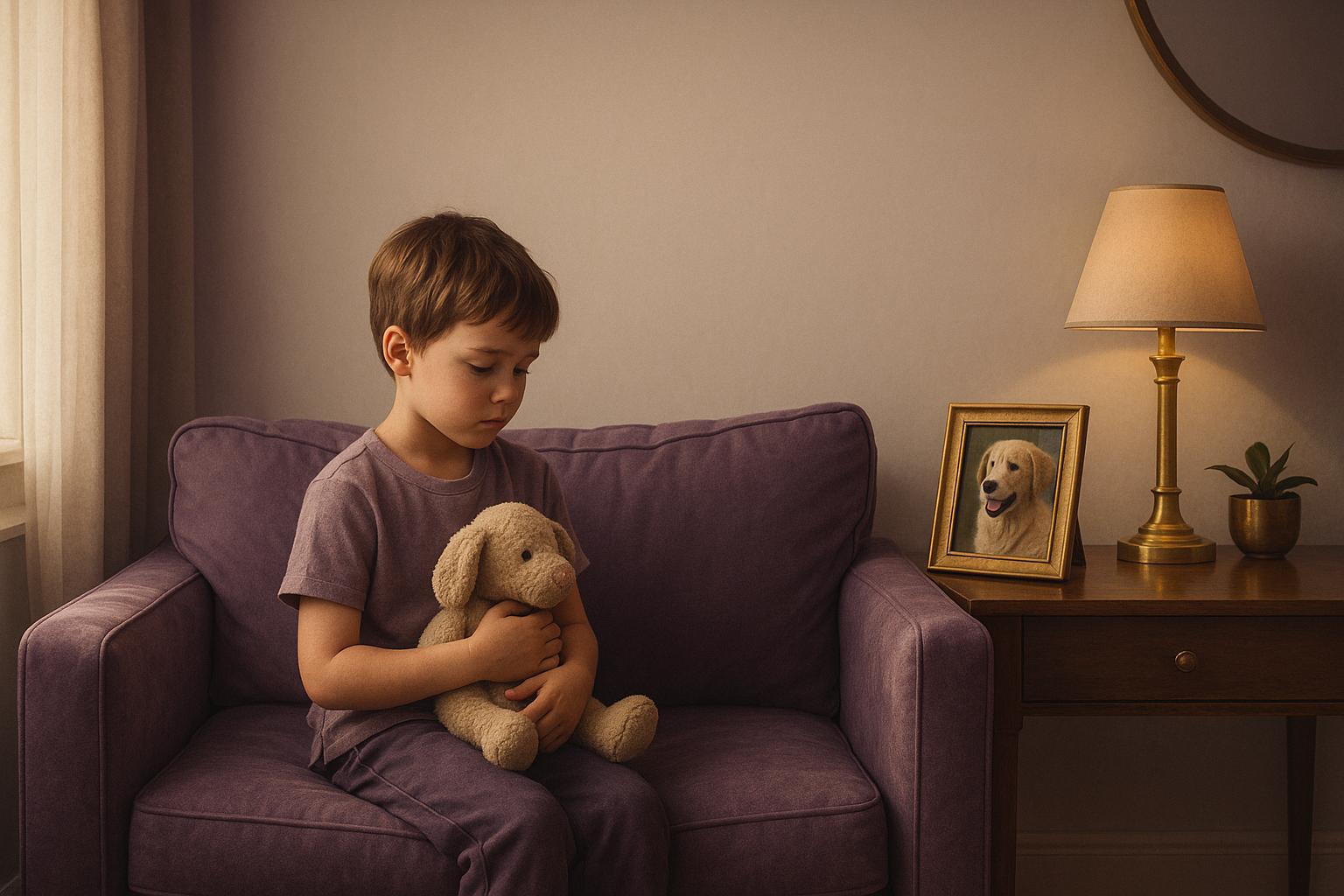
Help kids cope with pet death with honest language, age-appropriate guidance, memory rituals, and signs they may need extra support.
How-to15 min read
Losing a pet is often a child’s first encounter with loss. It can be confusing and overwhelming, as kids may not fully understand the concept of death. Here’s how you can help them cope:
Be honest and clear: Avoid euphemisms like “went to sleep.” Explain death in simple terms that match their age.
Recognize age-specific grief: Younger kids may not grasp permanence, while older ones may feel guilt or fear. Tailor your support to their understanding.
Encourage expression: Let them draw, write, or talk about their feelings. Activities like creating memory boxes or journals can help.
Maintain routines: Provide stability but allow flexibility for emotional needs.
Check in regularly: Grief can resurface over time. Keep communication open and offer reassurance.
Seek professional help if needed: If grief disrupts daily life for more than a month, consult a mental health professional.
Helping children through this process not only eases their pain but also teaches them how to handle emotions and loss in healthy ways.
Talking about the death of a pet can be a daunting task, but open and clear communication is essential. How you address this sensitive topic will deeply influence how your child processes loss, both now and in the future. It’s an opportunity to create a foundation for honest and supportive conversations.
Use Clear and Honest Words
It’s important to avoid euphemisms that might confuse children. While phrases like "put to sleep" or "ran away" might feel kinder, they can lead to misunderstandings and unnecessary anxiety. Instead, use straightforward language to explain what has happened.
For example, you could say that dying means the pet’s body has stopped working - its heart has stopped beating, and it can no longer breathe [1][3]. This clear explanation helps children grasp the reality of the situation without creating confusion.
Be sure to emphasize the permanence of death in a compassionate way. Let your child know that the pet has died and won’t be coming back [1][4]. This clarity is essential for helping them begin to process their grief, rather than holding onto false hope.
For younger children, a simple explanation might be: "Buddy’s body stopped working today. His heart isn’t beating anymore, and he can’t breathe. When this happens, we say that Buddy died. He won’t be coming home with us." For older kids, you can provide more detail about the circumstances, whether it’s related to illness, age, or something else, while still maintaining a truthful approach.
The key is to tailor your explanation to your child’s understanding while staying honest. A four-year-old needs simpler terms than a ten-year-old, but both deserve clear and truthful answers.
Let Children Ask Questions
Encourage your child to ask questions by creating a safe and open environment. Children are naturally curious, and their questions about death - while sometimes surprising - are a normal part of processing loss. They might wonder where the pet has gone, worry if they caused the death, or ask practical questions about what happens to the pet’s body.
When faced with tough questions, take a moment to think before responding. It’s okay to say, "That’s a really good question. Let me think about how to explain it", before offering an age-appropriate answer. If you don’t know the answer, it’s fine to admit that too.
During these conversations, listen more than you speak. Your child may need to express their thoughts, repeat questions, or revisit the same concerns multiple times. This repetition is a natural way for them to process complex emotions.
Keep the lines of communication open by checking in regularly. For example, you could say, "I was wondering if you’ve been thinking about Buddy lately. Do you have any questions about what happened?" Often, their questions will reveal deeper worries, like "Will you die too?" - a sign they’re grappling with the broader concept of loss and need reassurance about their safety.
Share Your Own Sadness
Sharing your emotions is a powerful way to teach children that grief is a natural response to loss. When you express your sadness, you show them it’s okay to feel and share their own emotions [2][4]. You might say something like: "I feel really sad that our dog died. I loved him so much, and I’m going to miss playing with him in the backyard. It’s okay for both of us to feel sad about this."
Talking about pets you’ve lost in the past can also help. Sharing your own experiences shows your child that grief is a part of life and that healing is possible. These personal stories create a sense of connection and help your child feel less alone in their sadness [4].
That said, it’s important to ensure your grief doesn’t overwhelm your child. Seek support from other adults if needed, so you can remain present and supportive for your child [5].
If you cry in front of your child, explain what’s happening: "I’m crying because I’m sad about losing our cat. Crying is one way our bodies show sadness, and it’s completely normal. You might feel like crying too, and that’s okay." This kind of explanation normalizes the physical expressions of grief and reassures your child that their feelings are valid and natural.
Help Children Express Their Feelings
Children experience grief in many ways, and it's important for parents and caregivers to adapt their support to each child's needs. Young children, in particular, might not articulate their sadness through words. Instead, their grief often surfaces through changes in behavior or daily routines. Recognizing these signs and responding with care can make a significant difference.
Different Ways Children Show Grief
Grief in children can show up in unexpected ways. They might withdraw from social interactions, lose interest in activities they once loved, or become more clingy. Some may regress in behavior, like having potty accidents, while others might display sudden bursts of anger over small issues. Mood swings are also common, with children shifting between moments of normalcy and deep sadness.
School performance and focus may take a hit as well, and basic routines like sleeping and eating can become disrupted. These reactions, while challenging, are normal responses to loss. It's important to remember that your child isn't being "difficult" - they're navigating an overwhelming emotional experience. Offering patience, understanding, and gentle support can help them through this tough time.
Art, Writing, and Other Activities for Grief
Creative activities can be a powerful way for children to express emotions they can't easily put into words. Drawing, writing, and crafting allow them to process their feelings in a hands-on, meaningful way. For instance, they might draw pictures of their pet, write letters or stories, or create a scrapbook filled with memories.
Art projects provide a safe space for children to externalize their grief. They might draw their pet in a happy place or use colors and shapes to represent their emotions. Writing activities, like journaling or composing poems, can also help. For younger children who aren't yet writing independently, dictating stories to an adult can be just as effective.
Other ideas include assembling a memory box filled with items like the pet's collar, favorite toys, or photos, or crafting a special tribute to their beloved companion. These activities offer children a sense of control and purpose, helping them feel more connected to their emotions during an otherwise disorienting time.
Keep Routines While Being Flexible
When children are grieving, maintaining a consistent routine can provide much-needed stability. Familiar schedules help create a sense of security and predictability, reminding them that life continues even in the face of loss. This structure can be comforting when everything else feels uncertain.
At the same time, it's crucial to remain flexible. Be ready to adjust routines to accommodate moments when your child needs extra care or time to process their feelings. A balance between consistency and adaptability ensures that children feel supported without being overwhelmed.
Encourage school attendance when they feel ready, and keep teachers informed about the situation so they can offer additional support [7]. Provide regular meals and snacks, even if your child's appetite fluctuates, and prioritize good sleep habits to help them stay emotionally balanced [7]. If your child resists routine activities, it may signal they need more flexibility to cope during particularly rough moments [6].
Striking the right balance between structure and adaptability helps children feel secure and cared for as they work through their grief. Encouraging healthy outlets for emotions and maintaining a sense of normalcy can lay the foundation for their emotional recovery.
Helping Children by Age Group
Preschool Children (Ages 3–5)
For preschoolers, ages 3 to 5, understanding grief requires a gentle and straightforward approach. At this stage, kids tend to take language literally, so it’s essential to use simple and clear explanations when discussing death.
While preschoolers recognize that death changes things, they often struggle to grasp its permanence. Many may think of death as something temporary - similar to how leaves fall and grow back in the spring [8][1]. Because they interpret words literally, phrases like “passed away” or “gone to sleep” can be confusing, so it’s better to stick with direct terms [8][4][1][9].
To help them, focus on teaching four key ideas: death is irreversible, life functions stop completely, all living things eventually die, and physical causes lead to death [9]. Most children begin to understand these concepts between ages 5 and 7, though experiencing a personal loss may lead to earlier comprehension.
sbb-itb-4671d2f
Ways to Remember and Honor the Pet
When dealing with the loss of a beloved pet, finding meaningful ways to remember and honor them can provide comfort and help preserve cherished memories. These activities offer a positive focus and lasting ways to celebrate the bond you shared.
Plan a Special Goodbye
Creating a memory book or pet journal is a heartfelt way to honor your pet. Kids can fill it with photos, drawings, stories, or poems about their favorite moments. Let them decorate the cover with bright colors or designs that remind them of their pet. This keepsake becomes a comforting reminder of happy times they can revisit whenever they want [10][12].
A pet memorial service is another way to say a meaningful goodbye. Gather as a family to share stories, funny memories, or what the pet meant to each person. You can include special touches like reading a poem, lighting candles, making memory lanterns, or playing music that feels connected to your pet. These ceremonies can help children feel supported and remind them that celebrating love is an important part of healing [10][11][12].
For an ongoing tribute, try a happy memories jar. Decorate a jar together, and have family members write down their favorite memories, funny moments, or reasons they loved the pet on small slips of paper. Add these to the jar, and encourage your child to pull one out whenever they need a smile [10][11][12].
If your child enjoys art, creating a pet collage or art wall can help them express their feelings. They can combine photos, drawings, and colorful cutouts that remind them of their pet. Display the collage in their room or a special spot in the home as a visual tribute [10].
These personal gestures not only honor the pet but also provide a creative outlet for processing emotions.
Use Books and Tools to Help Healing
Books and creative tools can also support children through their grief. "The Invisible Leash" by Patrice Karst is a touching story that explains how love creates an unbreakable bond, even after a pet has passed. Its gentle language and illustrations help children understand that their connection with their pet remains strong.
Encourage your child to write and illustrate their own pet storybook. They can create a tale where their pet is the main character, recounting real-life memories, imagining exciting adventures, or writing about crossing the rainbow bridge. This activity helps keep their pet's memory alive while giving them a sense of control over the story.
A time capsule or pet memory box is another meaningful way to preserve memories. Help your child collect special items like a favorite toy, a photo, a tuft of fur, the pet’s collar or tag, or paw prints. Store these in a decorated box or container for safekeeping [10][11][12].
Focus on Happy Memories
Shifting the focus from loss to the joy of shared memories is key to helping children heal. Asking questions like, “What’s your favorite memory of [pet’s name]?” can spark smiles and laughter as they recall happy times [12]. These conversations remind kids that while their pet is no longer with them, the love and happiness they shared will always remain.
Consider planting a tree, flowers, or creating a pet garden as a living tribute. This space can grow and change with the seasons, symbolizing the enduring love for their pet. Personalize it with painted rocks, a plaque, or a small statue with the pet’s name. This special spot offers a place to reflect and remember in a peaceful setting [10][11][12].
Long-Term Support and Building Strength
Recovering from the loss of a pet is a journey, not a quick fix. Grief can linger for months or even years, and ongoing support plays a key role in helping to build emotional resilience. These long-term strategies expand on earlier advice for managing the immediate stages of grief.
Helping Children Navigate Grief Over Time
Children process grief differently than adults, and their understanding of death can change as they grow [14][15]. This means their feelings about the loss may resurface at different stages of their development, requiring continued support.
Explain to your child that healing is a gradual process, and it's normal to feel sad for a long time. Reassure them that there will be good days and tough days, and both are part of the healing process.
Keep an eye out for signs that grief might be overwhelming them. If their sadness seems intense and starts interfering with daily life for more than a month, it may be time to seek professional help.
"If it's been more than a month, and your child's experience of grief is still intense and disrupting their life, talk to your primary care physician. Clinically, that's when we start to be concerned about prolonged grief, trauma and/or PTSD. Prolonged grief may cause sleep disruption, poor concentration, or aggressive behaviors. Research shows that prolonged grief can lead to more serious issues, including behavioral problems, hyperactivity or struggles with peers."
Complicated grief, which affects 2%-3% of the global population and up to 10% of bereaved individuals, can cause prolonged sorrow that disrupts everyday life [13]. Professional intervention can be a lifeline for children experiencing this level of difficulty.
Staying Present for Your Child
Grief doesn't follow a straight path - it ebbs and flows, often triggered by anniversaries, holidays, or unexpected reminders. Regular check-ins with your child are crucial, even if they appear to be coping well one week. They may need extra support the next.
Create opportunities for open conversations during everyday moments, like car rides, bedtime, or while looking at photos of your pet. Ask open-ended questions such as, "How are you feeling about [pet's name] today?" or "Did anything remind you of [pet's name] this week?"
Be alert to changes in behavior that might indicate your child is struggling, such as shifts in sleep, appetite, school performance, or social interactions. Grief may also resurface unexpectedly - your child might feel sad when they see another pet, visit the vet, or during family gatherings where your pet's absence is deeply felt. These moments are a natural part of the healing process and don't mean your child isn't making progress.
Expanding your child’s support network can also make a big difference. Trusted community members, like teachers or family friends, can help provide consistent encouragement and understanding.
Building a Support System Beyond the Home
Let others in your child’s life know about the loss so they can offer appropriate support. Teachers, coaches, and other caregivers can play a critical role in creating a nurturing environment.
Reach out to your child’s teacher or school counselor to inform them about the pet’s passing. Share any behavioral changes you’ve observed and ask them to keep an eye out for signs of distress. Teachers can provide additional patience, offer a quiet space when needed, or simply check in with your child on particularly tough days.
Extended family members and close friends should also be informed to help avoid potentially upsetting comments or questions about the pet. Provide them with guidance on how to discuss the loss in a way that is sensitive to your child’s age and emotions.
Connecting with other families who have experienced pet loss can also be comforting. Support groups or online communities can remind both you and your child that you’re not alone. Hearing how others have coped can offer practical strategies and reassurance.
If professional help becomes necessary, your primary care physician can refer you to therapists or counselors who specialize in childhood grief [14]. These experts can provide tailored tools and strategies to help your child process their emotions in a healthy way.
Conclusion: Helping Children Heal and Move Forward
Losing a pet is never easy, but with the right support, it can become an opportunity for emotional growth. The process of grieving teaches children important lessons about love, loss, and the strength they possess to navigate difficult emotions.
Let’s revisit the key strategies: open and age-appropriate communication creates a safe space for children to express their feelings. When you share your own sadness, it shows them that grief is a natural part of life - something to be acknowledged, not hidden.
Encouraging creative outlets like drawing, writing, or crafting a memorial helps children honor their pet's memory while channeling their emotions into something meaningful. These activities not only provide comfort but also teach healthy ways to cope with loss.
Grief doesn’t follow a set timeline - it can linger for months or even years. Offering steady, patient support reassures children that healing takes time and that it’s okay to feel sad for as long as they need.
A strong network of support, whether at home, school, or within the community, reminds children they’re never alone in their grief. Knowing that others care and are there to help can be a powerful source of comfort.
Creating rituals or memorials provides a sense of closure. These moments allow children to honor their pet and celebrate the joy their furry friend brought into their lives. Balancing the acknowledgment of loss with the celebration of happy memories lays the groundwork for moving forward.
FAQs
How can I help my young child understand the death of a pet?
When talking to a young child about the death of a pet, it’s important to keep your words simple and clear. Avoid using phrases like "went to sleep" or "passed away", as these can be confusing or misleading. Instead, explain gently but directly that their pet has died. You might say something like, "Their body stopped working, and they aren’t going to come back." Reassure them that their pet is no longer in pain or feeling uncomfortable.
Encourage your child to share how they’re feeling and let them know it’s okay to be sad, upset, or even confused. Remind them that they are loved and that it’s natural to feel this way when someone or something they care about is gone. You can also help them process their emotions through activities like reading books about loss, drawing pictures, or writing stories about their pet. These creative outlets can provide comfort and a healthy way to express their grief.
How can I tell if my child needs professional support after losing a pet?
It's completely normal for kids to feel sad after losing a pet, but certain signs might suggest they need some extra help. Keep an eye out for ongoing sadness, pulling away from activities they used to love, trouble focusing at school, or frequent physical complaints like headaches or stomachaches. You might also notice regressive behaviors (like acting younger than their age) or intense fears, which can be important to address.
If these behaviors stick around for more than a month or seem to get worse, reaching out to your child’s doctor is a smart step. They can evaluate the situation and, if necessary, guide you toward a therapist or counselor. Getting support early on can play a big role in helping your child process their feelings and regain their emotional balance.
What are some creative ways to help my child cope with the loss of a pet?
Helping your child find creative ways to express their emotions can be a soothing way to navigate the loss of a pet. Encourage them to draw or paint pictures of their pet, write stories or journal about their feelings, or put together a memory box filled with cherished items like photos, a collar, or a favorite toy.
You could also suggest activities like making a photo album, designing a tribute collage or scrapbook, or even writing a heartfelt letter to their pet. These kinds of projects not only offer an outlet for their emotions but also help them hold onto and celebrate the joyful moments they shared with their beloved companion.
Frequently Asked Questions
Should I replace a pet quickly to help my child feel better?
Getting a new pet too soon can send children the unintended message that loss is something to be erased rather than felt. Most child grief specialists recommend waiting until your child has had meaningful time to mourn the pet they lost, and letting the child have some say in any future decision rather than presenting a replacement as a fix.
Is it okay for my child to see the pet's body, or attend a burial?
For many children, seeing the body or participating in a small burial ritual makes death feel real in a way that helps them grieve honestly rather than waiting for a pet that won't return. Let the child's age and temperament guide you, explain what they will see beforehand, and make participation a choice rather than a requirement.
How do I handle it when my child seems totally fine one day and devastated the next?
Children grieve in short, intense bursts rather than in a steady wave, so swinging between playing happily and crying is developmentally normal, not a sign that something is wrong. The pattern typically reflects how children manage overwhelming feelings in small doses, and it usually levels out with consistent, low-pressure check-ins over weeks and months.
What do I say when my child asks if I will die too?
This question almost always surfaces after a child's first real encounter with death, and it deserves a calm, honest answer rather than a dismissal. Acknowledge that yes, all living things do die, reassure them that you plan to be with them for a very long time, and let them know they will always be cared for—that combination of honesty and safety tends to settle the fear better than deflection.
How do I explain euthanasia to a child when we had to make that decision for our pet?
Children often worry that choosing euthanasia means the pet was abandoned or that the family caused the death. A straightforward explanation—that the vet helped the pet die peacefully because their body was in too much pain to get better—separates the act of ending suffering from any idea of abandonment, and reassures the child that the decision came from love.
Reserve the paperback at the pre-order price, with clear shipping and cancellation terms.
Pre-order price: $24.99 (save $5 off retail price)
First copies out of the print run, estimated to ship December 2026, shipped directly to you
Email updates on the book's progress until it reaches you
$24.99$29.99
Save $5
Charged today · Cancel any time before it ships
US shipping is $4.90. Other countries are calculated at checkout.
Estimated to ship December 2026US shipping is $4.90. Other countries are calculated at checkout.
Not today?
If the timing is wrong, or you are buying for someone who is not ready yet, leave your email. I will write once, when copies start shipping, and that is the only time you will hear from me.