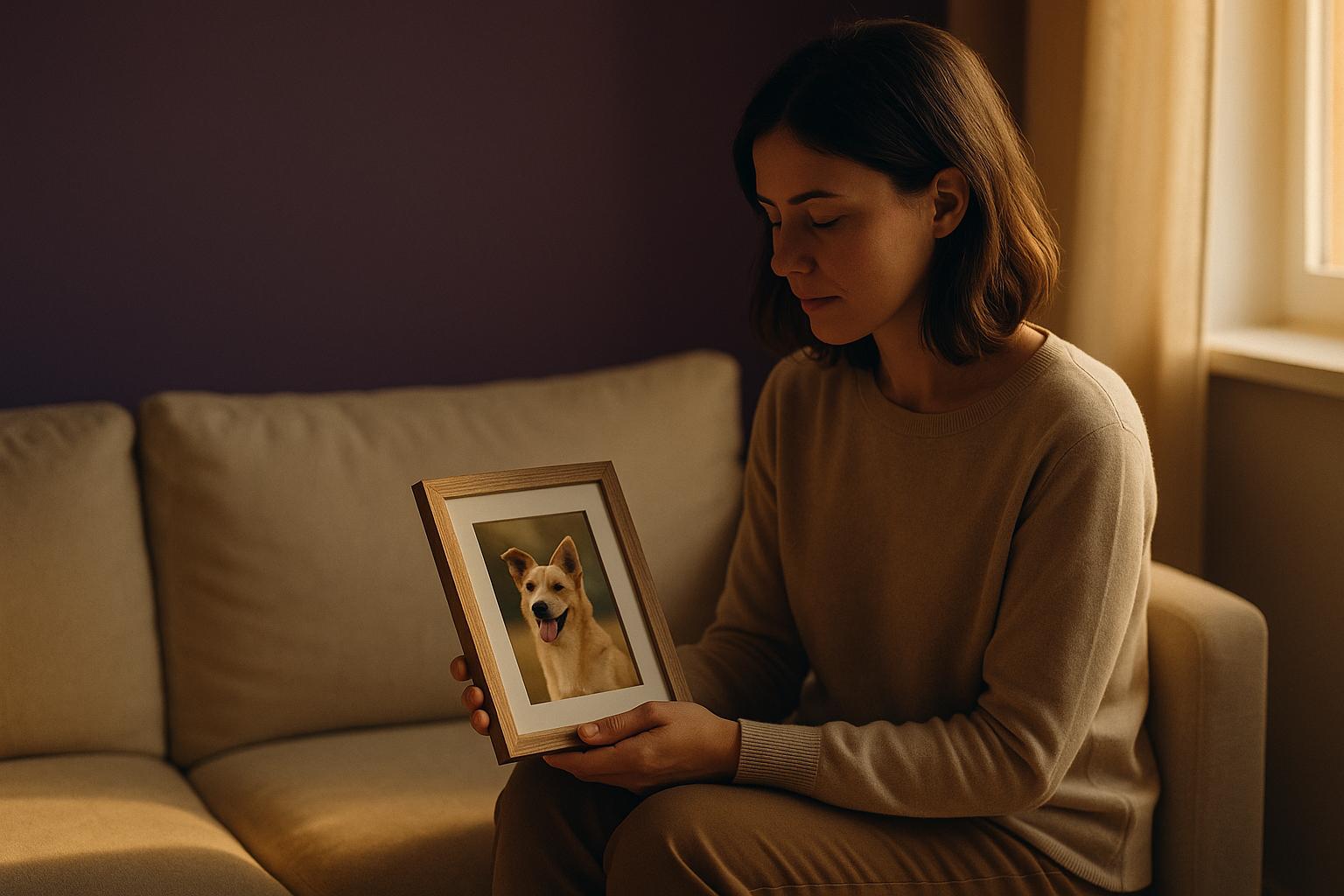
Understand pet loss grief through the human-animal bond, plus evidence-based coping tools, rituals, and support for the days after goodbye.
Guides12 min read
Losing a pet is more than just saying goodbye to an animal - it’s about losing a companion who shaped your daily life and emotions. The grief you feel isn’t exaggerated or misplaced; it’s rooted in the deep bond you shared. Pets become family, offering unconditional love and emotional support. When they’re gone, the loss leaves a noticeable void in your routines and mental well-being.
Here’s why pet loss hits so hard:
Emotional Connection: Pets provide comfort, stability, and nonjudgmental companionship. They respond to your emotions, making the bond feel mutual.
Brain Chemistry: Interacting with pets releases oxytocin (the bonding hormone) and reduces cortisol (stress hormone), creating feelings of happiness and calm.
Attachment: Pets act as secure emotional anchors, similar to human relationships, making their absence deeply felt.
Grieving a pet is valid and natural. Rituals, keepsakes, or even writing letters to your pet can help you process this loss. Seeking support from others who understand, like pet loss groups or therapists, can also provide relief. Remember, your grief reflects the love you shared, and it’s okay to take time to heal.
Pet loss grief; the pain explained | Sarah Hoggan DVM | TEDxTemecula
How the Brain Forms Bonds with Pets
The connection we feel with our pets isn’t just emotional - it’s deeply rooted in the brain. Interacting with pets triggers neurochemical responses that mirror those involved in human relationships. This explains why the bond with a pet can feel as genuine and meaningful as the relationships we share with family or friends.
Brain Chemistry and Pet Interactions
Every time you interact with your pet, your brain unleashes a wave of chemicals that strengthen your bond. This connection is supported by neuroendocrine pathways involving oxytocin and vasopressin - two key players in regulating emotions and social behavior [1]. These chemicals serve dual roles: they act as neurotransmitters and modulators in the brain’s limbic system, while also functioning as hormones that interact with the central nervous system [1].
For instance, when you and your dog lock eyes, oxytocin levels rise in both of you. This shared chemical boost creates a feedback loop that deepens your connection over time [2]. At the same time, interactions with pets reduce cortisol - the body’s primary stress hormone - leading to a sense of calm and relaxation [1][2]. These combined effects train the brain to associate time with your pet with comfort and positive emotions, making each interaction even more rewarding.
Synchronized Brain Activity with Pets
Beyond chemical changes, spending time with pets can also align your physiological responses. Take therapy dogs, for example. Research shows that just 10 minutes with a therapy dog can significantly lower stress and anxiety levels. In one study, 46% of children in an emergency room experienced reduced stress, and even their parents felt calmer after interacting with a therapy dog [2].
This synchronization goes further. Interacting with pets can influence heart rate, breathing, and blood pressure, activating the parasympathetic nervous system - the part of your body responsible for rest and recovery. These physiological changes highlight the profound effect pets have on our bodies, reinforcing the deep bond we share with them.
Why Losing a Pet Causes Deep Grief
The loss of a pet can feel overwhelming, and that pain stems from the deep connection built through everyday moments.
Attachment Theory and Pets
Attachment theory, which was originally developed to explain the bond between children and their caregivers, also sheds light on the relationship we have with our pets. Pets become a source of comfort and stability, acting as a “secure base” in our lives. From wagging tails greeting us at the door to their quiet companionship during tough times, they provide unwavering support. When that dependable presence disappears, it leaves an emotional void that triggers intense grief.
How the Brain Reacts to Pet Loss
Research shows that losing a pet activates the same brain regions involved in processing other significant losses. This can lead to physical and emotional reactions like chest tightness, difficulty concentrating, and waves of sadness. The sudden absence of daily routines - like feeding, walking, or simply their presence - amplifies the sense of loss. These changes reflect how our brains adapt to bonds and how their disruption can deeply affect us.
The science behind these responses highlights the profound and measurable impact that losing a pet has on our emotional and mental well-being.
sbb-itb-4671d2f
Evidence-Based Strategies for Pet Loss Grief
Losing a pet is a deeply personal experience that requires thoughtful approaches to navigate the healing process. These strategies can help honor your pet’s memory while addressing the emotional challenges of grief.
Maintaining Bonds Through Rituals and Mementos
The idea of continuing bonds has reshaped how we understand grief. Instead of "moving on", it's about preserving a connection with your pet in meaningful ways. This perspective recognizes that the love you shared doesn’t end - it simply transforms.
Creating a memorial space at home is one way to keep that bond alive. You might display their collar, favorite toy, or a framed photo in a special spot. Some people plant a tree or garden as a living tribute, while others hold small ceremonies with close friends and family to share stories and reflect on cherished memories.
Rituals can offer structure during the chaotic early days of grief. Lighting a candle on significant dates, like your pet’s birthday or adoption anniversary, provides a moment to reflect and honor their memory. Writing letters to your pet, even after they’ve passed, can help process emotions that feel too overwhelming to share aloud. These practices aren’t about clinging to sadness - they’re about weaving your pet’s memory into your life in a way that feels natural and comforting.
You might also keep a blanket with your pet’s scent, create a shadow box with their tags and photos, or commission artwork that celebrates their spirit. These tangible reminders help anchor the love you shared, making it easier to navigate the transition from loss to healing.
Addressing Disenfranchised Grief
Pet loss often falls into the category of disenfranchised grief, where the depth of your pain isn’t fully acknowledged by society. Comments like “It was just a dog” or “You can always get another one” can feel dismissive and isolating. Even well-meaning friends and colleagues might struggle to understand why you need time to grieve.
This lack of recognition can leave you questioning your feelings, wondering if your grief is excessive. But the truth is, your grief mirrors the love you shared, and that love deserves to be honored.
Being honest about your grief when someone asks how you’re doing can be a powerful step. Instead of brushing it off with “I’m fine,” sharing your experience can educate others about the significance of pet loss. While you don’t owe anyone an explanation, opening up can help shift societal attitudes and create more understanding over time.
Finding a supportive community is equally important. Whether it’s connecting with fellow pet owners who’ve experienced loss or seeking help from a therapist specializing in pet bereavement, surrounding yourself with people who truly understand can make a huge difference. Many veterinary clinics and animal hospitals also offer grief counseling or can refer you to professionals who take pet loss seriously.
It’s okay to set boundaries with those who minimize your feelings. Protecting your emotional well-being might mean limiting contact with people who make insensitive remarks or redirecting conversations when someone trivializes your loss. Prioritizing supportive relationships can make the healing process feel less lonely.
Practical Healing Methods
While there’s no set timeline for grief, certain practices can help you navigate the emotional challenges more effectively. Journaling is a simple yet powerful tool. Writing about your daily experiences, recording favorite memories of your pet, or even drafting letters to them can provide relief when emotions feel overwhelming. It’s a private space to express thoughts and feelings that might be hard to share out loud.
Support groups - whether in-person or online - offer a sense of community and understanding. These spaces allow you to connect with others who’ve been through similar losses, providing validation and practical advice. Hearing how others have coped can inspire hope and introduce new ways to process your own grief.
Reading books about pet loss can also be healing. For example, To Lose A Dog by Isaac H shares the author’s bond with his English Bulldog, Franki, while blending personal stories with science-backed insights on grief. It explores everything from surviving the initial waves of loss to honoring your pet’s legacy, offering both emotional support and actionable guidance.
Physical activity can also play a role in managing grief. A walk, some light stretching, or simply spending time outdoors can help regulate stress and provide a brief reprieve from emotional pain. Visiting places you used to go with your pet - like their favorite park - can be a way to feel close to them while processing your loss.
Channeling your grief into purposeful action can also be incredibly meaningful. Volunteering at an animal shelter, donating in your pet’s name, or fostering animals are ways to honor their memory while helping others. These activities won’t replace the love you’ve lost, but they can bring a sense of purpose during a time that often feels directionless.
Above all, be patient with yourself. Grief isn’t a straight path - some days will feel easier, while others might bring fresh waves of sadness. Both are normal. What works for someone else might not work for you, and that’s okay. The goal isn’t to erase your grief but to find ways to carry it while moving forward in your own time.
The Lasting Impact of the Human-Animal Bond
The connection we share with our pets goes far beyond companionship - it influences how we live, heal, and even see ourselves. Long after they’re gone, their bond continues to shape our identity, bringing both profound grief and opportunities for growth. As with the rituals we’ve discussed earlier, the impact of losing a pet often reshapes our daily routines and inner world in lasting ways.
Creating Memorials for Your Pet
Honoring your pet’s memory through a personal tribute can be a meaningful step in the healing process. Research on maintaining bonds after loss suggests that small rituals or keepsakes can help you process grief while offering comfort [6]. Whether it’s a quiet moment of reflection, planting a tree, or creating a scrapbook, the act of memorializing your pet allows you to channel your sorrow into something enduring and meaningful. These gestures not only provide solace but also turn your pet’s memory into a lasting legacy.
What Pets Teach Us About Love
Pets have a unique way of teaching us about love. Their affection is unconditional, free of judgment, and ever-present, offering emotional support that can ease loneliness, depression, stress, and anxiety [5]. They remind us to live in the moment, letting go of regrets or future worries, and instead focus on the here and now [3][5]. In their simple, unassuming way, pets teach us to find joy in life’s little moments.
The bond we share with pets also has measurable effects. For instance, mutual eye contact and physical affection between dogs and their owners can synchronize brain activity, a connection that strengthens with repeated interactions [4]. One study found that just 30 minutes of such engagement caused oxytocin levels to rise by 130% in dogs and an impressive 300% in humans [5]. These hormonal changes deepen our ability to connect - not just with our pets but with others - while fostering empathy and resilience.
Caring for a pet also brings structure and purpose to our lives. The daily routines they require provide stability, while their gentle nature reminds us to treasure life’s simpler pleasures [5]. Even after their passing, the memories of their unconditional love can enhance our appreciation for life, deepen our compassion for others experiencing loss, and strengthen our ability to form meaningful connections despite the inevitability of grief [3].
Making difficult end-of-life decisions or coping with the loss of a pet often reveals inner strength we didn’t know we had [6]. These experiences can inspire creativity, push us to care for others, or even lead to volunteering and forming new bonds. By continuing to honor the memory of a beloved pet, we find ways to heal and to carry forward the lessons they taught us. This ongoing connection becomes a guiding force, helping us navigate our grief and find value in their memory [6].
The human-animal bond is more than just emotional - it’s biological. Pets trigger the same neurological and hormonal responses as human relationships [3]. Their presence reshapes how we interact with the world, enhancing our empathy, reducing stress, and embedding the lessons of unconditional love into our very being. Their legacy lives on, not only in our memories but in the person we become because of them. That’s the lasting gift of a pet’s love.
Conclusion: Understanding the Depth of Pet Loss Grief
The pain you feel after losing a pet is neither imagined nor exaggerated - it’s a natural response rooted in the same biological and emotional systems that shape all our closest relationships. Your brain doesn’t distinguish between the love you feel for a pet and the love you feel for a person; both create deep emotional bonds. Those daily routines, the moments of care, and the companionship all become woven into your life, forming connections that are as real as any human relationship.
When that connection is broken, your brain and body feel the absence profoundly. Your pet wasn’t just a part of your day - they filled an emotional space that’s now left empty. That emptiness isn’t simply sadness; it’s your nervous system trying to adjust to the loss of a relationship that was deeply ingrained in your life.
This understanding helps validate the pain you’re experiencing. Knowing the science behind your grief doesn’t lessen the heartache, but it does affirm that your feelings are valid, your pain is real, and your loss is significant. You’re not overreacting - your response is exactly what your mind and heart are designed to do when someone you love is gone.
For those navigating this grief, resources that bridge emotional and scientific perspectives can be incredibly helpful. One such example is To Lose A Dog by Isaac H, which blends personal stories with science-based insights and practical advice for coping. Books like this not only explain why the pain runs so deep but also honor the special bond you shared with your pet.
The love you shared with your pet has left a lasting mark on you - it changed you in ways that matter. Your grief is a reflection of that profound connection, a reminder that what you shared was real, meaningful, and worth cherishing.
FAQs
How can I cope with the deep grief of losing a pet when others might not understand how much it hurts?
Losing a pet can be as heartbreaking as losing a close human companion. It's crucial to give yourself permission to grieve and recognize that your emotions are valid. The connection you shared with your pet was deeply personal and meaningful, so it’s natural to feel a range of emotions - whether it’s sadness, anger, or even guilt. Let yourself experience them without self-criticism.
Lean on those who understand the depth of your loss. Friends who are pet owners, pet loss support groups, or online communities can provide comfort and empathy during this time. If someone downplays your grief, you might gently explain, “[Pet’s name] was like family to me, and this loss has been incredibly hard.” It’s a simple way to express your feelings while setting healthy boundaries.
You might also find solace in honoring your pet's memory. This could be through creating a keepsake, writing about your cherished moments together, or celebrating the happiness they brought into your life. Remember, healing is a journey, so treat yourself with patience and kindness as you navigate this difficult time.
How can I keep my pet’s memory alive after they’ve passed away?
Keeping the memory of your pet alive is a heartfelt way to honor the bond you shared and navigate the pain of their loss. You might consider creating a keepsake, like a photo album filled with your favorite moments or a framed paw print that holds special meaning. Planting a tree in their honor or dedicating a small corner of your home as a memorial can also offer a comforting sense of connection.
Sharing stories about your pet or jotting down your favorite memories can be deeply therapeutic. Another meaningful option is to volunteer at an animal shelter or make a donation in their name, allowing their spirit of love to live on. These thoughtful gestures can help you feel closer to your pet while celebrating the unique relationship you shared.
Why does losing a pet feel as painful as losing a loved one?
Losing a pet can be an incredibly emotional experience, often comparable to losing a close family member or friend. The bond we share with our pets goes beyond companionship - it’s deeply emotional and even biological. Pets offer us unwavering love, a sense of purpose, and constant companionship, activating the same neurological and hormonal responses that human relationships do.
When a pet passes away, it can leave a significant emotional void. This loss often brings intense feelings of sadness and loneliness, and it’s not uncommon to experience physical symptoms of grief as well. These reactions highlight just how meaningful the connection with our pets is and the profound role they play in our lives.
Frequently Asked Questions
Is it normal to feel physical symptoms like chest tightness or trouble concentrating after a dog dies?
Yes, these are recognized grief responses. Losing a dog disrupts the same neurological and hormonal systems involved in any close attachment, so the brain and body register the absence as a genuine loss, not a minor inconvenience. Physical symptoms like tightness in the chest, disrupted sleep, or difficulty focusing are your nervous system adjusting to a relationship that was deeply wired into your daily life.
How do I handle guilt after my dog dies, especially if I had to make an end-of-life decision?
Guilt after euthanasia or any end-of-life decision is extremely common and does not mean you made the wrong choice. Framing the decision as an act of care rather than a failure can help, as can speaking with a veterinarian or pet loss counselor who can walk you through what the evidence says about quality of life. The guilt itself often reflects how seriously you took your responsibility to your dog.
When does pet loss grief typically start to get easier, and what should I expect?
There is no fixed timeline, and grief rarely follows a straight line. Some people feel acute pain for weeks, others for months, and many experience fresh waves around anniversaries, seasonal changes, or daily triggers like an empty leash hook. Progress tends to look less like the pain disappearing and more like the spaces between difficult moments gradually widening.
What can I say to a friend who just lost their dog without sounding dismissive or generic?
Name the dog specifically and acknowledge the relationship rather than offering a fix, for example: 'I know how much [name] meant to you and how much your days revolved around each other.' Avoid comparisons, timelines, or suggestions to get another dog. Simply sitting with your friend's grief, asking to hear a memory, or dropping off food can matter far more than finding the perfect words.
Are there vetted support resources specifically for people grieving a dog, not just general grief counseling?
Yes, several universities with veterinary programs, including Cornell and Tufts, offer pet loss support hotlines staffed by trained counselors who specialize in this type of bereavement. Many veterinary practices can also refer you to therapists who treat pet loss as real grief, not a lesser category of it. Online communities moderated by such professionals can provide additional peer support.
Reserve the paperback at the pre-order price, with clear shipping and cancellation terms.
Pre-order price: $24.99 (save $5 off retail price)
First copies out of the print run, estimated to ship December 2026, shipped directly to you
Email updates on the book's progress until it reaches you
$24.99$29.99
Save $5
Charged today · Cancel any time before it ships
US shipping is $4.90. Other countries are calculated at checkout.
Estimated to ship December 2026US shipping is $4.90. Other countries are calculated at checkout.
Not today?
If the timing is wrong, or you are buying for someone who is not ready yet, leave your email. I will write once, when copies start shipping, and that is the only time you will hear from me.