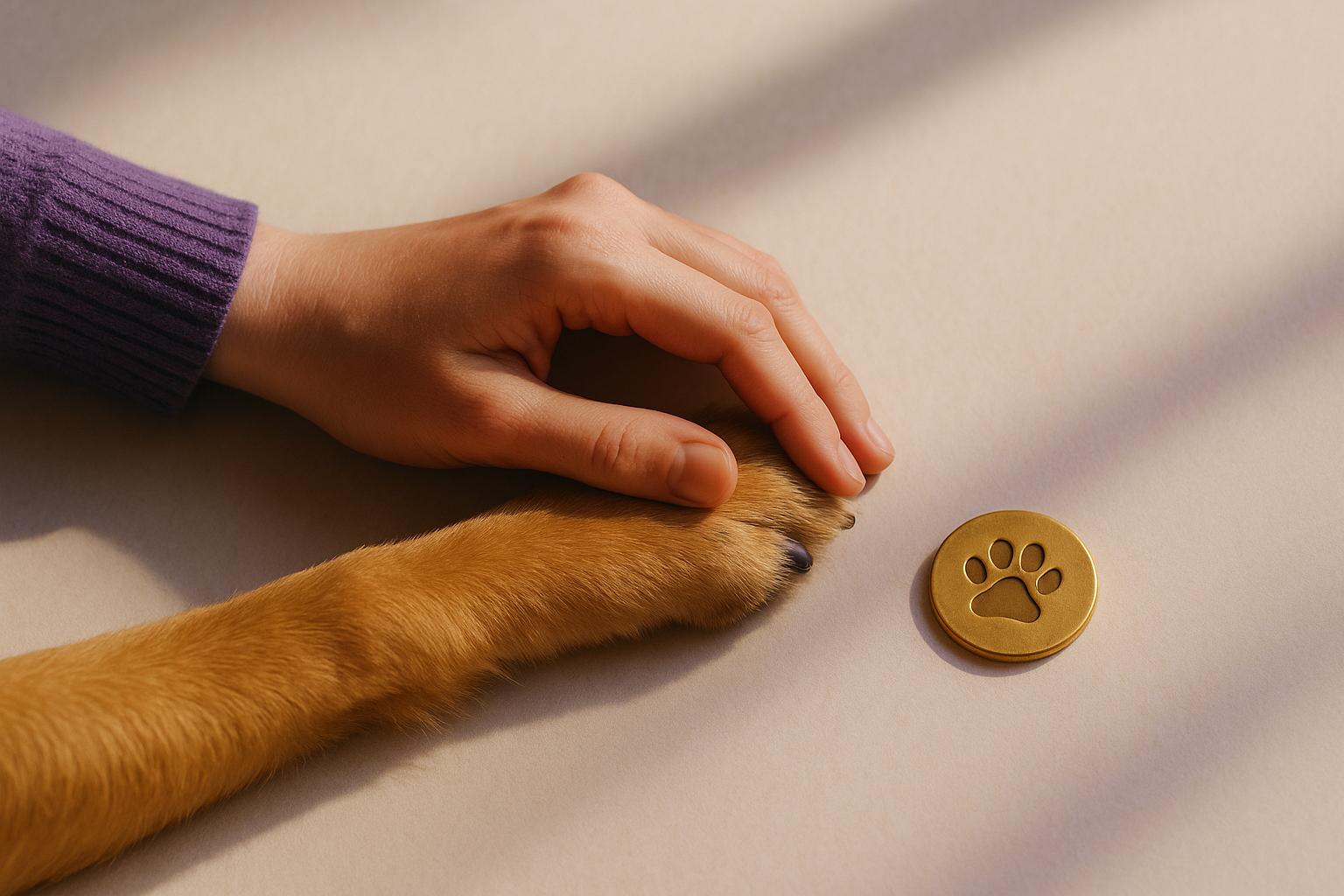
How Our Brains Bond with Pets
The connection you shared with your pet wasn’t just emotional - it had roots deep in your brain’s biology. Every time you pet them, met their gaze, or simply spent time together, your brain created pathways that solidified that bond.
Brain Synchronization During Interactions
When you gazed into your pet’s eyes or ran your hand through their fur, something remarkable was happening in your brain - and theirs. Research published in Advanced Science used EEG (electroencephalography) to measure brain activity in dogs and their owners during interactions. The study found that during mutual eye contact, especially when combined with petting, both human and canine brain activity aligned in real time [1]. Over time, repeated interactions strengthened this brain synchronization [1].
"Every shared walk, every cuddle on the couch, every training session or gaze across the room wasn't just time spent - it was a neurological duet, strengthening your bond day by day."
– Pet Widget [1]
Interestingly, this brain synchronization isn’t limited to neural activity. Other studies show that dogs and humans can also experience heart rate coordination during these moments of connection. This means your body and your pet’s were responding to each other on multiple levels, creating a bond that went beyond simple companionship.
Dr. Laurie Brush, founder of Heaven at Home Pet Hospice, encapsulated the depth of this connection:
"This research provides evidence of the intense love of dogs and the sense of accountability of guardians."
– Dr. Laurie Brush, Heaven at Home Pet Hospice [1]
This shared rhythm between you and your pet laid the groundwork for an even deeper emotional connection, driven by powerful hormonal responses.
Oxytocin and Emotional Connection
These synchronized interactions also primed your brain for the profound sense of loss you experience when that bond is broken.
Oxytocin, often called the "bonding hormone", plays a key role in this process [2]. Every affectionate moment - whether it was a loving glance, a gentle pet, or words of praise - triggered an oxytocin loop that deepened your connection [3][4]. In 2015, animal behaviorist Takefumi Kikusui documented this "oxytocin-gaze positive loop", showing how mutual eye contact between dogs and their owners increased oxytocin levels, encouraging even more affectionate behavior [4].
Even a brief interaction, like 10 minutes of petting, can significantly boost oxytocin levels. This not only creates a feel-good moment but also strengthens emotional memory and builds trust [3][4]. Research also shows that dogs experience a similar oxytocin surge when making eye contact with humans [3].
The hormonal bond created through oxytocin mirrors the attachment seen in parent-child relationships [5]. Your pet often acted as a "secure base" for you - a source of comfort and emotional balance. They helped regulate your emotions and even influenced your brain activity, fostering a sense of safety and calm [1]. It’s why your pet could ease your stress after a tough day or make you feel more at peace just by being near.
Together, the synchronization of brain activity and the shared release of oxytocin created a deep neurological foundation for your bond. Your brain processed the love you felt for your pet in the same way it does for close family members, reinforcing that they weren’t just a companion - they were truly part of your family.
How the Brain Processes Pet Loss
Losing a pet can bring about deep grief, engaging the same brain systems involved in processing the loss of a human loved one. Neuroscience has shown that grief activates areas of the brain responsible for emotions and memories. The connection you share with a pet becomes woven into your emotional life, so its loss can feel as painful as losing a close family member or friend.
How Pet Loss Affects the Brain's Emotional Centers
Research in neuroscience reveals that grief - whether caused by the loss of a pet or a person - engages the brain's emotional and memory-processing regions. When the bond with a pet is broken, it can lead to emotional pain that mirrors the intensity of other major losses. This emotional response can even feel overwhelming at times, as the brain processes the absence of a familiar and comforting presence.
The Link Between Grief and Physical Pain
Grief doesn't just affect your emotions - it can take a toll on your body as well. Many people experience physical symptoms like fatigue, tightness in the chest, headaches, or disrupted sleep. These physical reactions highlight the close connection between emotional and physical health. Adjusting to life without the comforting routines and presence of a pet can make this process especially difficult.
Although understanding these responses may not erase the pain, recognizing that these feelings are a natural part of grieving can offer some reassurance. Acknowledging your emotions is an important step toward finding a sense of healing.
What Influences the Intensity of Pet Loss Grief
The depth of grief you feel after losing a pet isn't just about the loss itself - it's shaped by personal connections and external factors. Your brain's response to loss, the role your pet played, and societal attitudes toward pet grief all play a part in how deeply you feel the pain.
How Your Pet's Role Affects Your Grief
The role your pet had in your life can significantly shape the intensity of your grief. Pets become an integral part of daily routines and emotional well-being, and when those routines are disrupted, the sense of loss can feel overwhelming. Your brain, accustomed to the comfort and companionship your pet provided, struggles to adjust to their absence.
For instance, if your pet was your primary companion - greeting you each morning, staying by your side during work, or offering comfort at the end of a long day - their absence leaves a noticeable void. This is especially true for service animals or emotional support pets, whose presence often helps manage stress or provide stability. Losing them can feel like losing a lifeline.
The circumstances of your pet’s passing also play a role. A sudden loss can leave you reeling, unprepared for the emotional impact. On the other hand, a prolonged illness may lead to anticipatory grief, where you begin mourning even before the final goodbye. However, that doesn’t make the loss any easier. Your attachment style, shaped by your life experiences, also influences how deeply you feel the grief. If your pet provided comfort during tough times or was a source of unconditional support, their loss can feel like losing both a companion and a sense of security.
When Society Dismisses Your Grief
Society’s response to pet loss can either ease or intensify your emotional pain. Unfortunately, dismissive attitudes often lead to what’s known as disenfranchised grief - grief that isn’t openly acknowledged or supported. This lack of validation can make it harder to process your emotions and prolong the healing process.
Many grieving pet owners encounter remarks that downplay their loss, suggesting it’s “just a pet” or that they can easily get another. Such comments can feel invalidating, implying that your grief isn’t justified. Research even shows that social rejection activates brain regions linked to physical pain, compounding the emotional toll.
Workplace policies and societal norms can add to this burden. While bereavement leave is common for the loss of human family members, it’s rarely offered for pet loss, forcing many to suppress their grief. In communities where pets are viewed as property rather than family, the lack of acknowledgment can pressure you to minimize your feelings. The absence of formal mourning rituals, like those for human losses, can leave the grieving process feeling incomplete and unresolved.
Recognizing how societal attitudes amplify your pain is a crucial step in allowing yourself to grieve fully. Understanding these external pressures can help you navigate your emotions and find strategies to process your loss in a healthy way.
sbb-itb-4671d2f
Using Brain Science to Navigate Grief
Grief isn't just an emotional journey - it's a process deeply rooted in how your brain works. Understanding how your brain processes grief can offer guidance as you navigate the loss of a beloved pet. The same neural pathways that made your bond so strong can also help you heal and honor their memory. By leaning into your brain’s natural ability to adapt, you can find a way forward while keeping that connection alive.
Maintaining Connection Through Memory
Your bond with your pet doesn’t end with their physical presence. Your brain holds onto those connections through memory, allowing you to continue feeling close to them. This idea, often referred to as continuing bonds, highlights that grieving doesn’t mean letting go entirely - it’s about transforming the relationship into something new.
Reliving happy memories can actually trigger the same feel-good chemicals your brain released during those moments. Looking at photos, talking about your pet, or visiting places you shared together can bring comfort. This isn’t about being stuck in the past; it’s about weaving their memory into your life in a meaningful way.
Taking intentional steps to honor your pet can also help your brain process the loss. Some people keep a cherished item, like a collar or toy, in a special spot. Others create photo albums or write down their favorite memories. These actions engage parts of your brain that help make sense of emotions, providing structure to the grieving process.
It’s important to find what works for you. If revisiting memories feels comforting and keeps you connected, it can be a healthy part of grief. But if it leaves you feeling overwhelmed or unable to focus on daily life, it might be time to seek additional support.
Physical rituals can also help your brain acknowledge the loss. Planting a tree, creating a memorial space, or donating to an animal shelter in your pet’s name can provide closure. These acts signal to your brain that, while the relationship has changed, the love and connection remain just as meaningful.
Once you’ve begun to integrate these memories, it’s possible to use grief as a stepping stone for personal growth.
Turning Grief into Personal Growth
Just as your brain holds onto cherished memories, it also has the ability to transform pain into growth. Grief can rewire your brain, and while the process is challenging, it can lead to deeper empathy, resilience, and new perspectives. The same neuroplasticity that allowed you to form such a strong bond with your pet enables your brain to adapt during this difficult time.
Reflecting intentionally can help your brain make sense of the loss. Writing about what your pet taught you, how they enriched your life, or what you’re thankful for can activate the areas of your brain responsible for meaning-making. This isn’t about forcing yourself to feel better or rushing through grief - it’s about allowing your mind to integrate the experience into your broader life story. Over time, this reflection can help create new neural pathways that bring clarity and understanding.
Many people find that losing a pet deepens their capacity for compassion. Experiencing profound grief can make you more aware of others’ pain, fostering a greater sense of empathy.
Facing the reality of your pet’s loss can also shift your priorities. It activates areas of your brain linked to existential thought, prompting you to reevaluate what truly matters. You may find yourself focusing more on meaningful relationships and appreciating the small joys of life.
Some channel their grief into purposeful actions that honor their pet’s memory. Volunteering at animal shelters, fostering pets in need, or supporting others who are grieving can create a sense of purpose. These activities don’t replace what you’ve lost, but they can help your brain find meaning in the experience while keeping your pet’s memory alive.
Your brain’s ability to adapt is remarkable. While the pain of loss may never fully disappear, it can transform over time. The sharp sting of grief that once overwhelmed you may soften into a quieter sadness, and memories that once brought tears may eventually bring comfort. This process isn’t about forgetting - it’s about learning to carry the loss while continuing to live fully.
Grief doesn’t follow a straight path. Healing happens gradually, and some days may feel harder than others. Be patient with yourself as your brain adjusts and finds a new way to hold onto love and connection.
Conclusion
The pain of losing a pet isn’t just in your head - it’s a deeply rooted response that affects both your brain and body. The bond you shared with your pet was built through real neural and hormonal connections. When that bond is broken, it’s no wonder the loss feels so profound.
This understanding of the science behind pet loss not only sheds light on your pain but also validates the emotional journey you’re going through. Your grief reflects the depth of the relationship you had, shaped by your pet’s role in your life, the circumstances of their loss, and the support around you.
What’s remarkable is that the same brain processes that created your connection with your pet can also help you heal. Over time, your brain’s ability to adapt can guide you through the grief, allowing you to find meaning and even growth in the experience. Cherishing the memories and honoring your pet in ways that feel right for you can help you work with your brain’s natural healing process.
Grief doesn’t follow a schedule, and healing doesn’t mean letting go of the love you shared. With time, the sharp pain of loss softens into something you can carry alongside your cherished memories. If the weight of grief feels too heavy, reaching out for support - whether from friends, support groups, or professionals - is not a weakness but a courageous step toward healing. Your feelings deserve recognition, kindness, and the space to unfold in their own time.
FAQs
How does understanding the neuroscience of pet loss help with grief?
When you lose a pet, the grief you feel isn’t just emotional - it’s deeply tied to how your brain processes relationships and attachments. The same parts of the brain that react to losing a close human companion are triggered when a pet passes away. This shows just how important these bonds truly are.
Understanding the role of hormones like oxytocin, often called the "bonding hormone", and the neural pathways involved in attachment can shed light on why the loss feels so overwhelming. Recognizing this connection can help you validate your feelings and take steps toward healing in a meaningful way.
Why is grief over losing a pet often dismissed, and how can I honor my emotions?
Grieving the loss of a pet is often underestimated, as society tends to downplay the significance of our relationships with animals. This can leave those mourning a pet feeling isolated or as though their pain isn’t fully understood.
It’s important to acknowledge that your grief is genuine and deserving of compassion. Reach out to friends, family, or even pet loss support groups who can offer understanding and empathy. Let yourself feel whatever emotions arise - whether that’s shedding tears, cherishing memories, or finding personal ways to honor your pet. Healing looks different for everyone, and it’s perfectly okay to take the time you need to navigate this loss.
How can I honor my pet's memory and cope with their loss?
Honoring the memory of your pet can be a heartfelt way to cope with their loss. You could put together a memory box filled with their favorite toys, collar, or other cherished items. Displaying a framed photo in a special spot or keeping their ashes in a meaningful place can also serve as a comforting tribute.
Other ways to remember them might include writing a letter to express your feelings, planting a tree in their honor, or making a donation to an animal charity in their name. These thoughtful gestures not only keep their memory alive but can also offer a sense of peace and connection as you work through your grief.
Frequently Asked Questions
Is the physical pain I feel after losing my dog actually real, or is it all in my head?
The physical symptoms are genuinely real. Grief activates the same brain regions involved in processing physical pain, which is why chest tightness, fatigue, headaches, and disrupted sleep are common after a dog dies. Your nervous system is responding to the loss of a bond that was built through real neurological and hormonal pathways.
Why do I feel lost without my dog's daily routines more than I expected?
Dogs anchor the structure of your day in ways you may not notice until they're gone — morning walks, feeding times, the weight of them settling near you. Your brain forms strong habit loops around these rituals, so their absence creates a cognitive and emotional void that can feel disorienting even before the deeper grief fully sets in.
Does anticipatory grief before a dog's death make the loss easier when it actually happens?
Anticipatory grief allows some time to process the coming loss and say goodbye intentionally, but it does not replace or reduce the grief that follows. Many people find they grieve twice — once during the illness or decline, and again after the death — because anticipating loss and experiencing it engage different emotional responses.
How do I explain to someone why losing my dog hit me harder than losing some human relationships?
The intensity often comes down to the nature of the bond rather than a hierarchy of love. A dog offers consistent, non-judgmental presence every single day, which builds deep oxytocin-driven attachment and strong habit-based connection. Some human relationships, by contrast, are more intermittent or complicated, so the daily void a dog leaves can feel more acute.
When does grief after losing a dog cross into something that needs professional support?
If grief is making it difficult to function at work, care for yourself, or find any relief after several weeks, that's a meaningful signal to seek support from a counselor who specializes in pet loss rather than waiting it out alone. Prolonged grief can intensify without structure, and reaching out is a practical step, not a sign of weakness.