Losing a pet is deeply painful, often leaving a void that feels impossible to fill. Painting can help you process these emotions by giving them a physical form, allowing you to release and understand your grief. You don’t need to be an artist to start - simple tools like paints, brushes, and a quiet space are enough. By using colors to represent your feelings or creating tributes like memorial paintings, you can honor your pet while navigating your healing journey. This process isn’t about perfection; it’s about finding comfort and creating a lasting connection to your pet’s memory.
Painting Through Grief: Healing After Pet Loss
Use painting after pet loss to express grief, honor your dog, and create a calming ritual with simple projects you can start today.
Guides13 min read
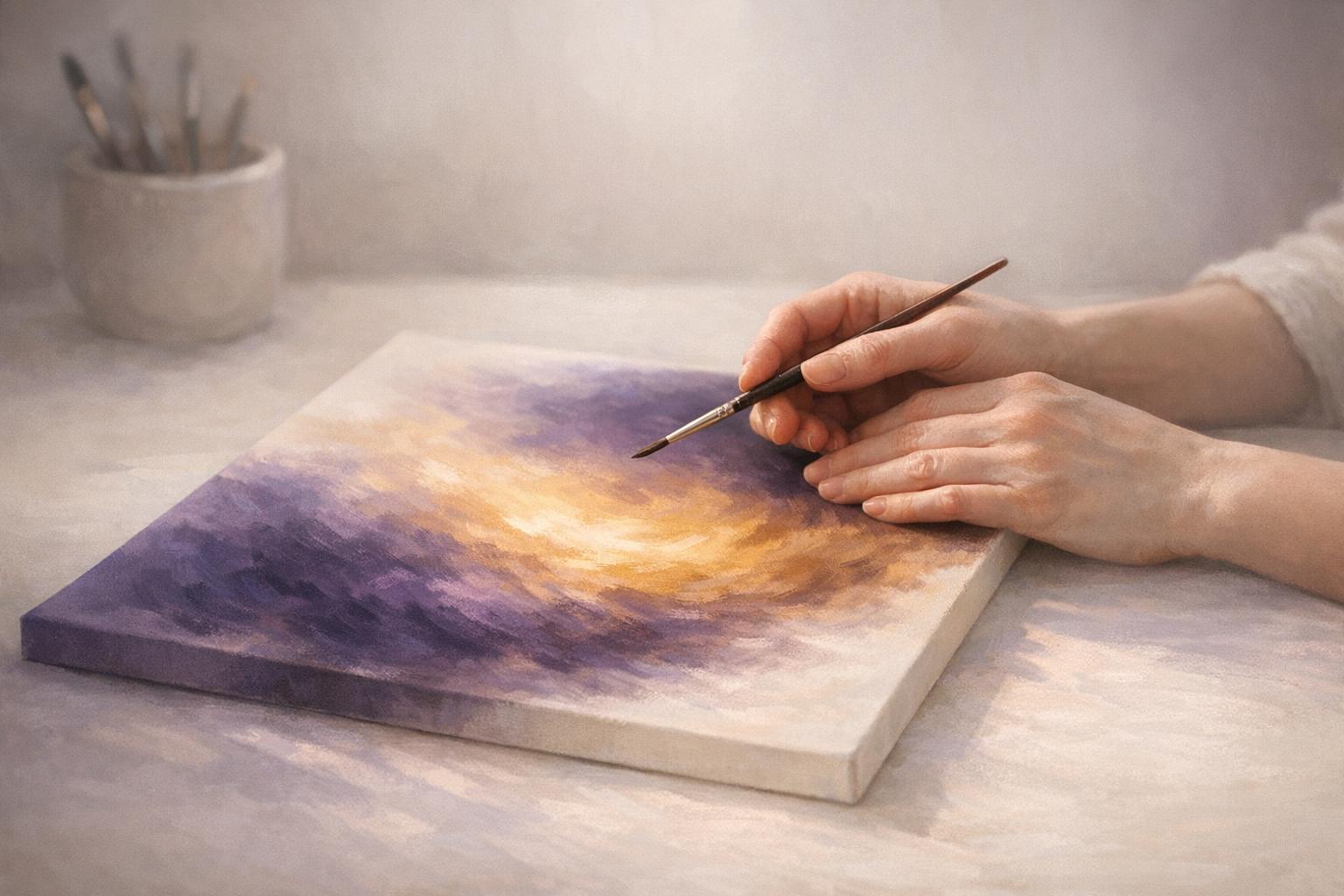
Art therapy and pet loss #art #arttherapist #petloss #griefandloss
Setting Up Your Painting Space and Supplies
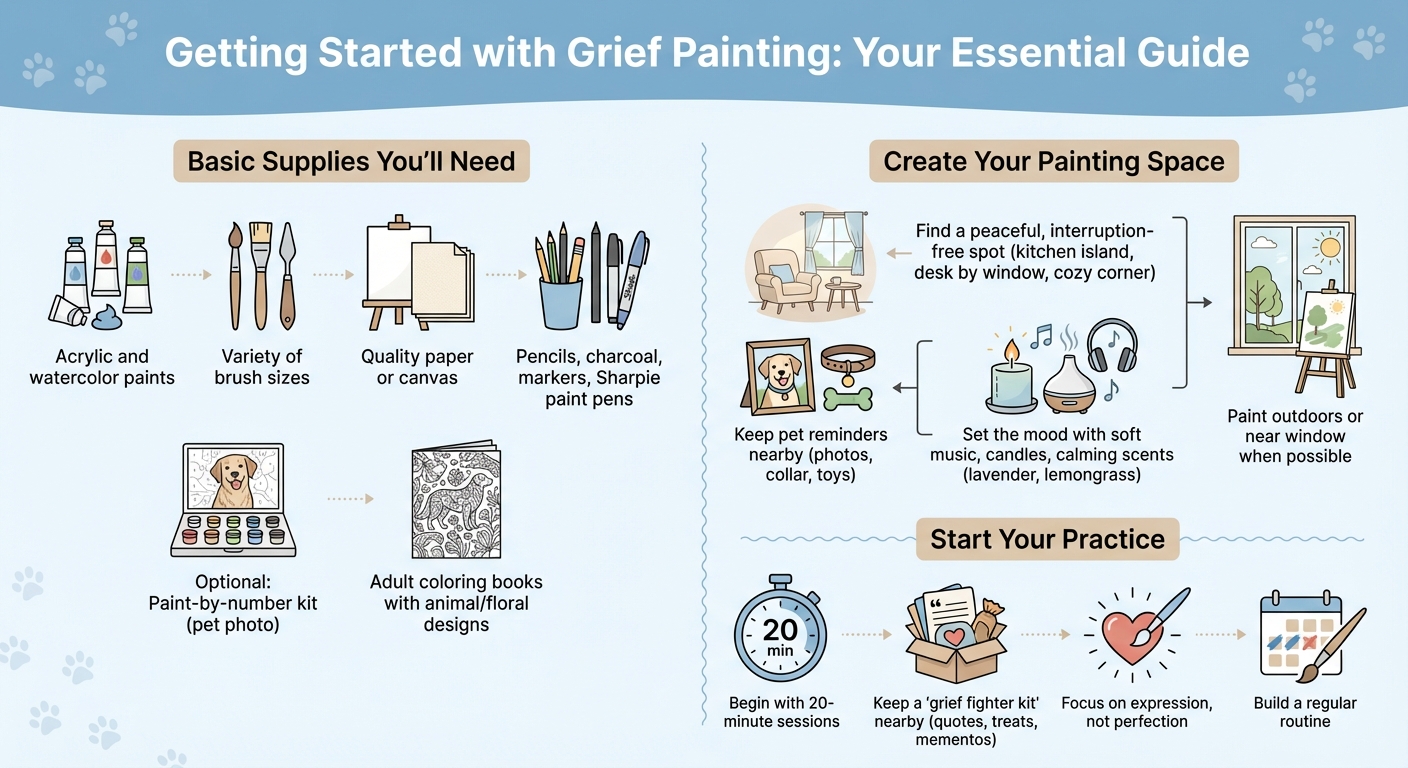
Getting Started with Grief Painting: Essential Supplies and Setup Guide
Basic Painting Supplies for Beginners
You don’t need a fancy studio to start painting - just a few essentials will do. Begin with acrylic and watercolor paints, a variety of brushes, and either quality paper or a canvas. For sketching or adding personal touches like your pet’s name, pencils, charcoal, markers, and Sharpie paint pens are great additions. If staring at a blank canvas feels overwhelming, try a paint-by-number kit, especially one customized with your pet’s photo. Another option? Adult coloring books with animal or floral designs can provide a helpful starting point when you’re not ready to create from scratch. Once you’ve gathered your supplies, focus on setting up a peaceful space to paint.
Creating a Comfortable Painting Area
Find a quiet spot where you can work without interruptions - think a kitchen island, a desk by a sunny window, or even a cozy corner in your living room. Set the mood with soft music, a lit candle, or calming scents like lavender or lemongrass. These little touches can help create a meditative atmosphere. Keep reminders of your pet close by, such as a favorite photo, their collar, or a beloved toy, to inspire your work. If weather permits, consider painting outdoors or near a window to draw energy and inspiration from nature.
"Art therapy is a tool to help provide a healthy distraction and place of serenity and peace apart from the negative emotions associated with grief and loss."
Once your space is ready, ease into the creative process with short, intentional painting sessions.
Starting with Short Painting Sessions
Start small - try painting for just 20 minutes. This approach helps you build a routine without feeling overwhelmed. These shorter sessions also allow you to process your emotions in a way that feels manageable. Keep a “grief fighter kit” nearby, filled with comforting items like a favorite quote, a treat, or a meaningful memento, to help you through any difficult moments. Remember, the goal isn’t to create a flawless piece of art. Instead, it’s about carving out regular moments to express your feelings and let them take shape on the canvas.
Using Painting to Express Your Emotions
Matching Colors to Your Feelings
Grief is a complex mix of emotions - sadness, anger, fear, love, and even relief. When words fail, colors can speak for you. Picture blue for the deep sadness that weighs on your chest, red for the anger sparked by seeing your pet’s empty bed, yellow for the warmth of sunny memories, or gray for the numbness that sometimes takes over. The beauty of this process is that you assign the colors based on what they mean to you.
"Art allows you to create an external expression of things you can't say." - Briana Colton, Art Therapist and Fraser Mental Health Professional [1]
A simple way to start is with body mapping. Draw an outline of a human body and use colors to represent where you feel grief. Maybe heavy blue fills your chest, a band of red circles your forehead, or dull gray settles in your stomach. This exercise helps you see where emotions are physically held, offering a way to begin releasing them [1].
Now, use these color connections to dive into exercises that explore and express your emotions.
Easy Painting Exercises to Begin With
Once you’ve matched colors to feelings, try these simple painting exercises to bring them to life.
Start with a feelings wheel. Draw a circle and divide it into sections, each representing an emotion - sadness, anger, guilt, love, loneliness - and fill them with the colors you’ve chosen. If some emotions feel stronger, make those sections larger [1].
Another option is the "color your heart" method. Draw a large heart and list your emotions. Assign a color to each, then fill the heart with those hues. If sadness feels overwhelming, you might use a lot of blue; if love for your pet still shines brightly, add warm tones like pink or gold. You could also try painting "emotion buckets" - draw several bucket shapes and fill each one with a color level that reflects how much of that emotion you’re carrying today [1].
Looking at Your Finished Paintings
When your painting is complete, take a moment to reflect. The colors on your canvas represent your emotions, holding their weight so you don’t have to carry it all inside [1]. Notice which colors dominate. Are there any unexpected brighter hues? They might hint at hidden hope or cherished memories.
Ask yourself questions like: What was I feeling while creating this? What does this color mean to me right now? [5] You might uncover emotions you hadn’t fully acknowledged before. Studies reveal that around 10–15% of people experience complicated grief, where emotions feel stuck or overwhelming. Engaging in visual arts has been shown to reduce depression and anxiety while boosting self-esteem [6]. Your paintings become a visual diary of your healing journey, helping you recognize patterns and prepare for the emotional waves that come with loss [3].
"Making art helps access those subconscious feelings. When you don't have words, sometimes an image says it better." - Briana Colton, Art Therapist and Fraser Mental Health Professional [1]
Painting Projects for Processing Pet Loss
Painting a Favorite Memory
Creating a painting of a cherished memory can shift your focus toward positive moments, helping to ease feelings of guilt and grief. You don’t need to be an experienced artist to try this - there’s a simple way to make it approachable. Start by choosing a clear, high-contrast photo of your pet that highlights their head and chest, ensuring their eyes and nose are distinctly visible. Print the photo to match the size of your canvas (a 9×12-inch canvas is a great starting point for beginners). Use graphite paper to trace your pet’s features onto the canvas, and then bring it to life with contrasting colors, focusing on the love behind the image rather than aiming for perfection.
For the background, pick a color that contrasts with your pet’s fur - if your pet had dark fur, a bright or light background can make the painting pop. Use a round brush to follow the natural direction of the fur, starting with darker tones and layering lighter shades to add depth. Remember, this isn’t about creating a flawless portrait; it’s about celebrating your pet’s memory with every brushstroke.
Painting Your Grief as Weather
Weather can be a powerful metaphor for grief, reflecting its unpredictable and shifting nature. Rain might symbolize sadness, fog could represent numbness, storms might embody anger, and sunrises can hint at hope beginning to emerge. Painting these scenes allows you to externalize your emotions, making them feel more tangible and easier to process.
One approach is the "Rain and Roots" technique. Paint turbulent weather - like a storm, heavy rain, or fog - on the upper half of your canvas, while the lower half depicts roots, symbolizing your inner strength and resilience. Let your brush move freely, focusing on expressing your feelings rather than achieving technical perfection.
In December 2020, artist and teacher Päivi Eerola created a moving acrylic painting titled If Grief Smoked after losing her dog, Cosmo, who had been her companion for 15 years. She described how the act of painting helped her confront her grief:
"When it started to feel that the grief would scorch my brushes, destroy the paints, and make the studio a smoky place, I knew it was time to paint. Not that it would take the grief away, but force me to deal with it."
- Päivi Eerola, Artist and Teacher [9]
You could even create a series of small weather-themed paintings over time to track how your emotions evolve, recognizing that both highs and lows are part of the healing journey. These expressive exercises can pave the way for a meaningful tribute to your pet.
Creating a Memorial Painting
A memorial painting is a deeply personal way to honor your pet’s memory. Start with a soothing background color, then add your pet’s name and symbols that reflect your unique bond, such as paw prints, hearts, or other meaningful motifs. If you’ve saved your pet’s paw print using ink or salt dough, you can incorporate it into the design for an even more personal touch.
Begin by painting a solid background, then use a contrasting color to write your pet’s name and surround it with symbols that hold special meaning. You might also try intuitive painting, where you let your emotions guide the brush without worrying about technical details. To enhance your tribute, consider adding tactile elements like beads or glitter - these small details can evoke the joy and warmth your pet brought into your life.
Moira Anderson Allen, M.Ed., offers this comforting reminder:
"Remembering the good times that you shared with that pet can help counteract the guilt and grief that come with its loss."
- Moira Anderson Allen, M.Ed. [8]
Creating a memorial painting can feel like a personal ritual, much like a funeral, helping you acknowledge your loss and begin to heal. With nearly 70% of U.S. households owning at least one pet [7], many find that crafting a tangible tribute is a meaningful way to preserve their pet’s legacy and keep their memory alive.
Using Art to Remember Your Pet Over Time
Creating Multiple Paintings to Track Your Healing
Once you've started using art to express your grief, consider creating a series of paintings to reflect how your emotions change over time. Grief is rarely a straight path - it shifts and evolves - and painting can help capture those transitions. One idea is to create a feelings wheel, a circular chart where each segment represents an emotion you’ve experienced during the week. Assign a color to each feeling - perhaps dark blues and grays during the early days of loss, gradually shifting to softer yellows and greens as you begin to heal [11].
Research supports the value of visual art in coping with loss. A 2018 systematic review of 27 studies found that creating art helped adults develop coping skills and preserve their loved one's memory, even if it didn’t immediately ease the pain [2].
Another way to explore your feelings is by painting memory stones. These could include messages, symbols, or images that represent milestones in your grief journey. Placing these stones in a garden or another cherished space creates a tangible timeline of your healing process [1][10]. Over time, these pieces can become part of meaningful traditions that honor your pet's memory.
Adding Paintings to Memorial Rituals
Your artwork can also become an integral part of memorial rituals. For example, you might use a finished portrait or memorial painting as the centerpiece of a "celebration of life" event. On your pet’s birthday or the anniversary of their passing, light a candle beside the painting as a way to honor their memory [3][10]. Even small, daily acts - like greeting the painting each morning - can help maintain your connection to your pet [10].
Another idea is to paint and decorate a wooden box to hold your pet’s collar, tags, favorite toys, or ashes. This keepsake becomes both a piece of art and a deeply personal memorial [8][2]. You could also create a memory map by painting the parks, trails, or other places you shared together, adding notes about your favorite moments. As Moira Anderson Allen, M.Ed., explains:
"Creating such a tribute can be an effective tool to help you cope with grief... and it will also provide you with a loving reminder of that pet in the years to come"
- Moira Anderson Allen, M.Ed. [8]
Connecting Your Art to 'To Lose A Dog'

These creative practices align with the themes explored in To Lose A Dog, a memoir by Isaac H. The book combines heartfelt storytelling with science-based advice and practical tools for navigating pet loss. It highlights how creativity can play a powerful role in emotional healing and preserving the bond with a beloved pet. Just as Isaac H illustrates the healing potential of art, your own projects - whether it’s a feelings wheel or a memory map - can serve as a living tribute to your pet. Through these creative efforts, you honor their legacy while gently moving toward healing.
Conclusion
Painting serves as a heartfelt way to honor your pet's memory while channeling the complex emotions of loss into something tangible. Art therapist Briana Colton explains it beautifully: "The piece you create can be a beautiful memory holder. Making art is an external reminder of the person you lost, and then you feel this person isn't lost to the ether" [1]. Through painting, you create a lasting tribute to your pet's life and the bond you shared.
Grief has a way of resurfacing, often unexpectedly, even years after loss. Painting provides a safe and meaningful outlet to process these emotions, whether it’s on an anniversary or simply a day when memories flood back [4]. Each stroke of the brush becomes an opportunity to feel, remember, and heal in your own time.
Think of painting as an ongoing conversation with your grief. Each piece you create reflects a moment in your healing journey. It doesn't need to be perfect or even recognizable - what matters is giving form to emotions that words can’t always capture.
As highlighted in To Lose A Dog, creative expression not only preserves your pet's legacy but also becomes a tool for healing. The memoir weaves touching stories of Isaac's relationship with his English Bulldog, Franki, alongside research-based insights and practical guidance for navigating the pain of pet loss.
FAQs
How can painting help me heal after losing a pet?
Painting offers a heartfelt way to navigate the grief of losing a cherished pet. Through brushstrokes and color, it becomes possible to express emotions that might feel too overwhelming or complex for words. Whether it’s sadness, anger, or even moments of joy as you recall treasured memories, painting transforms those feelings into something tangible - colors, shapes, and textures that tell your story.
Beyond emotional expression, painting can be incredibly soothing for both the mind and body. Studies have shown that engaging in creative activities like art can lower stress levels and encourage relaxation, easing some of the physical tension that grief often brings. And when the painting is complete, it becomes more than just art - it’s a deeply personal keepsake, a visual tribute to your pet that you can hold onto for years.
If you’re new to painting, don’t worry about creating a masterpiece. Start small with watercolors or acrylics, and carve out an hour or two for your project. This simple practice can become a comforting addition to your self-care routine, offering a peaceful space to heal and honor your pet’s memory.
What are some easy painting activities to help cope with pet loss?
Painting offers a heartfelt way to channel your emotions and work through grief after losing a beloved pet. Here are a few creative activities you can try:
- Emotion Mapping: Start by drawing a large heart or an outline of a figure on a piece of paper or canvas. Then, use colors to represent your feelings - maybe blue for sadness, red for anger, or yellow for joyful memories. Fill in sections of the outline with these colors to create a visual representation of the emotions you're experiencing.
- Free-Form Painting: Take a blank canvas and some paints, and allow your emotions to lead the way. Don’t focus on creating a specific image; instead, let the act of painting become a physical way to express your grief. It’s about the process, not the outcome.
- Memory Collage: Gather a few favorite photos of your pet and arrange them on a poster board. Around the photos, paint colors, patterns, or designs that remind you of the special moments you shared. This creates a unique and personal tribute to your pet.
These activities are simple, require only basic supplies, and can be done in the comfort of your home. They provide a creative and gentle way to process your emotions while honoring the cherished memories of your pet.
How can I create a calming space for grief painting at home?
Creating a peaceful space for grief painting begins with selecting a quiet spot that gets natural light, fostering a calm and reflective atmosphere. Gather the basics: a canvas or sturdy paper, paints, brushes, a cup for water, and some paper towels. Make sure your setup includes a comfortable chair and a table at the right height so you can paint without strain.
Add personal, soothing touches to the space. Soft lighting, a small plant, or even a framed photo of your pet can make the area feel more comforting and reflective. Keeping things organized with labeled bins or trays for your supplies can help maintain a sense of calm and focus. Finally, consider dedicating a specific time for painting. Turning it into a regular practice can make it a meaningful way to honor your pet while navigating your emotions.
Frequently Asked Questions
Do I have to be artistic or talented to use painting for grief?
No artistic skill is required. The goal is emotional release, not a finished product anyone else will judge. Even filling a canvas with colors that represent how you feel that day is a complete and valid act of grief work.
How is painting different from just journaling or talking about my grief?
Words require you to name what you feel before you can express it, but color and mark-making can bypass that step entirely. Art therapists describe this as accessing subconscious emotions—sometimes a smear of gray on canvas surfaces something a conversation never could.
What if painting makes me feel worse instead of better?
Some sessions will intensify grief before easing it, and that is a normal part of the process rather than a sign something is wrong. Keeping sessions short—around 20 minutes—and having comforting items nearby can help you stay grounded; if distress becomes persistent, a pet-loss counselor or support group is worth seeking out alongside any creative practice.
Can I use a painting as part of a memorial ritual, or does it need to be displayed privately?
A painting can anchor almost any ritual you design—a candle lit beside it on an anniversary, a centerpiece at a small celebration of your dog's life, or simply a quiet morning greeting. What matters is that the ritual feels intentional to you, not whether anyone else participates or sees it.
Is pet loss grief really comparable to losing a person, or am I overreacting?
Research consistently shows that the grief response after losing a dog can mirror the intensity of losing a close human relationship, in part because dogs are present for daily routines in ways that many people are not. Feeling devastated is not an overreaction—it reflects the real neurological and emotional bond that formed over years of shared life.
If the grief feels too heavy tonight, you do not have to carry it alone. Free pet loss hotlines and support groups, checked and current.