Learn how therapy can ease pet loss grief, reduce guilt, and help you honor your dog’s memory with calm, practical support.
Guides17 min read
Losing a pet can be as painful as losing a family member, but society often downplays this grief, leaving many feeling isolated. Therapists recognize the deep emotional bond between humans and pets and provide support through techniques like Cognitive Behavioral Therapy (CBT) and pet bereavement counseling. These approaches help individuals process emotions, manage guilt (especially around euthanasia), and find ways to honor their pet’s memory.
Key points:
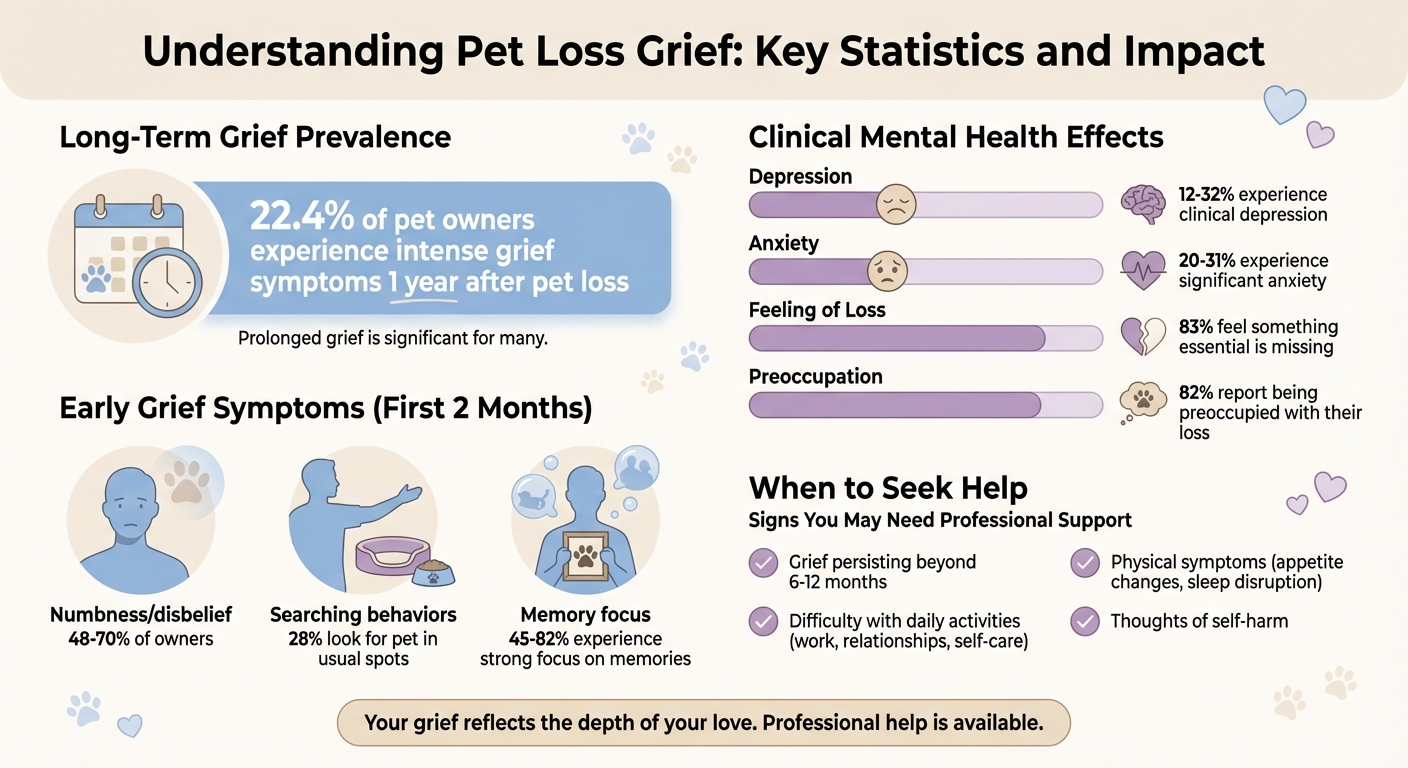
22.4% of pet owners experience intense grief symptoms a year after losing a pet.
Loss impacts mental and physical health, causing depression, anxiety, fatigue, and disrupted routines.
Therapy offers a safe space to grieve, reframe negative thoughts, and develop coping strategies.
Creating memorials, journaling, and connecting with support groups can aid healing.
If grief affects daily life for more than 6–12 months, therapy can help you find peace while honoring your pet’s memory.
Pet Loss Grief Statistics and Mental Health Impact
Why Pet Loss Grief Is So Difficult
The Emotional Weight of Losing a Pet
The connection you share with your pet is deeply personal and meaningful - comparable to human relationships but unique in its own way. Pets offer a rare kind of love: unconditional and free of judgment. They accept you as you are, no matter your income, appearance, or mistakes[3][7]. They witness your most vulnerable moments and become keepers of your secrets because, with them, there's no need to hide your true self[3].
Unlike children who grow up and eventually gain independence, pets remain completely reliant on you for their entire lives. This dependency creates a caregiving bond that can feel irreplaceable[3]. Studies reveal that humans and animals share a social brain and physiological traits that enable genuine companionship and attachment[1]. In fact, one study found that 13 out of 16 participants would prioritize giving a rare, lifesaving medicine to their pet over a non-family human[6].
When your pet passes away, the loss is more than just emotional. You lose the routine and purpose they brought to your life. For many, especially those living alone, a pet might be their closest companion and the primary reason for maintaining daily structure[4]. After a pet's death, between 48% and 70% of owners report feelings of numbness and disbelief, while around 28% experience "searching behaviors", such as looking for their pet in its usual spots[1]. These deep bonds make the societal dismissal of pet grief all the more painful.
How Society Dismisses Pet Grief
One of the hardest parts of losing a pet is how others react to your grief. Comments like "It’s just a dog" or "You can always get another one" can feel dismissive and invalidate the depth of your bond[1][6].
"Disenfranchised grief messages 'actively discount, dismiss, disapprove, discourage, invalidate, and delegitimize the experiences and efforts of grieving.'" - Attig, Author and Researcher[1]
Unlike the loss of a human loved one, pet loss is rarely accompanied by formal mourning rituals like funerals or memorial services. These rituals serve as public acknowledgments of the relationship and the loss, and their absence can leave pet owners feeling as though their grief is invisible[1][6]. Without these outlets, many people hide their pain or avoid discussing their loss, fearing judgment or a lack of empathy[1][2]. For men, societal expectations around emotional expression can make grieving even harder[2].
The lack of social support can amplify the emotional toll. Feeling as though your grief is "too much" or "inappropriate" doesn’t lessen the pain - it just isolates you further. This kind of invalidation can lead to prolonged, complicated grief and even intensify depressive symptoms[1][2].
Physical and Mental Effects of Pet Loss
The grief of losing a pet doesn’t just affect you emotionally - it can take a toll on your body and mind as well. Physically, you might experience loss of appetite, fatigue, and trouble sleeping[5][1]. Your body reacts to the loss much like it would to any other major trauma.
Mentally, the impact can be just as profound. Between 12% and 32% of people report experiencing clinical depression after the death of a pet, while 20% to 31% experience significant anxiety[1]. A staggering 83% of pet owners say they feel as though something essential in their lives is missing, and up to 82% report being preoccupied with their loss[1]. Research shows that six weeks after a pet’s death, grief symptoms like despair, anger, and guilt are often as intense as those experienced two weeks into mourning a human loved one[1].
These reactions aren’t signs of weakness or overreaction - they’re natural responses to losing someone who played a vital role in your life. The depth of your grief reflects the strength of your bond with your pet, and that bond is worth acknowledging and respecting.
Signs You May Need Professional Help
What Prolonged Grief Looks Like
Grieving the loss of a pet is a deeply personal experience, but when that grief lingers far beyond the initial mourning period, it might be time to consider professional help. The intense phase of grief often lasts one to two months, yet studies reveal that about 22.4% of pet owners continue to experience symptoms - such as crying, guilt, depression, and constant rumination over their pet - even a year after their loss[1].
Pay attention to signs that grief is interfering with your daily life, especially if it persists beyond six to twelve months. Struggling at work or school, difficulty maintaining relationships, or neglecting basic self-care are key indicators. Physical symptoms like significant changes in appetite or disrupted sleep patterns can also signal that the grief has taken a toll.
Cognitive shifts are another area to monitor. Feeling persistently numb or detached, having trouble concentrating, or avoiding anything that reminds you of your pet can all be warning signs[8]. Some people even report brief moments of believing they see or hear their deceased pet[8]. If you find yourself turning to alcohol or drugs to cope, or withdrawing from loved ones, it’s a clear sign that reaching out for help could make a difference.
"If the grief of losing your pet is impacting your ability to get through your daily life, Dr. Fenkel recommends seeking professional help - like setting up a therapy session with a licensed mental health professional." - Charlie Health Editorial Team[8]
If you’re experiencing thoughts of self-harm or suicide, seek immediate assistance. Certain factors, like living alone, having had a service animal, or losing your pet suddenly, can increase your risk of complicated grief. Recognizing these persistent symptoms is the first step toward finding therapeutic support that can guide you through the healing process.
How Therapy Helps You Heal
When grief becomes overwhelming, therapy provides a structured path toward healing. Techniques like Cognitive Behavioral Therapy (CBT) are often used to help you challenge and reframe negative thought patterns. Research highlights that addressing "catastrophic misinterpretations" is one of the most effective ways to alleviate grief symptoms[1]. For instance, therapists can help shift thoughts such as "I can’t function without my pet" to more constructive perspectives that honor your loss while fostering resilience.
Therapy can also be invaluable for working through feelings of guilt or regret, especially if you’re grappling with tough decisions surrounding euthanasia or end-of-life care. A therapist can help you navigate the emotional back-and-forth between cherished memories and the pain of loss. If your grief extends beyond a year, they can introduce specialized strategies to address prolonged grief disorder, helping you move forward without minimizing the significance of your bond.
How Therapists Help You Process Pet Loss
Providing a Safe Space to Grieve
Therapy offers a haven where your grief is acknowledged and respected, especially in a society that often pushes people to "move on" too quickly. Maybe your coworkers expect you back at your desk the next day, or friends casually suggest, "Just get another dog." A therapist understands that your relationship with your pet was deeply meaningful - something that can't simply be replaced or dismissed.
In therapy, you’re free to express your feelings without fear of judgment. Whether you cry through the entire session, share cherished memories, or articulate fears that others might not understand, this space allows you to process your emotions fully. This kind of validation can be profoundly healing, especially when the world around you seems to minimize your loss.
"If you've lost your [pet] and you're completely heartbroken, know that that's a sign of how mentally healthy you are. You have the capacity for deep love; it's a good thing."
This supportive environment also helps you explore and address other complicated emotions that often accompany grief.
Working Through Euthanasia Guilt
Therapists also offer guidance for coping with the unique and often overwhelming guilt that comes with euthanasia. Even when you intellectually know it was the right decision, the emotional weight of making that choice can be crushing.
Using techniques like cognitive restructuring, therapists help you challenge thoughts such as "I betrayed my pet" and reframe euthanasia as an act of compassion. For instance, some counselors might suggest writing a letter to your pet, explaining the loving reasons behind your decision. Others might use tools like quality-of-life scales to help you objectively evaluate your pet’s health, reinforcing that your choice was based on their well-being, not selfish motives.
"Write a thank-you card to your deceased pet. Talk about everything you'll miss and what you're most grateful for. Talk about what you regret. Say everything you want to say."
The aim isn’t to erase your guilt but to help you see the broader picture. Therapy helps you remember not just the difficult final moments but also the years of love, care, and happiness you shared with your pet. Beyond addressing guilt, therapists can guide you in finding meaningful ways to honor your pet’s memory.
Creating Meaningful Memorials
Acknowledging the depth of your bond, therapists can help you channel your grief into meaningful acts of remembrance. These rituals can provide a tangible way to celebrate your pet’s life, whether it’s creating a memory box with their collar and favorite toys or writing a heartfelt letter recounting your shared experiences.
Some therapists may use narrative therapy, encouraging you to write poems or stories about your pet. These exercises aren’t just sentimental - they’re therapeutic tools that help you maintain a connection while coming to terms with the loss.
Research indicates that between 45% and 82% of individuals experience a strong focus on memories during the early stages of grief[1]. Creating intentional memorials offers a healthy outlet for those memories, turning them into acts of love and remembrance rather than letting them spiral into unproductive rumination.
What You Gain from Pet Loss Counseling
Recognition of Your Bond with Your Pet
Pet loss counseling offers a space where the unique bond you shared with your pet is acknowledged and celebrated - a bond that society often overlooks or dismisses. Unfortunately, grieving a pet can feel isolating. You might encounter comments like, "It was just an animal", or feel pressured to downplay your emotions. Counseling challenges these dismissive attitudes by affirming your right to grieve and validating the depth of your loss.
Therapists often use psychoeducation to highlight how the human-animal bond holds profound emotional and psychological significance, comparable to human relationships. Whether your pet was your "furry child", closest confidant, or a trusted work partner in the case of service animals, therapy helps you recognize the irreplaceable role they played in your life. This acknowledgment is a key step in making sense of your loss and embracing your identity as a devoted pet parent.
"Because the loss of a pet is not experienced in the same universal way that we experience the loss of a human in our lives, pet parents often feel isolated and misunderstood during their grief."
Counseling doesn’t just validate your feelings - it also helps you move toward a sense of acceptance and peace.
Grief can feel overwhelming, but therapy provides tools to help you process it. For example, Cognitive Behavioral Therapy (CBT) can help reframe negative thoughts about your loss, which research has shown to significantly ease grief symptoms[1]. Acceptance and Commitment Therapy (ACT) takes a different approach, encouraging you to embrace your emotions rather than resist them. This allows you to focus on actions and values that bring meaning to your life.
The goal isn’t to forget your pet or "move on." Instead, therapy helps you integrate their memory into your daily life in a way that feels comforting rather than painful. With professional guidance, you can develop coping strategies that not only support your emotional well-being but also honor the special connection you shared with your pet.
Overcoming the grief of losing a pet: a conversation with Annette Scanlon
Combining Therapy with Self-Care
Therapy provides guidance for healing, while self-care keeps that healing on track. A therapist helps you navigate complex emotions like guilt or trauma, but it’s your daily self-care habits that create the emotional and physical foundation you need to truly move forward. Think of therapy as the map and self-care as the fuel that keeps you on the journey.
The emotional toll of losing a pet can quickly drain your energy. Skipping basic self-care can make therapy less effective. Simple actions like regular exercise can naturally lift your mood, while activities like yoga can help release the physical tension that often accompanies grief. Incorporating these practices into your daily routine helps reinforce the progress you make in therapy.
Daily Coping Strategies
Self-care doesn’t have to be elaborate - small, manageable steps can make a big difference. Your therapist can help you identify personal strategies that work for you. For example, journaling can be a powerful tool. Some therapists suggest writing a “thank-you card” to your pet, expressing gratitude, sharing regrets, and saying the things you didn’t get the chance to say.
Creating memorials can also be a meaningful way to process your grief. You might plant a tree, create a shadow box with your pet’s collar and tags, or put together a scrapbook filled with photos and memories. These rituals provide structure and a way to honor your pet’s life. If you have other pets, maintaining their care routines can offer daily structure and comfort.
When it comes to sorting through your pet’s belongings, take your time - there’s no set timeline for this process. During the early stages of grief, which often last one to two months [1], even basic self-care like eating and showering can feel overwhelming. Using a simple checklist can help you stay on top of these essentials and avoid physical burnout. Beyond personal routines, connecting with others who understand your loss can provide additional comfort and support.
Finding Others Who Understand
Grieving a pet can feel isolating, especially when others may not fully understand the depth of your loss. Seeking out people who share your experience can make a huge difference. Online pet loss forums or local animal shelter groups can connect you with communities that truly value the bond you had with your pet. These spaces can help counter the sting of dismissive comments like, “It was just a pet.”
Many veterinary schools offer pet loss hotlines, and the ASPCA Pet Loss Hotline is another resource for specialized support. For older adults, volunteering at animal shelters or rescue organizations can help fill the void left by a lost companion while also providing a sense of purpose. Being around people who recognize the human–animal connection can help combat disenfranchised grief - the feeling that your loss isn’t fully acknowledged by society.
"Your counselor can also help you find effective outlets to turn to outside of the therapy room... These practices will support your self-care efforts, allowing you to channel and release any heavy emotions."
Finding the right resources can make a world of difference when dealing with the grief of losing a beloved pet. Just as therapy equips us with tools to process emotions, these resources provide practical help and a sense of connection outside the counseling room. They complement the therapeutic approaches mentioned earlier by offering both personal insights and community-based support.
To Lose A Dog by Isaac H is a heartfelt memoir that combines a personal story with practical advice for coping with pet loss. It shares the touching bond between Isaac and his English Bulldog, Franki, while weaving in science-backed insights about the human–animal connection. The book also offers actionable steps for managing grief, making it more than just a self-help guide. It’s a source of validation for anyone who has encountered the dismissive "it was just a pet" sentiment.
The hardcover edition is available for pre-order at $22 and includes access to a private grief support community. The book is set to ship in the first quarter of 2026. For more details, visit toloseadog.com.
In addition to memoirs like this, there are numerous support groups and hotlines that provide immediate and compassionate help.
Support Groups and Online Communities
Connecting with others who understand your loss can be incredibly healing. Several national organizations offer free or affordable support options. For example, the Association for Pet Loss and Bereavement (APLB) has been helping people since 1999 with resources like live chat rooms and video support groups, all accessible through its free Bronze membership. This membership also includes helpful self-care tips.
If you need immediate support, the following hotlines are available:
Many local groups now offer virtual support, making it easier to find help no matter where you are. For instance, BirchBark Foundation provides free Zoom-based group and private sessions for California residents, while Rainbow Bridge offers a pet loss support chat room and hosts virtual candle ceremonies to honor pets who have passed [11].
"Losing an animal companion can be an isolating experience and one that is not well understood."
For further assistance, Chance's Spot serves as a global directory to help locate local support groups and services. Additionally, the Argus Institute offers free grief counseling specifically for those facing end-of-life decisions for their pets [11]. These community-driven resources continue to build on the professional help discussed earlier, ensuring that no one has to face their grief alone.
Conclusion
Losing a pet is one of the hardest experiences to endure. Seeking professional help during this time not only acknowledges the depth of your grief but also validates the bond you shared with your pet - a connection that society often overlooks. Therapists use approaches like Cognitive Behavioral Therapy to help shift overwhelming feelings of guilt into compassion, reframing difficult decisions, such as euthanasia, as acts of love rather than failure.
Therapy offers a way to navigate the healing process, not by erasing your loss, but by helping you weave your pet's memory into your life in a meaningful way. As Beth Levine, LCSW, so beautifully puts it:
"Grief doesn't mean forgetting. It means learning to live with love that has nowhere to go" [12].
Healing takes time and patience. While the most intense grief typically subsides within one to two months, studies show that 22.4% of people still experience symptoms of grief a year later [1].
In addition to therapy, self-care plays a crucial role in honoring your pet's memory and supporting your recovery. Sticking to daily routines, creating heartfelt memorials, and connecting with others who understand your loss can offer comfort and foster healing. Whether through therapy, support hotlines, or books like To Lose A Dog, you’re reminded that you don’t have to face this journey alone.
Above all, know that the depth of your grief reflects the depth of your love. The pain you feel is a testament to the bond you shared. With time, support, and care, you can find a way to carry your pet’s memory forward while allowing yourself to heal and, perhaps one day, open your heart again.
FAQs
How can therapy help me deal with the guilt of putting my pet to sleep?
Therapy provides a supportive and understanding environment to navigate the guilt that often accompanies the decision to euthanize a cherished pet. A therapist can help you recognize that these feelings are a natural part of grieving, while also guiding you to see your choice through a lens of compassion and your pet’s quality of life.
Grief-focused therapists frequently use evidence-based techniques, such as cognitive-behavioral therapy (CBT), to help shift thoughts like “I should have done more” into more compassionate and balanced perspectives. For instance, they may help you focus on the care and love you gave your pet throughout their life. Therapists might also introduce coping tools like mindful breathing, journaling, or even creating a memorial to honor your pet’s memory and process your emotions. If you’re feeling isolated in your grief, they can connect you with pet-loss support groups or other resources to help you feel less alone.
In addition to therapy, reading personal accounts like To Lose A Dog can offer relatable experiences and practical advice for coping with loss. Combining professional guidance with such resources can provide comfort and help you move toward healing.
What are some meaningful ways to remember my pet?
Honoring your pet's memory in a heartfelt way can bring comfort and help you celebrate the unique bond you shared. Many therapists suggest creating something tangible or symbolic as a way to stay connected and find peace.
You might consider planting a tree or garden as a living tribute, assembling a photo book, or commissioning custom artwork. Keeping a cherished item, like their collar or a paw print, can also serve as a touching reminder. Some people set up a small memorial space at home with photos, toys, or even a candle - offering a quiet place for reflection. If you're looking to turn your grief into action, volunteering at an animal shelter or donating in your pet's name can be a meaningful way to honor their legacy.
Other ideas include writing a letter to your pet, sharing cherished stories, or creating a digital tribute like a blog or slideshow. These acts not only help process emotions but also keep their memory alive. If you're seeking further guidance, the memoir “To Lose A Dog” provides thoughtful advice and touching insights to support you through this journey.
How can I tell if I need a therapist to cope with the loss of my pet?
Grieving the loss of a pet is an intensely personal experience, and feeling sadness is completely natural. But if your grief begins to interfere with your daily life, it might be time to consider reaching out for professional help. Some signs to watch for include persistent feelings of hopelessness, intense anxiety, trouble sleeping or eating that lasts for weeks, withdrawing from activities you once enjoyed, or having thoughts of self-harm. If the pain feels unbearable or seems to intensify instead of easing with time, a therapist can provide the support and tools you need to work through it.
Grief counselors or therapists with experience in loss can guide you in processing your emotions, teaching effective coping strategies, and addressing feelings like depression or anxiety that often accompany grief. If you're uncertain about taking that step, reaching out to a licensed counselor or contacting a crisis hotline can offer immediate support. Seeking help isn’t a sign of weakness - it’s a courageous step toward healing, and professional guidance can make a real difference in finding peace after loss.
Frequently Asked Questions
How long does grief after losing a dog usually last?
The most intense phase typically subsides within one to two months, but research shows that roughly 22% of pet owners still experience significant grief symptoms a full year after the loss. How long it lasts depends on the depth of the bond, your living situation, and whether you have social support — factors that vary widely from person to person.
Is it normal to feel physical symptoms like exhaustion or not eating after a dog dies?
Yes — the body responds to pet loss much like it does to any major trauma, making fatigue, disrupted sleep, and changes in appetite genuinely common reactions. These aren't signs of weakness; they reflect how deeply your nervous system registers the loss of a daily companion and caregiver relationship.
What kind of therapist should I look for after losing a pet?
Look for a licensed mental health professional — such as a licensed counselor, psychologist, or licensed clinical social worker — who has specific experience with grief or bereavement, ideally pet loss. Veterinary school pet loss hotlines (such as those at Cornell or Washington State University) can also connect you with trained counselors who understand the human-animal bond specifically.
Why do I feel like I'm being dramatic for grieving my dog this much?
That feeling usually comes from "disenfranchised grief" — the way society implicitly signals that pet loss isn't serious bereavement, leaving owners without the rituals or acknowledgment that help people heal after losing a human. Research confirms the human-animal bond activates the same attachment systems as close human relationships, so the pain is neurologically and emotionally real, not an overreaction.
Can I attend pet loss support groups even if I'm not in crisis?
Absolutely — support groups are not reserved for people in acute distress; many people join simply because they want to be understood by others who share the same kind of bond with a dog. Organizations like the Association for Pet Loss and Bereavement offer free virtual options, making it easy to participate at whatever pace feels right.
Reserve the paperback at the pre-order price, with clear shipping and cancellation terms.
Pre-order price: $24.99 (save $5 off retail price)
First copies out of the print run, estimated to ship December 2026, shipped directly to you
Email updates on the book's progress until it reaches you
$24.99$29.99
Save $5
Charged today · Cancel any time before it ships
US shipping is $4.90. Other countries are calculated at checkout.
Estimated to ship December 2026US shipping is $4.90. Other countries are calculated at checkout.
Not today?
If the timing is wrong, or you are buying for someone who is not ready yet, leave your email. I will write once, when copies start shipping, and that is the only time you will hear from me.