I Can't Stop Crying Over My Dog - Here's Why That's Completely Normal
Grief after losing a dog can feel crushing and isolating. Learn why it hurts so much, what’s normal, and how to cope with care.
Guides11 min read
Losing a dog is heartbreaking. It’s not “just a pet” - they’re family, offering unconditional love and companionship. Grieving for them is natural, and the pain you feel is valid. From emotional waves triggered by daily reminders to physical symptoms like fatigue, pet loss impacts both your heart and body. Society often dismisses this grief, calling it “disenfranchised grief,” which can make healing harder. But crying, feeling lost, or struggling with routines are all normal parts of this process.
Key Points to Remember:
Grief stages (denial, anger, bargaining, depression, acceptance) are unpredictable and unique to each person.
Crying is a healthy way to process loss and reflects the bond you shared.
Losing a dog disrupts routines, emotional balance, and even physical well-being.
Society’s lack of recognition for pet loss doesn’t diminish the depth of your pain.
To cope, try journaling, connecting with others who understand, or creating a small memorial for your dog. It’s okay to take time to adjust and honor their memory in ways that feel meaningful to you.
Pet loss grief; the pain explained | Sarah Hoggan DVM | TEDxTemecula
The Stages of Grief After Losing a Dog
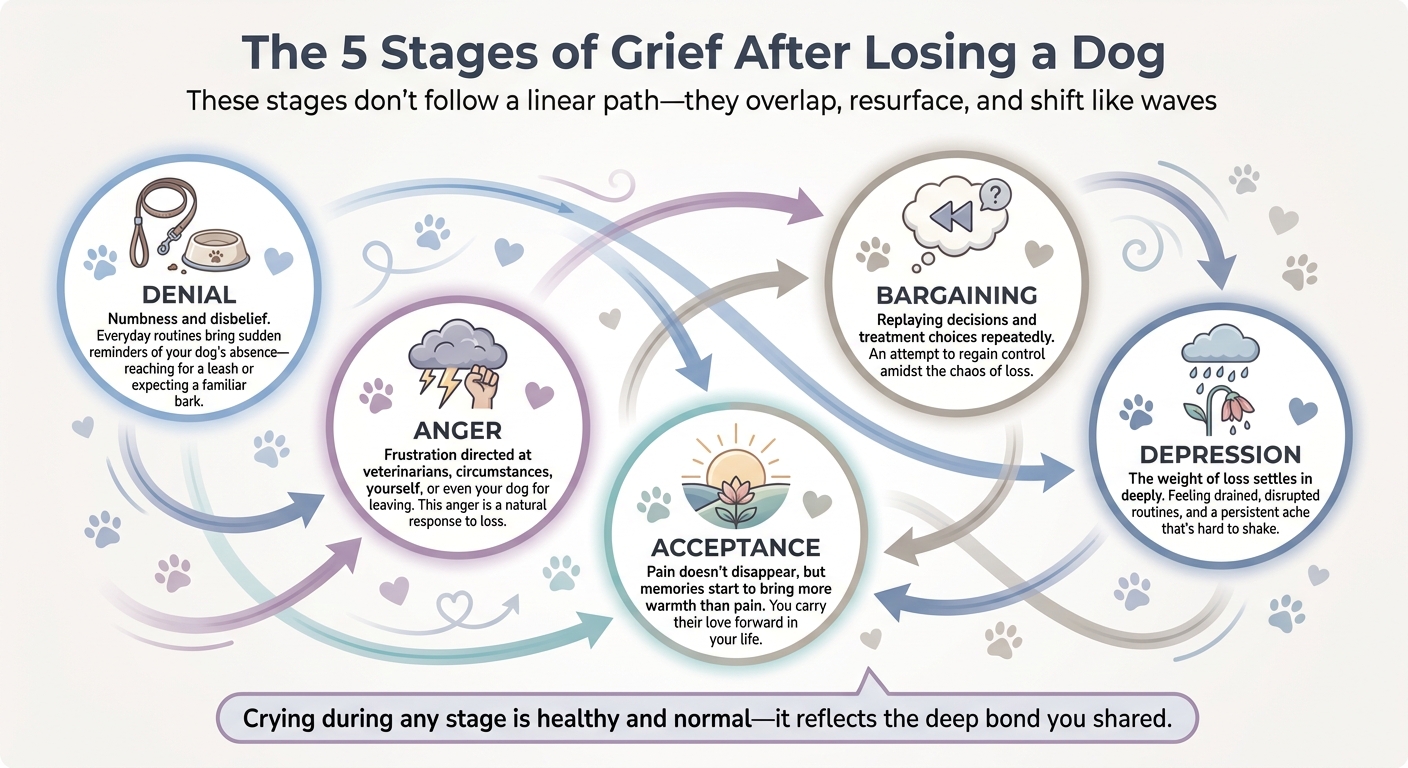
The 5 Stages of Grief After Losing a Dog
Grieving the loss of a dog often involves five overlapping stages: Denial, Anger, Bargaining, Depression, and Acceptance[4][6]. These stages don’t unfold in a neat, linear way. Instead, they can overlap, resurface, or shift unexpectedly - much like waves or changing weather patterns [5][6]. Each stage reflects the unpredictable nature of processing such a profound loss.
Denial: This stage might emerge as a sense of numbness, where everyday routines - like reaching for a leash or expecting a familiar bark - bring sudden reminders of your dog's absence [4][6].
Anger: You might find yourself angry at the veterinarian, at circumstances, or even at yourself for not noticing certain signs. Sometimes, the anger might even be directed at your dog for leaving you [4][6].
Bargaining: This stage often involves replaying decisions, such as treatment choices, over and over in your mind. It’s an attempt to regain some sense of control amidst the chaos of loss [4][6].
Depression: Here, the weight of the loss may settle in deeply. You might feel drained, struggle with disrupted routines, or experience a persistent ache that feels hard to shake [4][5].
Acceptance: Reaching acceptance doesn’t mean the pain disappears. Instead, it’s the point where the memories of your dog start to bring more warmth than pain, allowing you to carry their love forward in your life [5][6].
Why Crying Is Part of Healing
Tears are a natural part of grieving, especially during the depression stage. They’re not a sign of weakness but a reflection of the deep connection you shared with your dog [1]. Crying helps your heart adjust to life without your companion and plays a crucial role in healing [1]. Even weeks or months later, finding yourself in tears is completely normal - it’s simply part of processing the loss [5]. Acknowledging the importance of crying reinforces the idea that your bond with your dog was truly meaningful.
Grief Doesn't Follow a Straight Path
Grief is rarely predictable. One moment, you might feel a sense of peace, only to be caught off guard by anger or sadness the next. Simple triggers - like an empty leash, the sound of another dog, or walking into your home - can bring a fresh wave of pain [6]. These ups and downs are a natural part of grieving, shared by many who have lost a beloved pet. The key is to allow yourself to feel these emotions as they come, paving the way for the practical steps to cope that lie ahead.
Your Emotions Are Valid
Grieving the loss of a pet is not only natural but deeply rooted in both biology and social connection. Understanding this can help you see why your emotions are not only real but entirely justified.
The Research Behind Pet Loss Pain
The pain you're feeling after losing your dog isn't just emotional - it has a biological basis. For over 10,000 years, dogs have evolved alongside humans, developing social behaviors that make them feel like true companions. Studies even show that your brain processes your dog as part of your family. For instance, research on misnaming reveals that people often confuse their dog's name with those of human relatives, showing they occupy the same emotional space in our minds [7].
The physical symptoms you may be experiencing - like sleeplessness, anxiety, or even a literal ache in your chest - are very real. Interacting with your dog releases oxytocin, the "bonding hormone", while lowering stress levels [2][3]. Losing that daily interaction disrupts this natural balance, leaving your nervous system without the comfort their presence once provided [3]. A 2017 case study even documented hormonal imbalances similar to "broken heart syndrome" in individuals grieving a pet's death [8].
"I don't think a pet death causes less grief than a human one." - Amy Sullivan, PsyD, Cleveland Clinic [11]
This biological connection highlights why your grief feels so overwhelming and why societal attitudes toward pet loss can make it even harder to process.
Why Society Gets Pet Grief Wrong
What you're experiencing is often called "disenfranchised grief", a term psychologists use to describe grief that society tends to overlook or dismiss [9][2]. Unlike the loss of a human loved one, losing a pet rarely comes with formal acknowledgment. You likely won't get bereavement leave, receive sympathy cards, or see obituaries marking your loss. This lack of recognition can leave you feeling isolated and even questioning the validity of your pain.
Dismissive remarks like, "It was just a dog", or "You can always get another one", miss the depth of your loss entirely [9][10]. Your dog was part of your daily routine, from morning feedings to evening walks, offering constant companionship and unconditional love without the complexities that human relationships sometimes bring [7][8]. Despite the fact that 70% of U.S. households - around 90.5 million homes - have pets [11], society often fails to fully acknowledge the profound impact of pet loss.
Understanding this disconnect between your personal grief and societal expectations is a step toward addressing the pain and finding ways to cope, which we'll dive into next.
How to Cope with Overwhelming Grief
Dealing with overwhelming grief is never easy, but there are ways to navigate through it. These steps won't erase the pain, but they can offer a sense of structure and comfort during such a difficult time.
Write Down Your Feelings
Putting your emotions into words can be a powerful way to process grief. Journaling allows you to externalize your feelings, creating a space outside yourself to hold your sorrow. Whether you're recounting cherished memories with your dog, expressing things you wish you'd said, or simply describing your emotions, writing can be deeply therapeutic. As grief counselor Alan D. Wolfelt, Ph.D., explains:
"The outward expression of grief, or mourning, is how you externalize those thoughts and feelings and ultimately, integrate them into your life." [14]
You might start by writing a letter to your dog, sharing your favorite memories or describing how you feel. Reflect on moments that made you laugh or times that brought you comfort. If journaling feels overwhelming, consider other forms of expression, like writing a poem, creating an obituary, or making a list of your dog's unique quirks. Another idea is to repurpose the time you used to spend on pet-related routines - like evening walks or feeding time - for writing. This small adjustment can provide a sense of stability when everything else feels uncertain. By doing this, you honor the special role your dog played in your life.
Once you've started to process your feelings privately, you might find it helpful to connect with others who truly understand.
Connect with Others Who Understand
Grief can feel isolating, but sharing your journey with others who have experienced pet loss can help. These individuals won't minimize your feelings or urge you to "move on"; instead, they'll understand that your deep grief reflects the depth of your love. Online pet loss communities and local support groups are great places to start. Many veterinary schools and humane organizations also provide support sessions, often available via Zoom or phone. For instance, the ASPCA Pet Loss Support Line (877-474-3310) and the UC Davis Pet Loss Support Hotline (800-565-1526) offer trained counselors to guide you through this time [13].
If you find that your grief significantly impacts your daily life or self-care for an extended period, consider reaching out to a mental health professional who specializes in the human-animal bond. Connecting with others who understand can help you feel less alone and reinforce the enduring connection you share with your pet.
For additional comfort and guidance, consider learning from others' experiences.
Read "To Lose A Dog" for Support
Hearing someone else's story can provide solace. To Lose A Dog by Isaac H is a heartfelt memoir that combines the story of his English Bulldog, Franki, with practical advice for coping with pet loss. The book delves into the profound bond between humans and animals, offering insights on managing grief and honoring your pet's memory. For $22, you can pre-order the premium hardcover edition, which includes access to a private grief support community and practical tools to help you cope.
Reading about similar experiences can remind you that you're not alone in your grief and that healing, while slow, is possible.
Building a Daily Routine to Support Healing
Losing your dog can leave a noticeable void in your daily life. Simple routines - like morning feedings, evening walks, or bedtime rituals - suddenly feel incomplete. As Funeral.com explains, "Routine is one of the ways our brains feel safe. And when a pet has been your routine - your built-in reason to get up, go outside, keep time - losing them can create wide, echoing gaps that intensify distress." [15] Rebuilding your daily structure, however, can help you navigate this grief while honoring the bond you shared.
Keep Up with Daily Activities
Your mind will naturally seek out those familiar patterns - filling the water bowl, grabbing the leash, or opening the door for a walk. Instead of resisting these moments, replace them with small, mindful actions. For instance, at your dog’s usual feeding time, you could water a plant, brew a cup of tea, or simply step outside and take a few deep breaths. These small acts can help ease the emptiness left by your pet’s absence.
Incorporate movement into your day, even if it’s just for a few minutes at a time. A short walk, some light stretching, or standing in the sunlight can help release the physical tension that grief often brings. If your usual walking route feels too painful, try a different path or keep your walk brief. The goal isn’t to recreate what you had but to establish a rhythm that feels manageable amidst the chaos of loss.
Adding one or two simple routines - like making your bed each morning or playing a favorite song - can provide a sense of stability. As Carly Pollack, LCSW, a trauma and grief therapist, reminds us, "The goal right now is simply to move through the hours with as much self-compassion as possible." [12] These routines, though small, can help ground you as you navigate this challenging time.
Honor Your Dog's Memory
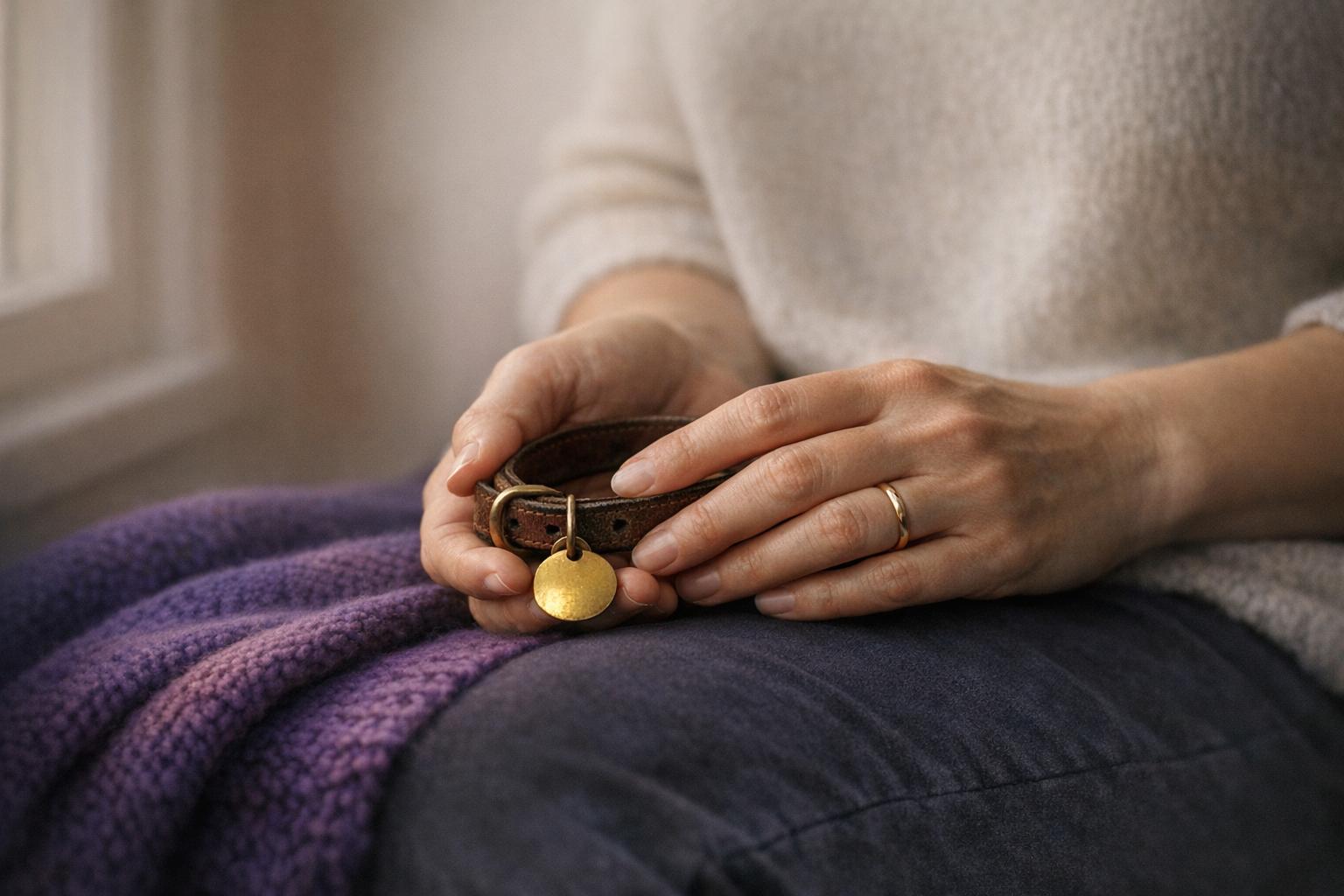
Finding ways to honor your dog’s memory can also bring comfort. Consider creating a small memorial space, such as a shelf or corner with a framed photo, their collar, a candle, or a favorite toy. This gives you a dedicated place to pause and reflect when needed, without feeling overwhelmed by their absence throughout the day.
Living tributes can also be a meaningful addition to your routine. Planting a tree or flower that blooms annually can serve as a seasonal reminder of your connection. Visiting your dog’s favorite park on their birthday or the anniversary of their passing can become a comforting tradition. Some people find solace in wearable keepsakes, like pendants or bracelets designed to hold a small portion of ashes [15]. These items allow you to carry a tangible piece of their memory, offering comfort during difficult moments.
If you have other pets, maintaining their routines can benefit both them and you. Their schedules can act as anchors, providing a sense of purpose and stability, even on the hardest days. This shared structure can be a gentle reminder that life, though changed, continues to move forward.
Conclusion
Your tears stand as a testament to the deep connection you shared with your dog. Dr. Amy Sullivan, a Clinical Health Psychologist at Cleveland Clinic, emphasizes this beautifully:
"We have to have to normalize that this grief is real." [11]
The pain you're experiencing mirrors the unconditional love that enriched your life. It's a natural and meaningful way to honor that bond, allowing yourself to feel and process the loss.
Crying is part of adapting to this new chapter - not by erasing the past or "moving on", but by moving forward with the love you shared still firmly in your heart. The waves of sadness, the unexpected moments of grief, and the ache of longing are all reflections of the role your dog played in your daily life. These emotions are not only normal but also a crucial part of healing.
As discussed earlier, practices like journaling, finding a supportive community, creating a space to honor your pet, and gently re-establishing routines can help you navigate this journey. These actions aren't about diminishing your grief - they're about carrying it with kindness and understanding. Carly Pollack, LCSW, captures this sentiment perfectly:
"The bond of love is never broken - it just changes form." [12]
Acknowledging the emptiness left behind is the first step toward transforming your sorrow into a tribute to the love you shared. The depth of your grief reflects the depth of your connection, and both deserve to be embraced. Let yourself grieve fully, knowing that every tear is a reminder of a relationship that truly mattered.
FAQs
How long is it normal to cry after my dog dies?
It's entirely normal to cry for weeks after losing your dog. Grief doesn't work on a fixed schedule - it’s different for everyone. Allow yourself the time and space to process your emotions. This kind of pain reflects the strong connection you had with your pet, and healing takes as long as it needs.
When should I get professional help for pet grief?
If your grief feels too heavy to manage or seems to linger without improvement - like ongoing distress, trouble handling daily tasks, or strong avoidance behaviors - it could be a sign to reach out for professional help. These symptoms might point to complicated grief, which often needs extra care and guidance to work through effectively.
How can I handle triggers like my dog’s leash or empty bed?
Dealing with reminders like your dog’s leash or their empty bed can be incredibly emotional, but treating yourself with kindness is essential. Turning these painful triggers into heartfelt tributes can make a difference. For instance, you might create a walking route that passes through your dog’s favorite spots, turning those memories into a special ritual. Keepsakes or activities that celebrate your dog’s memory - like framing a favorite photo or planting a tree in their honor - can also bring comfort. It’s completely natural to feel this loss deeply, and taking steps like these can help you navigate the healing process.
Frequently Asked Questions
Why do I feel physical symptoms like chest pain or exhaustion after losing my dog?
The loss disrupts a real neurochemical pattern: daily interaction with your dog released oxytocin and kept stress hormones in check. When that stops abruptly, your nervous system registers the absence as a genuine physiological shock, which can produce fatigue, chest tightness, and disrupted sleep. A 2017 case study documented hormonal changes in bereaved pet owners similar to those seen in 'broken heart syndrome.'
Is it normal to feel angry or even guilty after my dog dies?
Both reactions are common and don't mean you did anything wrong. Anger often surfaces toward the vet, the circumstances, or yourself for decisions you second-guess; guilt typically follows bargaining thoughts like 'what if I'd caught it sooner.' These responses reflect how much control you wished you'd had, not a failure of care.
What do I say to someone who tells me 'it's just a dog' and to get over it?
You don't owe anyone a defense of your grief, but it helps to know the dismissal has a name: psychologists call it disenfranchised grief, meaning a loss society hasn't given formal permission to mourn. The bond you had was neurologically and emotionally equivalent to a close family relationship, and the pain tracks accordingly.
How do I survive the first few weeks when my dog's routines are everywhere in my day?
Rather than avoiding those moments, gently replacing them with a small, intentional act can help ground you — stepping outside at feeding time, or walking a slightly different route. The goal isn't to erase the habit but to give your nervous system a manageable anchor while the rawness settles.
What's the difference between normal dog grief and something I should see a professional about?
Normal grief ebbs and flows and gradually allows you to function, even on hard days. If you're unable to maintain basic self-care, withdrawing from all relationships, or feeling that life has no purpose weeks to months out, that pattern — sometimes called complicated grief — responds well to a counselor familiar with the human-animal bond. Resources like the ASPCA Pet Loss Support Line (877-474-3310) or the UC Davis hotline (800-565-1526) can help you assess where you are.
Reserve the paperback at the pre-order price, with clear shipping and cancellation terms.
Pre-order price: $24.99 (save $5 off retail price)
First copies out of the print run, estimated to ship December 2026, shipped directly to you
Email updates on the book's progress until it reaches you
$24.99$29.99
Save $5
Charged today · Cancel any time before it ships
US shipping is $4.90. Other countries are calculated at checkout.
Estimated to ship December 2026US shipping is $4.90. Other countries are calculated at checkout.
Not today?
If the timing is wrong, or you are buying for someone who is not ready yet, leave your email. I will write once, when copies start shipping, and that is the only time you will hear from me.