How to Comfort Someone Who Lost a Dog (And What Never to Say)
Learn what to say and what not to say when a friend loses a dog, with calm, practical guidance that honors real pet grief.
Guides12 min read
When someone loses a dog, they’re grieving a family member, not just a pet. This loss can feel isolating, especially when society often downplays it. To support someone, focus on:
What to Say: Acknowledge their grief with phrases like, “I’m so sorry for your loss,” or share a fond memory of their dog using the pet’s name.
What to Do: Offer practical help (e.g., bringing meals or running errands), send a sympathy card or gift, or create a meaningful memorial.
What to Avoid: Don’t say dismissive phrases like, “It was just a dog,” or rush their grieving process.
Grief over a dog is deeply personal and often tied to the unique bond they shared. Your empathy and thoughtful actions can make a lasting difference.
Understanding the Grief of Losing a Dog
The Human-Animal Bond and Its Emotional Impact
Losing a dog can be an incredibly painful experience because dogs often hold a place in our lives similar to that of a parent, partner, or close friend. Psychologists call these "attachment figures", and neuroscience backs up just how deep this connection goes. Spending time with your dog triggers the release of oxytocin (the "bonding hormone") while reducing cortisol (the stress hormone). This process, known as "biological co-regulation", means your dog's presence actively helps calm your nervous system [5][6][7].
This bond is reinforced through daily routines - those morning walks, feeding schedules, or the comforting sound of their paws on the floor. These rituals create a sense of stability, and when they suddenly disappear, it leaves a noticeable void in both your mind and body [5][8]. In fact, MRI studies suggest that our brains may even categorize dogs as family members, which might explain why you occasionally mix up your dog's name with a loved one's [8].
"Losing a dog can feel like losing comfort itself, not just losing a living being." - Funeral.com [5]
What makes the human-dog bond so extraordinary is its simplicity. Unlike human relationships, which can be complicated by misunderstandings or expectations, a dog's love is steady and unconditional. Dr. Amy Sullivan, a clinical health psychologist at Cleveland Clinic, highlights this unique connection:
"Our animals become a part of our family. They provide unconditional love and support, which is something that people don't get from a lot of different places" [9].
When this bond is broken, it’s not just the loss of a pet - it’s the loss of a relationship where you felt completely at ease, without the need to filter your emotions [5]. This deep connection explains why the grief of losing a dog can feel so overwhelming and personal.
Common Emotional Reactions to Pet Loss
The grief that follows the loss of a dog often unfolds in ways you might not expect. At first, you may feel shock or numbness, a natural response as your brain tries to shield you from the full weight of the loss. You might even catch yourself expecting to hear their paws or see them in their favorite spot [10][12].
Feelings of anger and guilt are also common. You might find yourself frustrated - at yourself, the situation, or even your veterinarian. If euthanasia was part of the process, many experience what’s called "responsibility grief", replaying "what if" scenarios about timing or decisions around medical care. A 2020 UC Davis study found that pet owners grieving medical-related losses often report heightened feelings of frustration and self-blame [10][11][12].
The absence of your dog’s physical presence can create a profound sense of loneliness. The quietness of a home without their sounds can feel deafening. Deep sadness often follows, showing up as crying, trouble sleeping, loss of appetite, or even withdrawing from social activities [10][12]. Some grievers even report physical symptoms like chest tightness or exhaustion, and others mention sensory experiences like "hearing" phantom paw taps [5][7]. As Two by Two Pet Support explains:
"Deep sadness is your emotional system recalibrating - learning how to love your pet in memory rather than in physical presence" [10].
Grief rarely follows a straight path. It can ebb and flow, triggered by memories, old routines, or small, quiet moments. The role of caretaker or protector fades, leaving behind what some describe as "love that has nowhere to land" [5][7]. This emotional journey reflects the depth of the bond you shared with your dog, making each person’s grief as unique as their relationship.
How to Support Someone Who Has Lost a Pet | Guidance from MedVet Veterinary Social Workers
What to Say: Comforting Words That Help
When someone loses their dog, finding the right words can bring comfort during an incredibly tough time. The goal is to acknowledge their grief, validate their emotions, and show you understand how much their pet meant to them. Here’s how you can offer meaningful support.
Acknowledge Their Loss
Start with simple, heartfelt statements that recognize their pain without trying to fix it. Saying something like, "I'm so sorry for your loss", or "I know how much [Pet's Name] meant to you", shows that you see their grief and respect the bond they had. Using the pet’s name adds a personal touch, reminding them that their pet’s life mattered.
Dr. Erica Irish, a veterinarian, highlights why this is important:
"I would say don't be afraid to bring up good memories. Most of all... use the pet's name. For some owners, losing a pet is like losing a child, so the grief can be just as hard. Saying their name reminds people they existed." [14]
You can also acknowledge their feelings with phrases like, "This must be incredibly painful", or "Your feelings are completely valid." These small but meaningful statements show you’re not dismissing their emotions or trying to rush them through their grief. Once you’ve acknowledged their pain, you can gently remind them of the happy moments they shared with their pet.
Share a Fond Memory
Bringing up a specific memory about their dog can be a beautiful way to honor their pet’s life. Think about something unique to the dog’s personality - maybe how they wagged their tail at the mention of a walk, a silly habit, or a moment that always made people laugh.
For example, you could say, "I’ll never forget how [Pet’s Name] used to..." and share a genuine memory. Or, you might ask, "Do you have a favorite photo of them? I’d love to see it." Another option could be, "I keep thinking about those long walks you two used to take - what a special bond you had."
These shared memories become a way to keep the pet’s spirit alive. As Helen Keller once said:
"What we once enjoyed, we can never lose. All that we love deeply becomes a part of us." [2]
Offer a Listening Ear
Sometimes, the most meaningful support comes from simply being present. As grief researcher Sarah Thompson explains:
"Your friend doesn't need your perfectly crafted condolences. They need you to listen. The most powerful support you can offer... isn't about speaking at all - it's about creating space for their grief to exist without rushing to fix it." [13]
You can reflect their feelings with simple statements like, "It sounds like you’re heartbroken that [Pet’s Name] won’t be there to greet you anymore." Asking open-ended questions such as, "What’s one of your favorite memories of them?" can also encourage them to share their feelings. And sometimes, just sitting quietly together can be enough. Your presence alone can provide reassurance and show that they don’t have to face this loss alone.
Express Continued Support
Grief often deepens after the initial shock wears off, and support from others can fade over time. A thoughtful way to help is by checking in weeks or even months later. Instead of saying, "Let me know if you need anything", offer specific help. For example, "I can bring over dinner tomorrow - does 6:00 work for you?" or "I can help with errands or anything else - just say the word."
Even a quick text like, "How are you holding up today?" or "Thinking of you and [Pet’s Name] today", can mean a lot. You might also mark your calendar for the pet’s birthday or adoption anniversary and send a note or message on that day. These small gestures show that you haven’t forgotten and that their pet’s memory is still honored.
Helpful Actions to Support Someone Grieving a Dog
When someone loses a beloved dog, thoughtful gestures often speak louder than words. The goal is to show care and understanding in ways that feel personal and meaningful, rather than waiting for them to ask for help.
Send a Sympathy Card or Gift
A handwritten card mentioning the dog by name can bring immense comfort. It shows you understand the unique bond they shared. Memorial gifts are another touching way to honor their pet. Consider a framed photo, a clay paw print, or even a custom portrait. For those who keep their pet's ashes, cremation jewelry - like necklaces or bracelets that hold a small amount of ashes - can be a deeply personal keepsake. These items typically range from $40.95 to $165.95 [3].
Another heartfelt gesture is making a donation in the dog's name to a local humane society or animal rescue. Alternatively, planting a tree or perennial flowers in their yard creates a living tribute that grows over time. If you have any photos or videos of their dog they might not have seen, sharing those moments can also be incredibly meaningful.
Offer Practical Help
Grief can make even the simplest tasks feel overwhelming. Instead of saying, "Let me know if you need anything", try offering something specific. For example:
"I can bring over dinner tomorrow at 6:00 PM - would that work for you?"
"I’m heading to the grocery store this afternoon; can I grab anything for you?"
Other helpful gestures include dropping off a home-cooked meal, sending a food delivery gift card, helping with errands, or even walking their other pets. These small acts can ease their daily burdens when they need it most.
Be Present Without Pressuring
Sometimes, just being there is enough. Offer to sit quietly with them, take a walk, or simply share space as they navigate life without their pet. You don’t need to fill the silence or try to "fix" their sadness. As Michele Pich, a veterinary grief counselor, explains:
"It's important to acknowledge that you're OK with their tears, that they don't have to hide their emotions or 'be strong' or avoid the issue." [1]
Create a space where they feel safe to cry, share stories, or simply exist with their grief. If they’re open to it, invite them to look through favorite photos of their dog or reminisce about cherished memories. But if they’re not ready, don’t push. Sometimes, your quiet, understanding presence is the most powerful support you can offer.
What Never to Say or Do: Avoiding Hurtful Mistakes
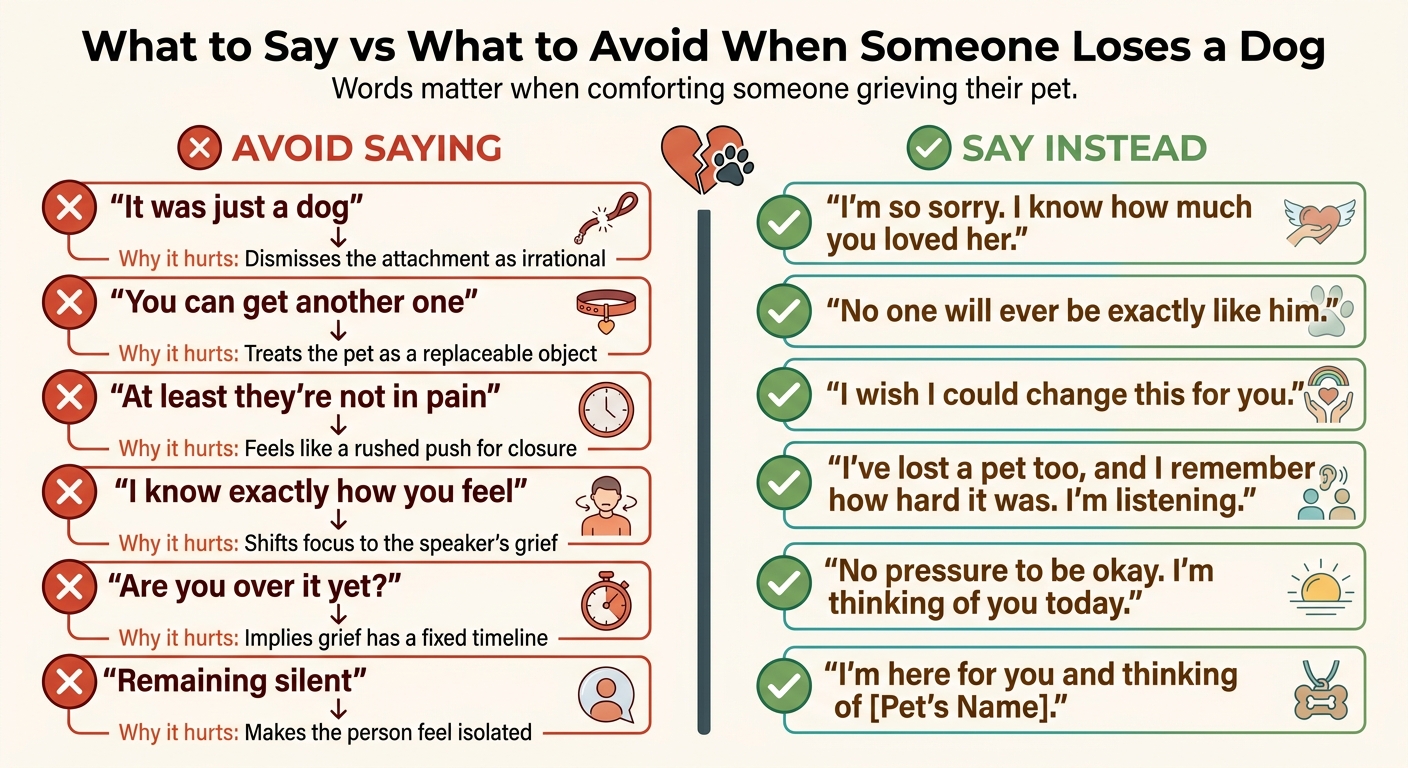
What to Say vs What to Avoid When Someone Loses a Dog
Even when intentions are good, certain words can unintentionally deepen the pain of someone grieving the loss of their dog. Knowing what to avoid - and why - can help you provide comfort in a way that genuinely supports them.
Hurtful Phrases and Why They Cause Pain
Some phrases, though common, can feel dismissive or even hurtful to someone mourning their pet. Here's why they can be problematic:
"It was just a dog": This phrase dismisses the deep emotional bond the owner had with their pet, making their grief seem irrational or unimportant.
"You can get another one": Suggesting a pet is replaceable overlooks the unique connection and memories tied to that specific animal.
"At least they're not in pain": While meant to console, this can come across as rushing the grieving process or minimizing the depth of the loss.
"I know exactly how you feel": This shifts the focus away from the grieving person and onto the speaker's experiences, which can feel invalidating.
Remaining silent: Not saying anything at all can make the grieving person feel isolated, as though their loss isn't acknowledged or important.
Hurtful Phrase
Why It Hurts
Better Alternative
"It was just a dog."
Dismisses the attachment as irrational.
"I'm so sorry. I know how much you loved her."
"You can get another one."
Treats the pet as a replaceable object.
"No one will ever be exactly like him."
"At least they're not in pain."
Feels like a rushed push for closure.
"I wish I could change this for you."
"I know exactly how you feel."
Shifts focus to the speaker's grief.
"I've lost a pet too, and I remember how hard it was. I'm listening."
"Are you over it yet?"
Implies grief has a fixed timeline.
"No pressure to be okay. I'm thinking of you today."
Better Alternatives to Hurtful Phrases
Instead of using phrases that might unintentionally hurt, focus on compassionate and validating language. For example:
"I can't imagine how hard this must be for you": Acknowledges their pain without making assumptions.
"That sounds really hard. I'm here if you want to talk": Keeps the focus on their experience while offering support.
"I can only imagine how heavy that decision was": When discussing euthanasia, this avoids judgment and shows empathy.
By choosing words that validate their feelings, you can offer comfort without pressuring them to move on or feel better before they're ready.
Don't Minimize or Rush Their Grief
Grieving a pet is often considered "disenfranchised grief" - a form of mourning that society doesn't always fully recognize. This makes it even more important not to impose timelines or expectations on their healing process.
Veterinary grief counselor Michele Pich explains:
"Time will change the grieving process, but by saying time is going to heal everything implies there comes a point you feel like the pet never existed. That's not what people are looking for." [1]
Avoid asking questions like, "Are you feeling better yet?" even weeks or months later. Grief doesn’t follow a set timeline. Instead, check in with thoughtful messages like, "I'm thinking of you today. How are you doing?" This shows that their loss is still recognized and that their feelings matter, no matter how much time has passed.
Conclusion
Supporting someone who has lost their dog requires heartfelt empathy and a willingness to be there for them in meaningful ways. The best comfort comes from recognizing the deep connection they had with their pet - use their pet's name, validate their emotions, and acknowledge the depth of their loss.
The words you choose matter deeply. They can either affirm their feelings or unintentionally minimize them. Speak with kindness, honoring their bond and giving them the space to grieve. Share stories about their pet, listen without trying to "fix" their sadness, and avoid suggesting how long their healing should take.
Actions can speak volumes, too. Small gestures, like sending a card or helping create a keepsake or memorial, can show your support in a tangible way. Planting a tree or creating a tribute in their pet's honor can also help preserve their memory.
Most importantly, grief doesn’t follow a set timeline. Stay connected months down the road, remember important dates like anniversaries, and understand that feelings of loss can resurface unexpectedly [4]. Your ongoing care and thoughtful actions will help keep their pet’s memory alive while showing that you’re there for them, no matter how much time has passed.
FAQs
What if I didn’t know the dog well?
When someone loses a pet, even if you didn’t know the dog personally, you can still provide heartfelt support by focusing on the pet owner’s emotions. Simple, empathetic words like, "I’m so sorry for your loss. I know how much your pet meant to you," can go a long way. The most important thing is to be kind, listen attentively, and acknowledge their feelings. Grief is deeply personal, and their emotions are valid, no matter your connection to the pet.
How can I support them weeks later?
To help someone weeks after they've lost their dog, focus on showing consistent empathy and understanding. Reach out with thoughtful messages or small gestures to let them know you're thinking of them. Acknowledge their pain openly and use their dog's name in conversations - it shows you understand the depth of their bond. Avoid downplaying their grief or pressuring them to move on. Instead, just listen and be there for them. Your presence and support can make a big difference during this challenging time.
What should I say after euthanasia?
When someone experiences the loss of a pet, offering kind and understanding words can make a world of difference. Simple phrases like "I'm so sorry for your loss" or "I know how much your pet meant to you" can provide comfort and show that you truly acknowledge their pain. It's important to avoid comments that might unintentionally downplay their grief. Instead, focus on heartfelt and empathetic statements that let them know you're there for them during this tough time.
Frequently Asked Questions
Is it normal to grieve a dog as much as a person?
Yes, and the science supports it. Dogs function as genuine attachment figures, and the oxytocin-driven bond they form with their owners is neurologically similar to bonds between humans. When that relationship ends, the brain registers a real loss, which is why the grief can feel just as destabilizing as losing a close friend or family member.
What do you do when no one around you takes your dog's death seriously?
This experience, sometimes called disenfranchised grief, is one of the most painful parts of losing a dog. Seeking out people who do understand, whether a pet loss support group, a therapist who specializes in bereavement, or a community of other dog owners, can provide the validation that dismissive friends and coworkers simply can't offer.
How do I handle guilt after choosing euthanasia for my dog?
Guilt after euthanasia is extremely common and has its own name in grief research: responsibility grief. It often shows up as replaying the timing or second-guessing the decision. Reframing the act as the final, protective choice you made for a dog who could no longer tell you how much they were suffering can help, as can speaking with a veterinary grief counselor who works with this specific experience regularly.
What are some meaningful memorial ideas that aren't cheesy?
Grounded tributes tend to outlast sentimental ones: commissioning a custom portrait, planting a perennial in your yard, making a donation to a rescue in the dog's name, or creating a small photo book of your favorite moments together. The goal is something that fits the actual personality of your dog and your relationship, not a generic gesture.
When is the right time to reach out to a grieving friend after their dog dies?
Reach out sooner than you think you should, and then again later than most people do. The first days are important, but grief over a dog often peaks once the initial support fades, around two to four weeks in. A specific, low-pressure check-in, like a short text on the dog's adoption anniversary or birthday, can mean more than anything said in the first 48 hours.
Reserve the paperback at the pre-order price, with clear shipping and cancellation terms.
Pre-order price: $24.99 (save $5 off retail price)
First copies out of the print run, estimated to ship December 2026, shipped directly to you
Email updates on the book's progress until it reaches you
$24.99$29.99
Save $5
Charged today · Cancel any time before it ships
US shipping is $4.90. Other countries are calculated at checkout.
Estimated to ship December 2026US shipping is $4.90. Other countries are calculated at checkout.
Not today?
If the timing is wrong, or you are buying for someone who is not ready yet, leave your email. I will write once, when copies start shipping, and that is the only time you will hear from me.