How to Help Your Child Understand the Death of a Pet
Help your child understand pet death with honest words, age-aware guidance, and simple rituals that make grief easier to hold.
Guides14 min read
When a pet dies, it can be a child’s first encounter with loss. Your role is to guide them through this challenging experience in a way that helps them process their emotions and understand grief. Here’s how you can help:
Use clear and honest language: Explain the death using terms like "died" instead of euphemisms like "went to sleep" to avoid confusion.
Tailor explanations by age: Younger children might see death as temporary, while older kids understand its permanence. Adjust your approach depending on their developmental stage.
Validate their emotions: Acknowledge their sadness, anger, or guilt. Avoid minimizing their feelings by saying, "It was just a pet."
Encourage questions: Be patient and answer honestly, even if they ask the same thing multiple times.
Create rituals or memorials: Activities like planting a tree or making a memory box can help them say goodbye and feel connected to their pet’s memory.
Monitor their grief: Watch for signs of prolonged distress, like withdrawal or changes in behavior, and seek professional help if needed.
Your support teaches them that it’s okay to grieve and helps them build healthy coping skills for the future.
How to Explain Pet Loss to Children and What NOT to Do!
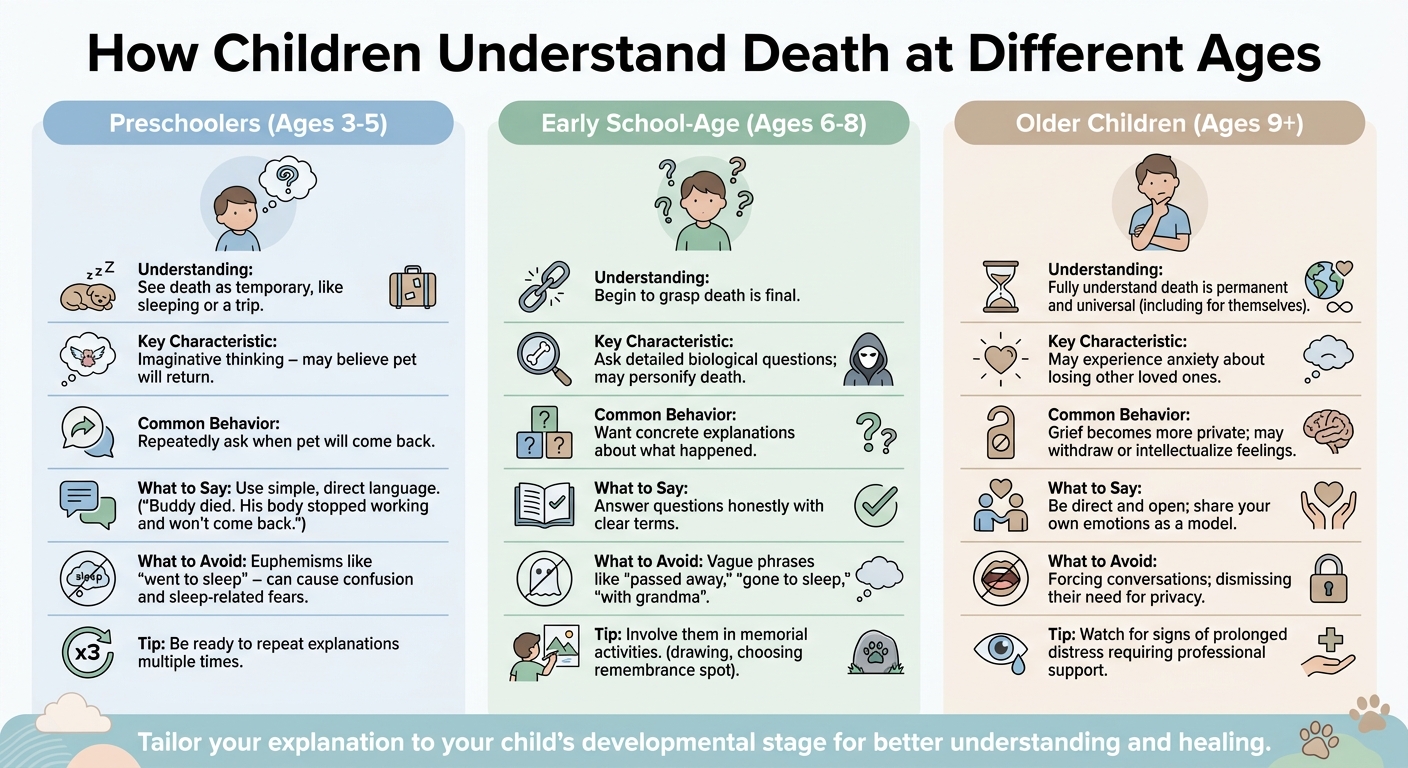
How Children Understand Death at Different Ages
How Children Understand Pet Death by Age Group
When explaining the loss of a pet, it’s important to consider your child’s developmental stage. A child’s age influences how they perceive and process death, so tailoring your explanation to their level of understanding can make a big difference.
Preschoolers (Ages 3-5)
Children in this age group often see death as temporary, similar to sleeping or going on a trip. This is due to their "imaginative thinking", which can lead them to believe that their pet might return if they wish hard enough. They may repeatedly ask when their pet will come back, as they struggle to grasp the permanence of death.
Use simple, straightforward language to explain what happened. For example:
"Buddy died. That means his body stopped working and he won't be coming back. We're very sad because we loved him so much."[2]
Avoid euphemisms like "went to sleep", as these can confuse young children and even cause sleep-related fears. Be ready to repeat your explanation multiple times, as preschoolers often process information by asking the same questions repeatedly.
Early School-Age Children (Ages 6-8)
By this stage, children begin to understand that death is final and may start asking more detailed questions about the biological aspects of dying. They might also personify death, imagining it as a character or force.
"Using euphemisms and vague language often creates fear in children. Phrases like 'Passed away, gone to sleep, he's with grandma, lost their life' do not explain in concrete terms that their loved one has died."[6]
Answer their questions honestly and consider involving them in a memorial activity, like drawing a picture or choosing a special place to remember their pet. These activities can help them process their emotions and feel connected to the memory of their pet.
Older Children (Ages 9+)
Older children understand that death is permanent and universal, including for themselves. This realization can lead to anxiety about losing other loved ones or even fears that death is a punishment. Their grief may become more private, with some withdrawing or intellectualizing their feelings.
When talking to older children, be direct and open. Let them know it’s okay to grieve in their own way, but also make it clear that you’re available to talk when they’re ready. Sharing your own emotions can model healthy ways to express sadness and help them feel less alone in their grief. At the same time, keep an eye out for signs of prolonged distress that might require professional support.
How to Explain Death Honestly and Clearly
The way you talk about a pet's death can significantly impact how a child processes the experience. Young minds are working to grasp an idea that feels both abstract and unsettling, so the words you choose can either help them understand or leave them more confused. Just as with explanations tailored for younger and older children, using clear, straightforward language is crucial.
Use Direct Terms Like 'Died' or 'Death'
It's important to use words like "died" and "death" directly and without hesitation. Offer a simple explanation, such as: "Buddy's body stopped working. He can't breathe, move, or feel anything anymore." This helps establish that death is final. Dr. Alan Wolfelt, a grief counselor and author, emphasizes this point:
"The death of a pet leaves a hole in our hearts, but love does not end. It transforms and lives on in memory, ritual, and shared stories."[7]
If your pet was euthanized, explain it in a way that underscores compassion and medical necessity: "The veterinarian gave them special medicine to stop their suffering and help them die peacefully."[7][8] Be sure to clarify that this is something done only for animals that are very sick and cannot recover. This distinction is important to prevent children from worrying that the same could happen to people they care about.
It's also essential to avoid language that might create confusion or fear.
Avoid Confusing Euphemisms
Phrases like "went to sleep,""lost them," or "went away" can be misleading and even scary for children. Pamela Regan, Ph.D., a research psychologist at California State University, Los Angeles, explains:
"Saying the dog went to sleep could be terrifying to a three-year-old, especially when it comes time for a nap."[10]
Florence Soares-Dabalos, a licensed mental health professional at UC Davis, also points out:
"Children are concrete thinkers and interpret what we say literally. It's ok to use age-appropriate medical terms, but avoid 'put to sleep' since we all sleep."[9]
If you've already used a euphemism, it's important to clarify right away. You could say: "I said 'went to sleep,' but I want to be clear. I mean Buddy died, and his body stopped working. I'm sorry if that was confusing."[8]
Be Prepared to Repeat Your Explanation
Even when you use clear terms, children may need to hear the explanation multiple times. Repeated questions are a sign that they’re working to process the information. Dr. Regan notes:
"We think children don't understand, as they may repeat the same questions over and over, but they're only trying to process the information. They're grappling with a new concept, so patience goes a long way."[10]
Stick to the same simple and consistent language when answering their questions. You can also validate their emotions by saying things like, "I miss them too", or "It's okay to keep asking questions."[11] This reassurance helps them feel supported as they navigate their feelings.
How to Address Your Child's Emotions and Questions
After explaining death, the next step is helping your child process their emotions. By guiding them through this challenging time, you can shape how they understand and cope with grief - both now and in the future.
Validate Their Grief and Emotions
Children need to know that their feelings - no matter how intense or confusing - are completely normal. Sadness, anger, loneliness, frustration, and even guilt are all natural reactions to loss. Avoid minimizing their emotions with phrases like, "It was just a pet." Instead, acknowledge their grief. As UCLA Health explains:
"The feelings of grief you are experiencing are real. Letting your child know how you are feeling is okay - even healthy."[5]
If your child sees you cry or express sadness, it shows them that it's safe to do the same.
Some children might feel angry - at the veterinarian, at you, or even at the pet. Offering an "Anger Jar", where they can write or draw their feelings, can help them release and process those emotions. It's also important not to force conversations before they're ready. Let them know you're available when they want to talk, and gently encourage sharing with open-ended questions like, "What was your favorite thing about your pet?" This approach helps them feel supported without pressure.
Answer Questions Honestly
As your child works through their emotions, they might ask tough questions. Always aim for clear, consistent, and truthful answers. For instance, if they ask, "Where did they go?" share your family's beliefs - whether that's heaven, becoming part of nature, or even admitting, "I don't know." If they ask, "Are you going to die?" reassure them with honesty: "Yes, everyone dies someday, but I plan to be here for a very long time."
Here’s how you might address some common questions:
Common Question
Suggested Honest Answer
"Did they feel pain?"
"The vet gave medicine so they weren't in pain" or "Their body was tired and stopped hurting."
"Is it my fault?"
"No. This was not your fault. You loved [pet] so well."
"Can we get a new pet?"
"Not right now - we want to remember [pet] for a while. Someday we might, and that's okay."
Reassure Them It’s Not Their Fault
Children, especially those in elementary school, often worry that they caused their pet’s death. They might recall moments like forgetting to refill the water bowl, being rough during play, or even having angry thoughts about the pet. This kind of "magical thinking" can lead them to believe they are to blame. It’s crucial to reassure them directly: "No. This was not your fault. You loved [pet] so well."[2]
Help them understand the physical reality of what happened - that the pet’s body stopped working and couldn’t be fixed. This explanation can counter their belief that their actions or thoughts played a role. Encourage them to share any regrets they have. Letting them know it’s okay to feel bad about certain moments can help them move forward. Writing a letter to their pet to say "sorry" or express their love can also be a comforting way to transform guilt into a heartfelt goodbye.
Creating Rituals and Memorials
Helping your child process the loss of a pet often involves more than just talking about their emotions. Encouraging them to create a ritual or memorial can provide a meaningful way to honor their pet’s memory. These activities offer a sense of structure and purpose during a time that can feel overwhelming, helping your child maintain a connection to their pet even after they’ve passed. As Funeral.com explains:
"A pet funeral is simply a structured goodbye. Think of it as a 'container' for love and emotion - a beginning, a middle, and an end - so your child doesn't have to carry the question 'what now?' by themselves." [12]
Plan a Family Memorial or Ritual
Including your child in planning a memorial can help them regain a sense of control. They might choose a favorite photo to display, pick a meaningful song, or decide on a location for a small ceremony - such as your backyard or the pet’s favorite park. During the memorial, family members could share cherished memories, light a candle, or ring a bell to mark the beginning and end of the goodbye. Other thoughtful ideas include planting a tree or starting a memory garden, where your child can help decorate with painted garden stones.
A memory box filled with items like the pet’s collar or favorite toy can also provide comfort. If you have more than one child, small keepsake urns can allow each sibling to have their own special item to remember the pet. For children who prefer something they can carry with them, cremation jewelry - like a locket or bracelet - can serve as a constant reminder of their bond.
Beyond formal rituals, creative activities can offer another outlet for your child to express their feelings and memories.
Encourage Creative Expression
Art and writing can help children process emotions they might not yet be able to put into words. A memory jar is a simple but meaningful project: decorate a jar together, and have your child fill it with slips of paper featuring written or drawn memories of their pet. Older children might prefer writing a letter or poem, creating a photo album, or compiling a video tribute with favorite pictures and clips.
Hands-on projects like drawing, crafting, or decorating a picture frame can also provide comfort, serving as physical reminders of the love they shared with their pet. These creative outlets reinforce that the connection they felt doesn’t disappear, even if their pet is no longer with them.
Books and stories can further help children understand and process their grief in a way that feels approachable.
Use Books or Stories to Help Them Understand
Reading together can open the door to gentle conversations about loss and healing. Books like The Invisible Leash by Patrice Karst explain that an "invisible leash" of love keeps children connected to their pet even after death. Other great options include The Tenth Good Thing About Barney by Judith Viorst, I'll Always Love You by Hans Wilhelm, and The Goodbye Book by Todd Parr. These stories not only normalize feelings of grief but also reassure children that they’re not alone, creating a safe space for questions and shared memories.
How to Provide Support Over Time
Grief doesn’t follow a set timeline, and your child may need ongoing support for months after losing a pet. Staying connected to their emotional needs and keeping communication open can help them process their feelings in a healthy way. This might even be their first experience with loss, making your continued presence and guidance especially important.
Once you’ve helped your child navigate the initial stages of grief, these steps can ensure they feel supported as time goes on.
Model Healthy Emotional Expression
Kids often look to their parents to learn how to handle tough emotions. By openly expressing your own feelings, you show them that it’s okay to feel sad or upset. As KidsHealth Medical Experts explain:
"Showing how you feel and talking about it openly sets an example for kids. You show that it's OK to feel sad when you lose a loved one, to talk about your feelings, and to cry when you feel sad." [1]
Use clear, relatable phrases like, “I feel really sad and miss [pet’s name]” or “It’s okay to feel angry that our pet got sick” [13]. This helps your child name and understand their own emotions. Sharing happy or funny memories about your pet also teaches them that grief isn’t just about sadness - it’s about remembering and celebrating the life of someone you loved.
Inform Teachers or Caregivers
It’s a good idea to let your child’s teacher, coach, or other caregivers know about the loss. They can offer extra understanding and support, especially if your child seems distracted or withdrawn. KidsHealth Medical Experts highlight:
"For kids, losing a pet who offered love and companionship can be much harder than losing a distant relative. You might have to explain that to friends, family members, or others." [1]
Ask teachers to watch for changes in your child’s behavior, like difficulty focusing, sudden shifts in academic performance, or changes in how they interact with friends. Younger school-age children (7-10) might express their sadness through anger or acting out, while teens may hide their emotions behind irritability [13]. Keeping routines steady at school and home can provide much-needed stability during this challenging time.
Monitoring for behavioral changes is just as important as external support.
Watch for Signs of Prolonged Grief
While most children adjust to their loss over several weeks, some may struggle for longer. If grief continues to feel overwhelming and disrupts your child’s daily life for more than a month, it may be time to seek professional help. Dr. Alexandra B. Gibson, a child psychologist at Children’s Mercy, explains:
"If it's been more than a month, and your child's experience of grief is still intense and disrupting their life, talk to your primary care physician. Clinically, that's when we start to be concerned about prolonged grief, trauma and/or PTSD." [4]
Look for warning signs like increased aggression, extreme clinginess, social withdrawal, or regressive behaviors (like acting younger than their age). Physical symptoms - such as frequent headaches, stomach aches, ongoing fatigue, or trouble sleeping - can also signal that your child is struggling [3]. A drop in grades, trouble concentrating, or repeated questions about death may further indicate the need for extra support. If your child expresses self-harm or suicidal thoughts, seek immediate professional intervention. Start by contacting your pediatrician, who can rule out physical causes and connect you with a grief counselor or mental health specialist if needed.
Conclusion
How you talk to your child about the death of a pet can leave a lasting impact on how they understand and cope with loss. As Pet Cremation Place explains, "How you handle that conversation - what words you choose, how honest you are, and how you invite them to grieve - can shape their relationship with loss for the rest of their lives."[2] Since many children encounter loss for the first time at a young age [3], your approach becomes even more important.
Use clear and honest language to help your child process their feelings. Avoid euphemisms and use direct terms like "died" to prevent confusion and build trust [2]. By openly sharing your own emotions, you show them that grief is a normal part of life and that they don’t have to face it alone. This openness not only provides comfort now but also equips your child with tools to handle future losses.
Incorporating rituals and memorials can give your child a meaningful way to say goodbye and honor their pet. Activities like planting a tree, creating a scrapbook, or sharing favorite memories can help shift their focus from the pain of loss to the joy of remembering. Alexandra B. Gibson, PhD, emphasizes this, stating, "With support from adults, children can learn how to both love and grieve well."[4]
Grieving doesn’t follow a set timeline. Your child might need support for weeks or even months. By staying present, acknowledging their emotions, and celebrating the memories of their pet, you help them build resilience and learn how to navigate loss throughout their life.
FAQs
Should my child see the pet’s body or attend the burial/cremation?
When a pet passes away, it's important to approach the situation with honesty while keeping your child's emotional needs in mind. Allowing them to see the pet’s body or be part of the burial or cremation can give them a chance to process their feelings and say a proper goodbye. However, every child is different - consider their age, personality, and emotional readiness before involving them. Open and honest communication, paired with explanations they can understand, will go a long way in helping them navigate this difficult experience.
What if my child won’t talk about it or seems “fine”?
Children often process grief in their own unique ways, and they might not express their feelings right away. To help them, you can start by sharing your own emotions openly. This shows them that it’s okay to talk about how they feel. Make sure to listen without judgment, creating a safe space for them to share when they’re ready.
Sometimes, indirect approaches can be effective too. Activities like creating a tribute together or holding a small ceremony can help them work through their grief in a less direct but meaningful way. Above all, be patient - understanding and expressing emotions can take time for children.
When is it okay to get another pet after one dies?
It’s wise to give your child time to grieve and process the loss of a pet before introducing a new one into the family. This pause allows them to emotionally prepare for the responsibility of bonding with and caring for a new companion. Creating this space for healing helps them work through their feelings about loss and understand the importance of responsibility.
Frequently Asked Questions
How do I explain euthanasia to a young child without scaring them?
Use calm, concrete language that focuses on compassion and relief from suffering—something like, 'The vet gave special medicine to help them stop hurting and die peacefully.' It helps to clarify immediately that this is only done for animals who are very sick and cannot get better, so children don't worry the same could happen to people they love.
My child seems fine after our dog died—should I be worried they're not grieving?
Children often grieve in bursts rather than continuously, and some cope by returning quickly to play or normal routines—this doesn't mean they aren't affected. Watch for delayed signs like sleep changes, clinginess, or questions about death that surface days or weeks later, and keep gentle check-ins open so they know the door to talk is always there.
What's a meaningful memorial idea for a child who is too young to write or make a scrapbook?
Hands-on, sensory activities work well for very young children—decorating a garden stone, pressing their handprint into clay alongside the pet's paw print, or helping plant a flower in the pet's memory gives them something tangible to do with their feelings when words aren't available yet.
How do I handle it if my child asks whether our dog is in heaven?
Share your family's honest beliefs without overpromising specific details you can't confirm—whether that's heaven, becoming part of nature, or simply saying 'I'm not sure, but I know how much we loved them and that doesn't disappear.' Matching your answer to what you actually believe builds trust and prevents confusion later.
At what point should I get a child professional help after a pet dies?
If grief is still significantly disrupting your child's sleep, appetite, schoolwork, or friendships after about a month, that's a reasonable signal to loop in your pediatrician, who can rule out other causes and refer you to a grief counselor experienced with children—pet loss can genuinely trigger prolonged grief or anxiety, especially if it's a child's first encounter with death.
Reserve the paperback at the pre-order price, with clear shipping and cancellation terms.
Pre-order price: $24.99 (save $5 off retail price)
First copies out of the print run, estimated to ship December 2026, shipped directly to you
Email updates on the book's progress until it reaches you
$24.99$29.99
Save $5
Charged today · Cancel any time before it ships
US shipping is $4.90. Other countries are calculated at checkout.
Estimated to ship December 2026US shipping is $4.90. Other countries are calculated at checkout.
Not today?
If the timing is wrong, or you are buying for someone who is not ready yet, leave your email. I will write once, when copies start shipping, and that is the only time you will hear from me.