What to Do When Your Dog Dies: The First 24 Hours Step by Step
What to do when your dog dies at home: confirm the loss, care for the body, contact your vet, and take the next grief steps calmly.
How-to11 min read
When your dog passes away, the first 24 hours can feel overwhelming. Here's a quick guide to help you manage this difficult time:
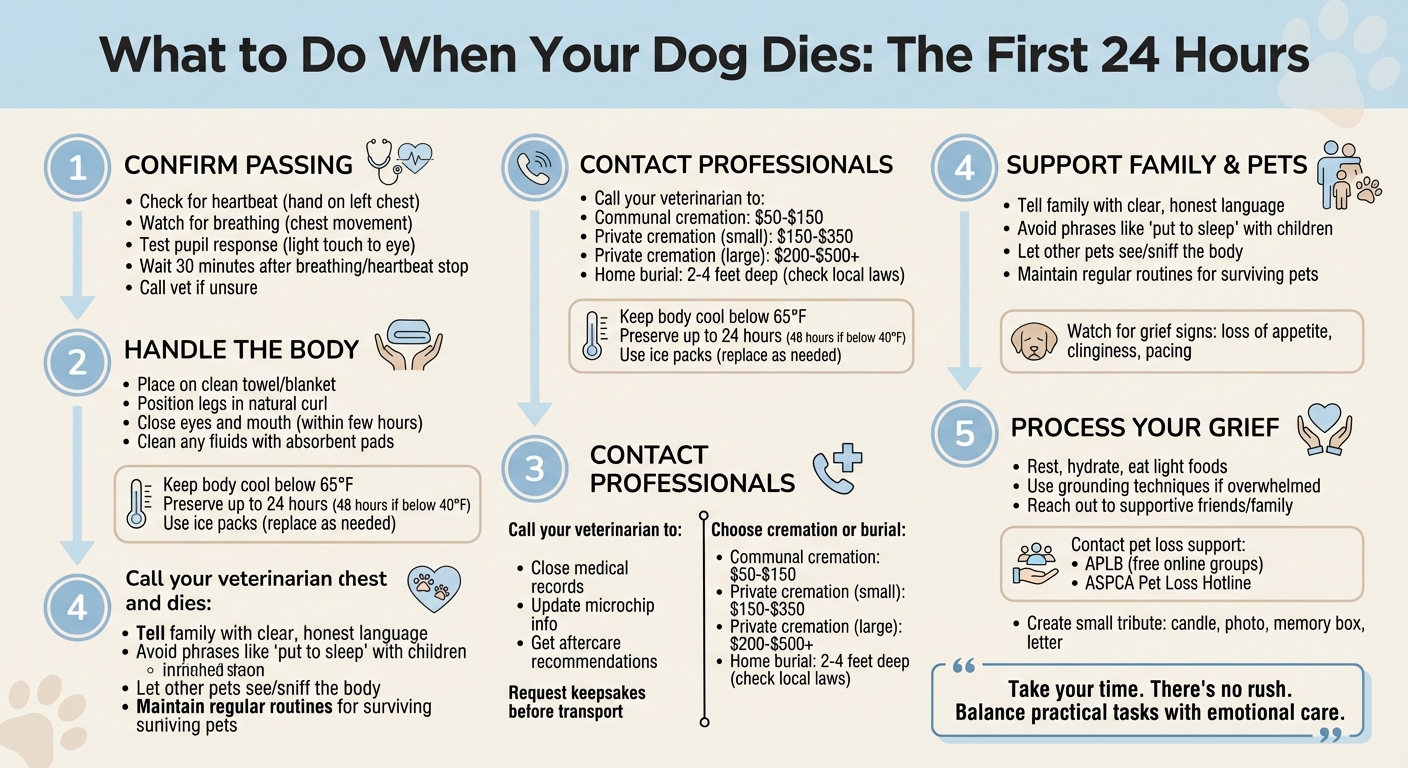
Confirm Passing: Check for a heartbeat, breathing, and pupil response. If unsure, contact a vet for confirmation.
Handle the Body: Place your dog on a clean surface, gently position their body, and clean up any fluids. Cool the body using ice packs or a cool space to preserve it for up to 24 hours.
Contact Professionals: Call your vet to close medical records and arrange aftercare. Decide between cremation or burial and check local regulations for home burial.
Support Family and Pets: Be honest with family members, especially children, and help surviving pets adjust by maintaining routines.
Process Grief: Take time to rest, hydrate, and seek support from friends, family, or pet loss groups. Consider creating a small tribute to honor your dog.
Focus on balancing practical tasks with emotional care. Take your time to say goodbye and seek support as needed.
What to Do When Your Dog Dies: First 24 Hours Guide
What to do when your pet passes at home
Step 1: Confirm Your Dog Has Died
Before making any arrangements, it’s important to confirm that your dog has passed away. Start by checking for vital signs. Place your hand on your dog’s left chest to feel for a heartbeat and watch for any chest movement that indicates breathing. Dr. Leslie Gillette, DVM, advises, "Once breathing and heartbeat have stopped for 30 minutes after a natural death, pet parents can be assured that their dog has passed away" [4].
Physical Signs of Death
The clearest signs of death include the absence of a heartbeat, breathing, and pupil response. You can test for a blink reflex by lightly touching your dog’s eye - if there’s no response, this is a strong indication of death [4]. Other signs include the mouth falling open, loss of bladder or bowel control, and the body cooling as its temperature drops [4][5].
It’s also normal to witness certain involuntary movements like muscle twitching, a final exhale, or reflexive gasping (known as "agonal breathing"). Dr. Lauren Barrow explains, "Although they may be hard for you to witness, these [muscle contractions and agonal breathing] are all part of a natural series of events" [6]. These actions occur after consciousness has ended and do not mean your dog is still alive or in pain.
When to Call Your Veterinarian
If you’re unsure whether your dog has passed, it’s best to contact your veterinarian or an emergency clinic immediately. You don’t need to know exactly what to say - simply explain, "My pet may have died. I’m not sure what to do" [1]. The veterinary team can guide you through identifying physical signs over the phone.
Professional confirmation is especially helpful if your dog was elderly or had been battling an illness. A veterinarian can confirm death with a brief exam and assist with planning the next steps for aftercare. Once death is confirmed, you can focus on handling aftercare arrangements.
Step 2: Handle Your Dog's Body
When your dog passes away, taking care of their body is an important step as you decide on the next course of action. These steps will help you treat your pet with respect while preparing for aftercare.
Position and Clean the Body
Start by placing your dog on a clean towel, blanket, or even their favorite pet bed. Carefully tuck their legs into a natural, curled position, and gently close their eyes and mouth if they remain open. It’s best to do this within a few hours of passing, as rigor mortis (the stiffening of the body) will set in shortly after.
As the muscles relax after death, it’s common for the body to release urine or stool. To manage this, place absorbent pads or extra towels under your dog’s rear area. Clean up any fluids promptly, and dry the fur to slow down decomposition. Always wash your hands thoroughly after handling the body, and keep other pets away from the area to maintain hygiene and prevent them from disturbing the remains [2].
Keep the Body Cool for Up to 24 Hours
Cooling your dog's body is essential for preservation while you make aftercare arrangements. According to the ASPCA, a well-cooled body can be preserved for up to 24 hours[1]. Choose the coolest, shaded room in your home, aiming for a temperature below 65°F. In colder environments (below 40°F), the body may be kept at home for up to 48 hours [3].
For small dogs, a refrigerator compartment may suffice. For larger dogs, a cool, hard surface such as a cement floor works well [1]. Once positioned, wrap the body in a clean sheet to prepare for cooling. Use ice packs, placing them around the body rather than directly on the fur to avoid moisture damage. Be sure to replace melting ice packs as needed. If a necropsy (autopsy) is planned, avoid freezing the body, as freezing can damage tissues and interfere with the examination [1][3].
Step 3: Contact Your Veterinarian or Aftercare Services
After you've taken the initial steps to handle your dog's body, it's important to reach out to professionals for guidance and to arrange final care. This step not only helps with the practical aspects of saying goodbye but also ensures your pet's records are properly closed and offers opportunities to memorialize your companion.
Call Your Veterinarian
Whether your dog passed away at home or elsewhere, your veterinarian should be your first point of contact. They'll need to close out your pet's medical records, update microchip information, and advise you on the safe disposal of any leftover medications [3]. Additionally, your vet can recommend reputable cremation or burial providers in your area. Many veterinary offices even partner with aftercare services to help streamline the process [3].
If your dog passed away at the clinic, the staff can often handle aftercare arrangements right away. However, remember that you’re not obligated to use their default service provider - you can select one that aligns with your preferences [1][3].
Arrange Cremation or Burial
Within the first 24 hours, you’ll need to decide between cremation and burial. Most aftercare providers offer pickup services - either from your home or the veterinary office - within a day of your initial call [3]. If you choose cremation, you’ll need to provide details such as your dog’s name, species, approximate weight, and the type of cremation you prefer [3].
Here’s an overview of common cremation options and their costs:
Cremation Type
Description
Typical Cost
Communal Cremation
Multiple pets are cremated together; ashes are not returned
If you’d like keepsakes such as paw prints or a clipping of your dog’s fur, make sure to request them before the body is transported [1][3].
For those considering a home burial, it’s crucial to check local regulations first. Burying pets on public property, like parks, is generally prohibited [1][3]. If home burial is allowed, the grave should be 2 to 4 feet deep to ensure proper coverage and prevent disturbance [3].
Step 4: Tell Your Family and Help Other Pets
After arranging aftercare, it’s time to share the loss with your family and help any other pets in your home adjust. Everyone, including the animals, will grieve in their own way, so patience and understanding are key.
Tell Family Members
Once you’ve finalized aftercare plans, talk to your family about the loss. When explaining the situation, especially to children, use clear and direct language. Avoid phrases like "put to sleep" or "went away", as these can confuse kids and even cause unnecessary fear or anxiety [1][8]. Instead, keep it simple and honest: "Our dog died. Their body stopped working, and they won’t be coming back."
Children often process grief differently, sometimes in short bursts, before returning to normal activities like playing [8]. You can involve them in small ways to help them cope, such as choosing a special photo for a memorial, writing a farewell note, or picking a meaningful spot in the yard to honor your dog.
"What children need most is to feel safe, informed, and allowed to feel sad without being rushed to 'be okay.'" - Funeral.com [1]
For adults in your family, focus on being present rather than trying to “fix” their feelings. Simple acknowledgments like, "I'm so sorry about [Dog's Name]. They meant so much", or "It’s okay to feel however you’re feeling", can go a long way [7].
After addressing your family’s needs, turn your attention to the surviving pets.
Support Your Other Pets
Other pets in the home may grieve too. Signs of their sadness could include a loss of appetite, clinginess, pacing, or searching for their companion in familiar places [9]. One of the most helpful things you can do is stick to their usual routine. Regular meals, walks, and bedtime schedules can provide a sense of stability during this adjustment period.
If possible, allow your pet to see or sniff the body of the deceased dog. This can help them understand the loss. Additionally, leaving a familiar item - like a blanket, collar, or favorite toy - nearby might provide some comfort.
Engage in calming activities like slow walks, letting your pet set the pace. If they’re not eating, don’t force it; simply remove the food bowl after a reasonable time and try again later. However, if their behavior worsens or they start losing weight, consult your veterinarian to rule out any health concerns [9].
"The goal isn't to 'fix' the dog's sadness. The goal is to protect their health while their nervous system adjusts to a new household reality." - Funeral.com [9]
Step 5: Begin Processing Your Grief
Once the practical matters are settled, it’s important to turn your attention to your emotional recovery. After notifying family and handling logistics, allow yourself time to focus on your own well-being. The first 24 to 72 hours after losing your dog can bring physical reactions like shakiness, nausea, exhaustion, or restlessness [8][10]. These responses are natural - your body processes this loss in ways similar to grieving a human family member. Research even indicates that the emotional journey is remarkably alike [3].
Take small steps to stabilize yourself rather than trying to analyze every feeling. Start by staying hydrated, eating something light (like crackers or toast), and resting in a quiet, dimly lit space to calm your nerves [8][10]. If you find yourself overwhelmed by panic or intrusive thoughts - especially after an unexpected loss - use grounding techniques. For instance, name five things you can see around you or focus on the sensation of your feet firmly planted on the floor [10]. Once you feel steadier, consider reaching out to others who can support you through your grief.
Reach Out for Support
Lean on friends or family members who truly understand the bond you shared with your dog. If you need someone to simply listen, you can say something like: "I'm struggling right now, and I don’t want advice - just someone to hear me." Or, if you're ready to talk about your dog, try: "I’d like to share memories - please say their name."
If those around you don’t fully grasp the depth of your loss, there are other options. Organizations like the Association for Pet Loss and Bereavement (APLB) provide free online support groups, while the ASPCA Pet Loss Hotline offers immediate emotional support [3][10]. Your veterinarian might also have recommendations for local pet loss counselors or bereavement therapists. For some, having a trusted friend manage phone calls or other tasks can free up space to focus on healing [10].
Create a Small Tribute
Honoring your dog with a simple ritual can be deeply comforting. Light a candle next to a favorite photo, write a letter to your dog expressing anything left unsaid, or gather cherished items - like toys, tags, or a small fur clipping - into a memory box [8][10]. You could also set a beloved photo as your phone’s lock screen or gently care for something meaningful, like washing and folding their favorite blanket [8].
If your daily routine feels hollow - like the absence of your usual walks - consider filling that time with a small, meaningful act. For example, step outside for a few minutes during your typical walk time to breathe and reflect on the change [8]. Remember, the intensity of your grief mirrors the depth of your love. There’s no need to rush this process; allow yourself to heal at your own pace.
Conclusion
The first 24 hours after your dog's passing require balancing practical tasks with emotional care. Begin by confirming their death. If you're unsure, reach out to an emergency veterinarian for guidance [3]. Once certain, take a moment to pause and collect your thoughts. As the Baltimore Humane Society advises, "When a pet dies at home, you do not have to panic, and it is not automatically an emergency" [1]. Use this time to sit with your pet, say your goodbyes, and prepare yourself for the next steps.
Make sure your dog's body is properly cooled, following earlier guidance, and contact your veterinarian to discuss aftercare arrangements. Before the body is moved, you may want to gather keepsakes like a paw print, a clipping of fur, or some final photos.
Once the immediate tasks are handled, focus on your emotional needs. Grieving is natural and necessary, so reach out to supportive friends, family, or organizations like the Association for Pet Loss and Bereavement. Creating a small tribute, such as lighting a candle or writing a letter, can also help you process your loss. Research shows that mourning a pet often mirrors the emotional experience of grieving a loved one [3].
There's no need to rush through this process. Taking time to breathe, find stability, and lean on support will help you honor your pet's memory while caring for your own well-being.
FAQs
What if I can’t tell if my dog is truly gone?
If you're uncertain, look for clear signs such as no breathing, no heartbeat, fixed and dilated pupils, and a noticeable drop in body temperature. Be aware that some animals may exhibit muscle contractions or agonal breathing even after passing. If you're still unsure, confirm the absence of vital signs and reach out to your veterinarian or an emergency animal hospital for further guidance.
How do I move a large dog’s body safely by myself?
To handle a large dog's body safely, wrap it in a blanket or towel. This makes it easier to carry while also protecting the body. When lifting, use proper techniques: bend your knees and keep your back straight to avoid injury. If the dog is too heavy to lift alone, get help or use a dolly or stretcher. Place the body in a cool, quiet area until you can make further arrangements.
How do I decide between cremation and burial so quickly?
Deciding between cremation and burial for your pet can be a tough and emotional choice, especially when time feels limited. Start by thinking about what matters most to you and your family. Do you want to keep your pet’s remains close, or are you drawn to a particular type of memorial? These personal preferences can guide your decision.
Reach out to your veterinarian or a local pet cremation service - they can provide helpful information about the available options and associated costs. Trust their expertise to make the process a bit easier during such a difficult time. Ultimately, go with what feels most meaningful and comforting for you and your loved ones.
Frequently Asked Questions
Is it normal to feel physical symptoms like nausea or shaking right after your dog dies?
Yes, and those responses are your nervous system registering a real loss. The first 24–72 hours after a dog's death can bring shakiness, exhaustion, nausea, and difficulty thinking clearly — reactions that closely parallel what people experience when grieving a human family member. Staying hydrated, eating something small, and resting in a quiet space can help stabilize you while the shock passes.
What do I say to people who don't understand why I'm so devastated over a dog?
You don't owe anyone an explanation, but it helps to know the grief is grounded in real attachment science — the bond between a dog and their person activates the same neurological pathways as close human relationships. If someone minimizes your loss, it's okay to simply say, "This was a genuine relationship, and I'm going to take the time I need to grieve it."
Should I let my surviving dog see or smell the body of the dog who died?
Allowing a surviving dog to sniff their companion's body can help them register the loss rather than spend days searching for a dog who never comes home. Keep the interaction calm and brief, follow your dog's lead, and don't force proximity if they seem distressed.
What keepsakes should I request before my dog's body is taken for cremation?
Request any keepsakes — a paw print impression, a small fur clipping, or a final photo — before the body is transported, because once it leaves your home or the clinic that window closes. Ask the cremation provider in advance whether they offer these services, as not all do without prior arrangement.
How do I talk to a young child about their dog dying without making it scarier?
Use clear, honest language: "Our dog died — their body stopped working and they won't be coming back" is gentler and less confusing than phrases like "went to sleep" or "went away," which can create fear around sleep or travel. Children often grieve in short bursts before returning to play, which is normal; what they need most is permission to feel sad without being rushed to feel better.
Are there free support resources specifically for pet loss, not just general grief hotlines?
The Association for Pet Loss and Bereavement (APLB) offers free online support groups moderated by people trained specifically in pet grief, and the ASPCA Pet Loss Hotline provides immediate emotional support by phone. Your veterinarian may also be able to refer you to a local bereavement counselor who specializes in animal loss.
Reserve the paperback at the pre-order price, with clear shipping and cancellation terms.
Pre-order price: $24.99 (save $5 off retail price)
First copies out of the print run, estimated to ship December 2026, shipped directly to you
Email updates on the book's progress until it reaches you
$24.99$29.99
Save $5
Charged today · Cancel any time before it ships
US shipping is $4.90. Other countries are calculated at checkout.
Estimated to ship December 2026US shipping is $4.90. Other countries are calculated at checkout.
Not today?
If the timing is wrong, or you are buying for someone who is not ready yet, leave your email. I will write once, when copies start shipping, and that is the only time you will hear from me.