When to Put Your Dog Down: A Vet-Backed Guide to the Hardest Decision You'll Ever Make
Learn when to put your dog down with vet-backed signs, quality-of-life tools, and calm guidance for making a loving, humane EndOfLife decision.
Guides17 min read
Deciding when to say goodbye to your dog is heartbreaking but necessary when their quality of life declines. The goal is to prioritize your dog’s comfort and dignity, even when it’s emotionally challenging. Key steps include:
Track Quality of Life: Use tools like the HHHHHMM Scale or Lap of Love Scale to assess pain, mobility, appetite, and happiness. Scores below certain thresholds or persistent bad days signal it may be time.
Watch for Signs of Suffering: Look for labored breathing, refusal to eat, incontinence, or behavioral changes like withdrawal or confusion.
Consult Your Vet: Work with your veterinarian to explore treatment options, track good vs. bad days, and decide if euthanasia is the kindest choice.
Plan a Peaceful Goodbye: Ensure a calm, pain-free process with sedation and a euthanasia solution. Consider being present for closure.
Making this decision is an act of love, ensuring your dog doesn’t endure unnecessary pain. Use these tools and guidance to focus on their well-being while coping with your grief.
When to Euthanize a Dog? 5 Signs It's Time (Vet Advice)💔
How to Assess Your Dog's Quality of Life
HHHHHMM Scale: 7 Quality of Life Indicators for Dogs
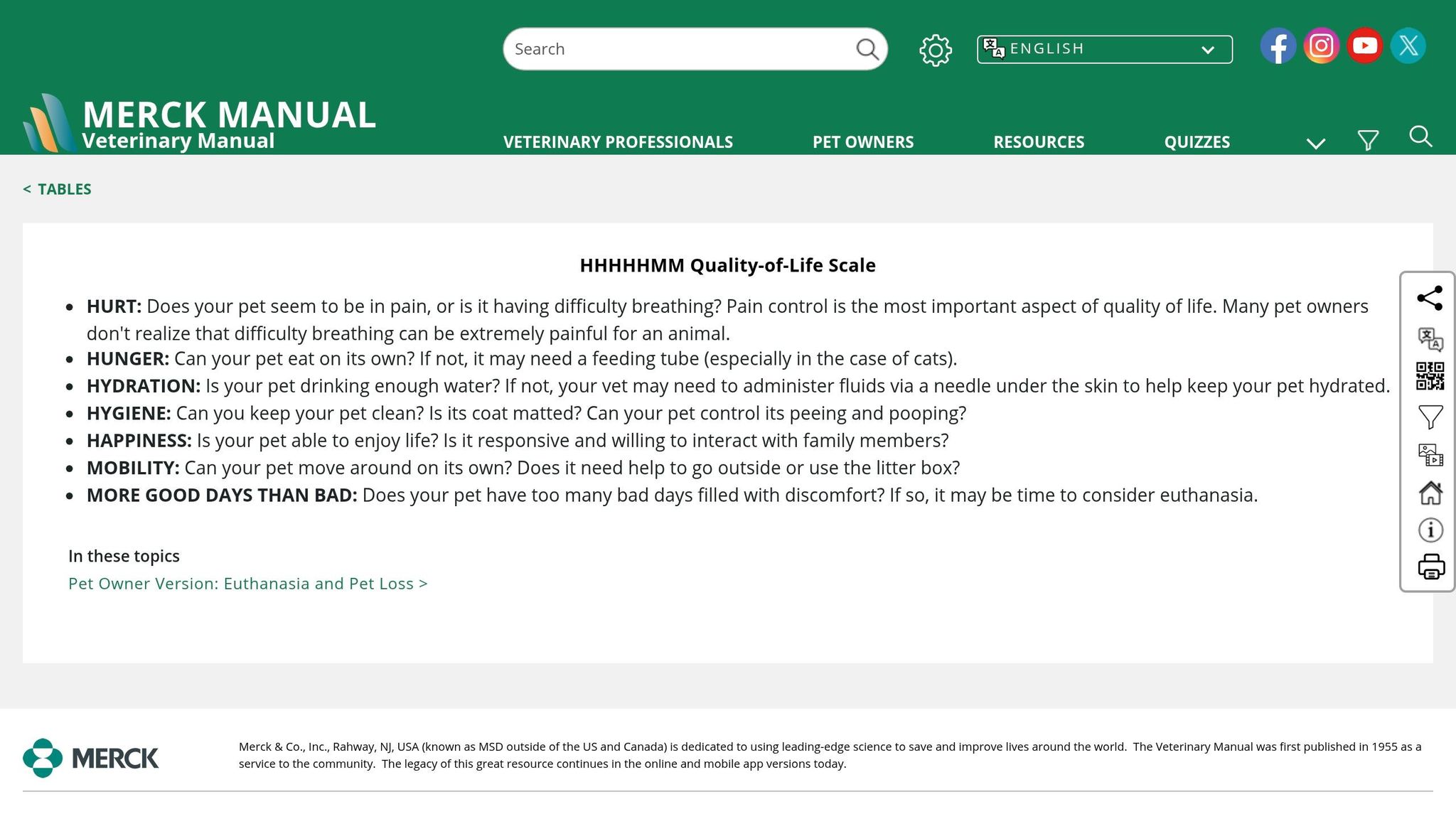
Making decisions about your dog's quality of life is never easy, especially when emotions are running high. That’s why objective tools like quality-of-life scales can be so helpful. They provide a structured way to evaluate your pet’s well-being, helping you track changes over time and communicate effectively with your veterinarian. These frameworks are designed to reduce emotional bias and focus on what truly matters: your dog's comfort and happiness [3].
Two commonly used tools are the HHHHHMM Scale and the Lap of Love Scale. Both are designed to help you document your observations rather than rely on memory or fleeting impressions. The purpose isn’t to give your dog a "pass" or "fail" score but to identify patterns - like whether good days are becoming fewer or if distress is harder to manage [5].
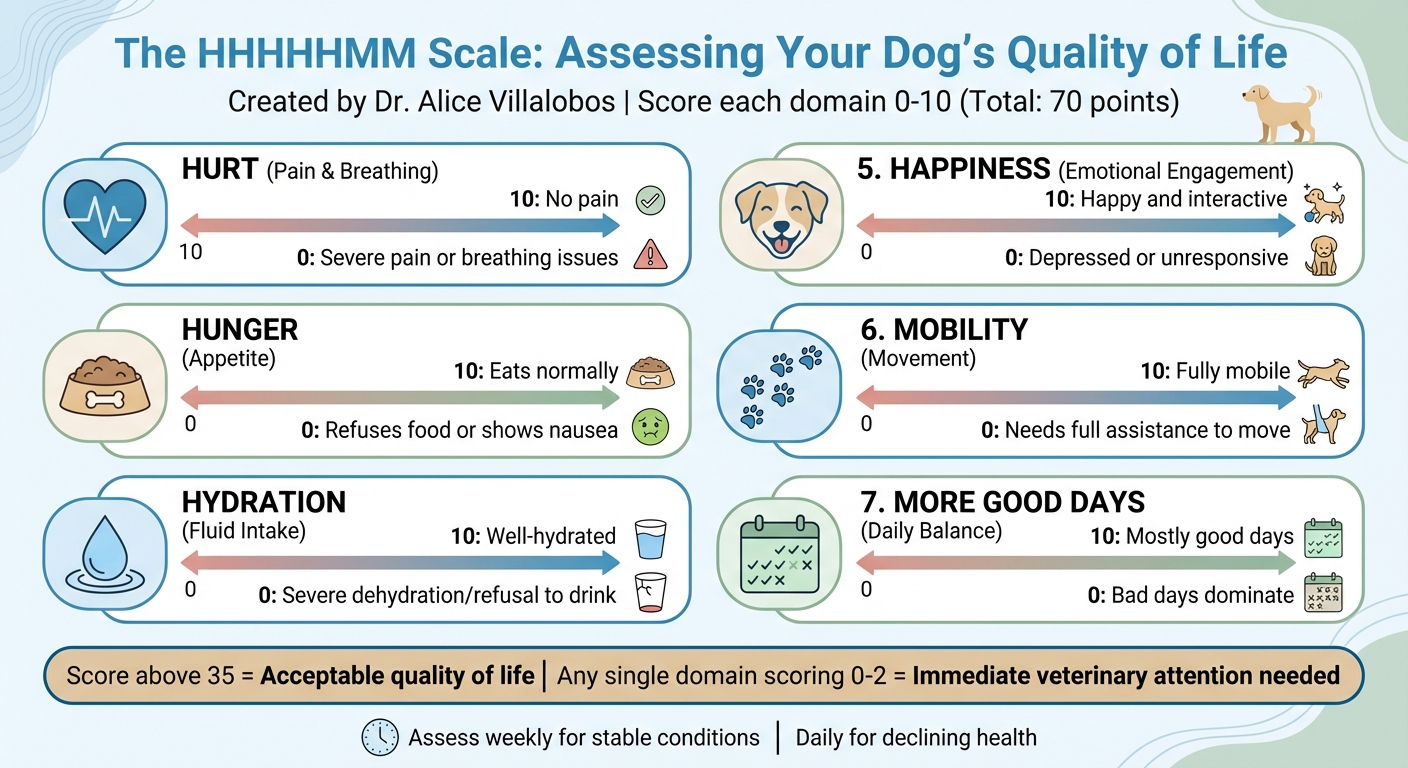
Created by Dr. Alice Villalobos, a veterinary oncologist, the HHHHHMM Scale evaluates seven key areas of your dog’s life. Each domain is scored from 0 to 10, with 0 being the worst and 10 the best. The highest possible score is 70, but the goal isn’t perfection - it’s about understanding your pet’s needs and quality of life [3].
Here’s a quick breakdown of the scale:
Domain
What You're Evaluating
Scoring Guide
Hurt
Pain levels and breathing ability
10: No pain; 0: Severe pain or breathing issues
Hunger
Appetite and willingness to eat
10: Eats normally; 0: Refuses food or shows nausea
Hydration
Fluid intake and skin elasticity
10: Well-hydrated; 0: Severe dehydration/refusal to drink
Hygiene
Cleanliness and ability to eliminate properly
10: Clean and no sores; 0: Persistent soiling or pressure sores
Happiness
Emotional engagement and responsiveness
10: Happy and interactive; 0: Depressed or unresponsive
Mobility
Ability to move independently
10: Fully mobile; 0: Needs full assistance to move
More Good Days
Balance of good versus bad days
10: Mostly good days; 0: Bad days dominate
A score above 35 generally suggests your dog has an acceptable quality of life. However, even a single domain with a very low score (0–2) is a red flag that warrants immediate veterinary attention [3].
To use this scale effectively, assess weekly for dogs with stable conditions. If your dog’s health is declining, switch to daily or every-other-day evaluations. Keep a written log to track trends, marking each day as "good", "okay", or "bad." For hydration, gently lift the skin over your dog’s shoulder blades - if it takes more than two seconds to snap back, dehydration is likely [3].
Breathing difficulties are especially critical. In animals, trouble breathing is considered a form of pain and should be addressed urgently [4]. Share your scores and observations with your veterinarian to guide discussions about treatment and care options [3].
The Lap of Love Quality-of-Life Scale offers a simpler alternative, focusing on five main categories: Comfort and Pain, Appetite, Mobility, Breathing, and Connection [5]. It also includes a section for "Family concerns/perceptions", which helps you factor in your own emotional state and ability to provide care [6].
"The scale helps organize your thoughts, not make decisions for you." - Lap of Love [5]
This tool encourages daily observation and weekly scoring for pets with stable conditions. If your dog’s symptoms worsen, assess daily for one to two weeks to monitor changes closely [5][2].
For a well-rounded perspective, have family members score the scale independently and compare results. Add notes to each score, detailing what interventions - like medications or extra bedding - helped or didn’t [5].
Keep in mind that certain signs require immediate veterinary attention, regardless of your current quality-of-life score. These include sudden breathing difficulties, collapse, severe pain, or unrelenting distress [5].
"Most hospice veterinarians agree that it is kinder to say goodbye a little 'too early' than even a day too late, to prevent crisis or severe suffering from occurring at all." - Lap of Love [2]
Signs Your Dog May Be Suffering
Dogs have a natural instinct to hide pain, making it tough for us to recognize when they’re struggling. As Dr. Nick Roman, DVM, MPH, puts it:
"It's hard to know when pets are in pain because they can't communicate the same way people do" [7].
While acute injuries often come with clear signs like yelping or limping, chronic pain tends to manifest in more subtle ways - reduced grooming, lower energy levels, or weight loss [7]. The real challenge lies in spotting patterns of decline rather than focusing on one-off incidents. Behavioral and physical changes can begin to emerge as early as three months before the end of life [8]. Tracking these changes daily can help you recognize trends and use quality-of-life scales more effectively.
Physical Signs of Pain
Physical distress in dogs often shows up through breathing changes. Dogs in pain might pant even when resting, breathe shallowly, or struggle to breathe with noticeable effort [2, 11, 12]. If you notice labored or high-effort breathing, it’s critical to contact your vet right away [2].
Mobility problems are another key indicator. Stiffness, limping, trembling, or difficulty climbing stairs or standing up are all signs to watch for [2, 12]. Posture changes, delayed reflexes, or an inability to settle down comfortably can also point to pain [2, 11]. Additionally, dogs may lick, bite, or rub areas of their body that are hurting [7].
In more advanced stages of decline, you might notice cooling extremities, incontinence due to neurological issues, or a "death rattle" - a distinct sound caused by mucus buildup in the throat [8]. Dr. Leslie Gillette, DVM, cautions:
"A natural death does not mean a peaceful death, and the stages of dying can be very stressful to watch" [8].
Panting at rest, labored breathing, increased heart rate, cooling extremities
Behavioral-Physical
Restlessness, licking/biting a specific area, inability to settle
Elimination
Incontinence, inability to rise to eliminate waste
Systemic
Vomiting, diarrhea, refusal of food/water, "death rattle" mucus buildup
Physical symptoms often go hand in hand with changes in appetite, which can reveal deeper medical concerns.
Refusing Food and Water
It’s important to distinguish between selective eating and true medical anorexia. If your dog refuses kibble but happily eats chicken or cheese, they’re likely being picky. However, if they won’t eat even their favorite treats, it’s a sign of something more serious [9].
For adult dogs, not eating for more than 48 hours - or 24 hours for seniors or those with chronic conditions - indicates a significant problem [9]. Refusing water demands even faster action and should prompt an immediate vet visit [9].
You can try the "high-value test": offer a small amount of plain boiled chicken or deli meat. If your dog eats it, the issue might be stress, heat, or dental pain from something like broken teeth or swollen gums [9]. But if they refuse everything - especially alongside symptoms like vomiting, a bloated abdomen, extreme lethargy, or pale gums - it’s time for emergency care [10, 13].
In end-of-life scenarios, dogs with chronic illnesses may have occasional "good days" where they eat, but these brief improvements don’t reverse the underlying condition [2]. Lap of Love offers this guidance:
"It's usually time to consider euthanasia when, over one to two weeks, your dog's bad days consistently outnumber their good days, even with medication and supportive care" [2].
Changes in Behavior and Mood
Behavioral shifts often accompany physical symptoms, signaling a decline in overall quality of life.
Dogs may show emotional and cognitive changes that are just as telling as physical signs. They might withdraw, seeking isolation instead of engaging with family members, or seem distant and uninterested in affection [10]. A loss of interest in activities they once loved - like walks, playing with toys, or greeting you at the door - can also be a red flag.
Mental changes, such as confusion, disorientation, or staring blankly, are common in senior dogs. Some may fail to recognize familiar people or display signs of dementia [8]. Emotional distress often appears as heightened anxiety, restlessness, or even depression. Some dogs may become unusually clingy, while others might act irritable or aggressive - often as a response to ongoing pain [8].
Altered sleep patterns can also indicate trouble. Pacing at night, frequent waking, vocalizing during rest, or sleeping much more than usual are all signs to monitor [10]. Sudden aggression, often mistaken for a temperament issue, may actually point to unmanaged pain or neurological problems like brain tumors [8].
Category
Behavioral Indicators of Decline
Social Connection
Hiding, withdrawing, irritability, seeming distant, less interest in affection
Joy and Engagement
Lack of interest in toys, walks, treats, or greeting family members
Mental State
Confusion, agitation, staring blankly, disorientation, not recognizing family
Sleep and Rest
Restlessness, pacing at night, vocalizing, or excessive sleeping
These observations can provide valuable insights when paired with quality-of-life assessments like HHHHHMM or Lap of Love's tools. Focus on long-term patterns rather than isolated "good moments", and share your findings with your vet to determine whether the changes are due to manageable pain or a permanent decline [10].
Working with Your Veterinarian on End-of-Life Decisions
Your veterinarian plays a crucial role in assessing your dog's overall well-being, helping to cut through the emotional challenges that can cloud judgment. They evaluate whether your dog can maintain what Dr. Jerry Klein, Chief Veterinarian at the AKC, refers to as "grace and nobility." This means being able to breathe comfortably, eat without assistance, maintain hygiene, and access food and water independently. They also consider factors like age, breed, overall health, and the financial realities of treatment.
Before recommending euthanasia, your veterinarian will explore every reasonable medical option and rule out treatable conditions. If you're not ready to say goodbye, they can help create a hospice care plan to keep your dog as comfortable as possible.
Tracking Good Days vs. Bad Days
Keeping a daily log of your dog's condition can provide valuable insight for both you and your veterinarian. This log helps track changes over time and offers an objective way to measure your dog's quality of life. Use a simple calendar to mark each day as "good", "okay", or "bad" based on factors like pain levels, appetite, and mobility. Patterns often emerge over time, especially if you track for 7–14 days or even a full month for chronic conditions.
It's important to remember that brief periods of improvement during a terminal illness don't necessarily change the overall trajectory. As Lap of Love explains:
"One brighter day doesn't erase weeks or months of decline. It's okay to enjoy that good day fully while still honoring the bigger picture of your dog's comfort over time." [2]
When bad days consistently outnumber the good - despite medication and supportive care - it’s time to have an honest conversation with your vet. Sharing your tracking notes during a quality-of-life consultation can provide the context needed to decide whether to continue treatment or consider a peaceful goodbye.
Understanding Pain Management Limits
Recognizing the limits of pain management is another key aspect of end-of-life care. Your veterinarian can help you identify when medications are no longer enough to provide meaningful relief. For example, if your dog shows signs of labored breathing, such as shallow breaths, panting even at rest, or other respiratory distress, it may indicate significant suffering that medications cannot alleviate.
When trembling, pacing, or persistent discomfort continues despite the maximum safe doses of pain relief, it’s a sign that your dog’s quality of life has declined to a critical point. At this stage, your vet may recommend euthanasia - not as giving up, but as a compassionate choice to prevent further suffering.
Exploring All Treatment Options First
Your veterinarian will ensure that every reasonable treatment option has been considered before making a final decision. This includes ruling out treatable conditions and discussing the potential benefits, risks, and recovery time associated with interventions like surgery or chemotherapy. It's important to weigh these options carefully, as some treatments may cause more stress and discomfort than relief.
Ask your vet to explain what treatments remain viable and what outcomes you can realistically expect. Sometimes, choosing not to pursue aggressive interventions is the kindest decision you can make. Starting these conversations early, before an emergency arises, can help you feel more prepared. Consider scheduling a quality-of-life consultation or a Telehospice appointment to review your dog's medical history and discuss options.
Dr. Klein emphasizes the importance of timing in these decisions:
"It's better to do it one day too early than one day too late." [11]
What to Expect During Euthanasia
Understanding what happens during euthanasia - whether at a clinic, a comfort center, or in your home - can help reduce anxiety. The process is designed to be calm and painless, ensuring your pet's final moments are peaceful. Here's an overview of what typically happens and how you can prepare yourself for this emotional day.
The Two-Step Euthanasia Process
Veterinarians usually follow a two-step approach to make sure your dog feels no discomfort. First, a sedative is given to help your dog relax deeply, often to the point where they appear to be in a natural sleep. This step ensures they feel no fear or awareness before the next stage [13][2].
Once your dog is fully unconscious, the vet administers a euthanasia solution, which is usually a concentrated anesthetic or barbiturate. This medication works quickly, causing your dog to lose consciousness entirely, followed by the heart stopping in a gentle and peaceful way. If given through an IV, the process typically takes just seconds, while abdominal injections may require up to 10 minutes [13].
After the procedure, the veterinarian will confirm your dog's passing and give you private time to say your final goodbyes. It's important to know that certain reflexes, like muscle twitches, open eyes, or a final deep breath, are normal and not a sign of pain [10]. With this understanding of the process, you can better prepare for the day.
How to Prepare for the Day
Preparing both emotionally and practically can help make this day a little easier. Start by confirming the details with your vet, such as the sedation process, IV placement, and aftercare options like cremation or burial [13].
Consider bringing a favorite toy or blanket to comfort your dog, and, if possible, offer them a "last meal" of their favorite food [13]. Decide ahead of time if you want to be present during the procedure. Many pet owners find comfort in being there, as it provides a sense of closure, but this choice is entirely personal [10].
"The decision to end suffering is not a failure of love - it is one of its highest expressions." - Pet Cremation Place [10]
Coping with Loss and Honoring Your Dog's Memory
Losing a dog can feel like losing a piece of your heart. Everyday moments - like hearing the jingle of a leash or walking a familiar path - can trigger waves of grief [14][15]. The emptiness left behind is often overwhelming, making it one of the most challenging emotional adjustments [14][15]. These feelings highlight how important it is to have support as you work through your loss.
Finding Grief Support
The pain of losing a dog is real and deserves acknowledgment. For many, the grief can feel just as intense as losing a human loved one. Unfortunately, some people may not fully understand the depth of this loss, leaving you feeling isolated [14][16][18]. Guilt often accompanies the decision to euthanize a pet, even when it’s made out of love and compassion. Talking with others who truly understand can help ease that burden [16][18].
Consider seeking out resources like veterinary social workers, telehospice services, or 24/7 pet loss support centers [2][16][17]. At "To Lose A Dog", you’ll find research-backed insights into the human-animal bond and a community of dog owners who share your experience. Connecting with others who have faced similar losses can make the grieving process feel a little less lonely.
Ways to Honor Your Dog's Life
Finding ways to celebrate your dog’s life can also be a comforting part of healing. Just as veterinarians guide us in making compassionate end-of-life decisions, creating a tribute to your pet can help you find peace.
Memorializing your dog can take many forms. You might create a photo album, frame a favorite picture, or write down your cherished memories in a journal [12]. Some people find solace in planting a tree or flowers in a spot their dog loved [12].
You can also honor your dog's memory with small, heartfelt gestures. Offer their favorite treats, speak to them in familiar tones, or revisit places that held special meaning for both of you [2]. Tools like the Greymuzzle app can help you document your memories, creating a digital keepsake of your time together [12]. These acts of remembrance not only honor your pet but also keep the love you shared alive in your heart.
Conclusion: Making a Loving Decision for Your Dog
Deciding when to say goodbye to your dog is one of the hardest choices you'll ever face, but it’s also one of the most compassionate. At its core, this decision is about prioritizing your dog’s comfort and well-being above all else.
"This difficult decision is being made to ease your pets' suffering rather than your own feelings is not only helpful but imperative" [1].
Using tools like the HHHHHMM Scale or tracking good days versus bad days can help you approach this emotional process with a clearer perspective. These methods provide a way to balance your deep emotional connection with objective signs of your dog’s quality of life. Your bond with your dog gives you unmatched insight into their needs, while veterinary guidance and assessments offer the medical expertise to support your decision. Key signs such as a steady decline in mobility, appetite, or overall comfort often indicate that their quality of life has significantly diminished.
Planning a peaceful goodbye allows you to be there for your dog in their final moments, offering reassurance through your voice and touch. This approach prevents the distress of an emergency situation and gives you the chance to honor your dog’s life in a meaningful way.
Trust in your relationship with your dog, lean on your veterinarian’s expertise, and rely on tools that help you evaluate their condition objectively. You know your dog better than anyone else, and by combining your understanding with professional guidance, you can make a decision that reflects love and care. Choosing euthanasia when the time comes is a profound way to preserve your dog’s dignity and offer them peace, free from pain. It’s the ultimate act of love.
FAQs
How do I know it’s “time” if my dog still has some good moments?
Experts suggest prioritizing your dog's overall quality of life instead of focusing on occasional good moments. Signs like constant pain, loss of mobility, trouble eating or drinking, or major behavioral shifts could mean it’s time to think about humane euthanasia. It's important to work closely with your veterinarian to evaluate your dog’s comfort and well-being, as this decision is deeply personal and benefits from professional insight.
What should I ask my vet during a quality-of-life or euthanasia consult?
When discussing your dog's situation with your veterinarian, it's essential to focus on their condition, signs of discomfort, and ability to engage in normal daily activities. Here are some key areas to address:
Quality-of-life assessment tools: Ask about methods to evaluate your dog's overall well-being and whether their quality of life is declining.
Signs of pain or distress: Learn how to recognize behaviors or symptoms that indicate your dog may be suffering.
What to expect during euthanasia: Understand the process so you can prepare yourself emotionally and ensure a peaceful experience for your dog.
Comfort in their final days: Discuss ways to keep your dog as comfortable as possible, whether through environmental adjustments or emotional support.
Palliative care or pain management: If you're considering delaying euthanasia, explore options to manage their pain or provide supportive care.
Having these conversations with your vet can help you make a thoughtful decision that prioritizes your dog's well-being.
How can I tell pain I can manage from suffering I can’t?
Manageable pain can often be addressed with medication, helping your dog remain active, mobile, and responsive to affection. However, signs of suffering that may be beyond control include labored breathing, ongoing distress, difficulty moving, or noticeable behavioral shifts like depression or agitation. If these signs persist despite treatment, it’s important to consult your veterinarian. They can help you assess whether humane euthanasia might be the kindest choice for your dog’s quality of life.
Should I choose at-home euthanasia or go to the clinic?
Choosing between at-home euthanasia and a clinic visit depends on what feels best for your dog and your emotional needs. Opting for at-home euthanasia allows your pet to stay in a familiar, calm environment, avoiding the stress of travel. On the other hand, clinics provide immediate access to medical support, which could be important in certain situations. Think about your dog's health, your own emotional preparedness, and what will provide the most comfort and dignity for your pet during this challenging moment.
What happens to my dog’s body after euthanasia?
After saying goodbye to your dog, there are a few options for handling their remains. The most common choice is cremation, which can be done privately (where you receive the ashes) or communally (where ashes are not returned). If local laws permit, home burial is another option, allowing you to keep your pet close. Alternatively, you might consider interment in a pet cemetery, which provides a dedicated resting place. Be sure to check your local regulations and explore the options available to choose what feels most appropriate for you and your beloved pet.
Frequently Asked Questions
Will I feel guilty no matter when I choose euthanasia?
Guilt after euthanasia is nearly universal, even when the decision was clearly made out of love. Many veterinarians and pet loss counselors point out that the guilt often coexists with relief—and that both feelings are valid. Talking with others who have faced the same decision, whether through a veterinary social worker or a peer support group, can help you hold both emotions without letting guilt become the whole story.
How do I support a friend who just euthanized their dog without saying the wrong thing?
The most helpful thing is to name the loss directly and resist the urge to reassure or fix. Saying something like 'I know how much she meant to you—I'm so sorry' does more than 'at least she isn't suffering.' Practical gestures—dropping off food, offering to sit with them, or simply checking in a week later when the world has moved on—tend to matter more than finding the perfect words.
Can I delay euthanasia if my dog still seems to recognize me and enjoy affection?
Emotional connection is meaningful, but veterinary hospice experts caution against using it as the sole measure of quality of life. A dog can still recognize their owner while also experiencing unmanaged pain, labored breathing, or an inability to eat—factors that matter just as much. Tracking good days versus bad days over one to two weeks, alongside a vet's assessment, gives a fuller picture than any single moment of connection.
What do I do with the guilt of wondering if I waited too long—or acted too soon?
Second-guessing the timing is one of the most common and painful parts of anticipatory and post-euthanasia grief. Veterinary oncologist Dr. Alice Villalobos and hospice vets broadly agree that erring slightly early—before a crisis—is kinder than waiting for a moment of severe suffering. If you used quality-of-life tools and consulted your vet, that process itself is evidence of love and care, not failure.
How long does grief after losing a dog typically last?
There is no fixed timeline, and research on human-animal attachment confirms that grief after losing a dog can be as intense and prolonged as grief after losing a person. Some owners feel acute pain for weeks; others navigate grief in waves for months or years, especially around anniversaries, the dog's birthday, or the first time they do something they always did together. The absence of a 'normal' duration is itself normal.
Reserve the paperback at the pre-order price, with clear shipping and cancellation terms.
Pre-order price: $24.99 (save $5 off retail price)
First copies out of the print run, estimated to ship December 2026, shipped directly to you
Email updates on the book's progress until it reaches you
$24.99$29.99
Save $5
Charged today · Cancel any time before it ships
US shipping is $4.90. Other countries are calculated at checkout.
Estimated to ship December 2026US shipping is $4.90. Other countries are calculated at checkout.
Not today?
If the timing is wrong, or you are buying for someone who is not ready yet, leave your email. I will write once, when copies start shipping, and that is the only time you will hear from me.