Why Losing a Dog Hurts More Than Losing a Person - According to Science
Learn why grief after losing a dog can feel overwhelming, and get calm, science-backed coping ideas to honor the bond and survive the first days.
Guides13 min read
Losing a dog can feel as painful - or even more painful - than losing a person. Here’s why:
Emotional Bond: Dogs provide unconditional love, emotional support, and a sense of stability. The connection is pure and uncomplicated, unlike many human relationships.
Daily Presence: Dogs become part of your daily routine, offering comfort through physical closeness and shared habits. Their absence disrupts this rhythm.
Attachment Role: Psychologists compare dogs to key attachment figures like parents or close friends. Losing them can trigger anxiety and imbalance.
Social Stigma: Society often dismisses pet grief as less valid, leading to "disenfranchised grief", which can deepen feelings of isolation.
Physical Effects: Losing a dog impacts your brain and body. The oxytocin (love hormone) bond and neural synchronization with your dog are lost, creating a tangible emotional and physical void.
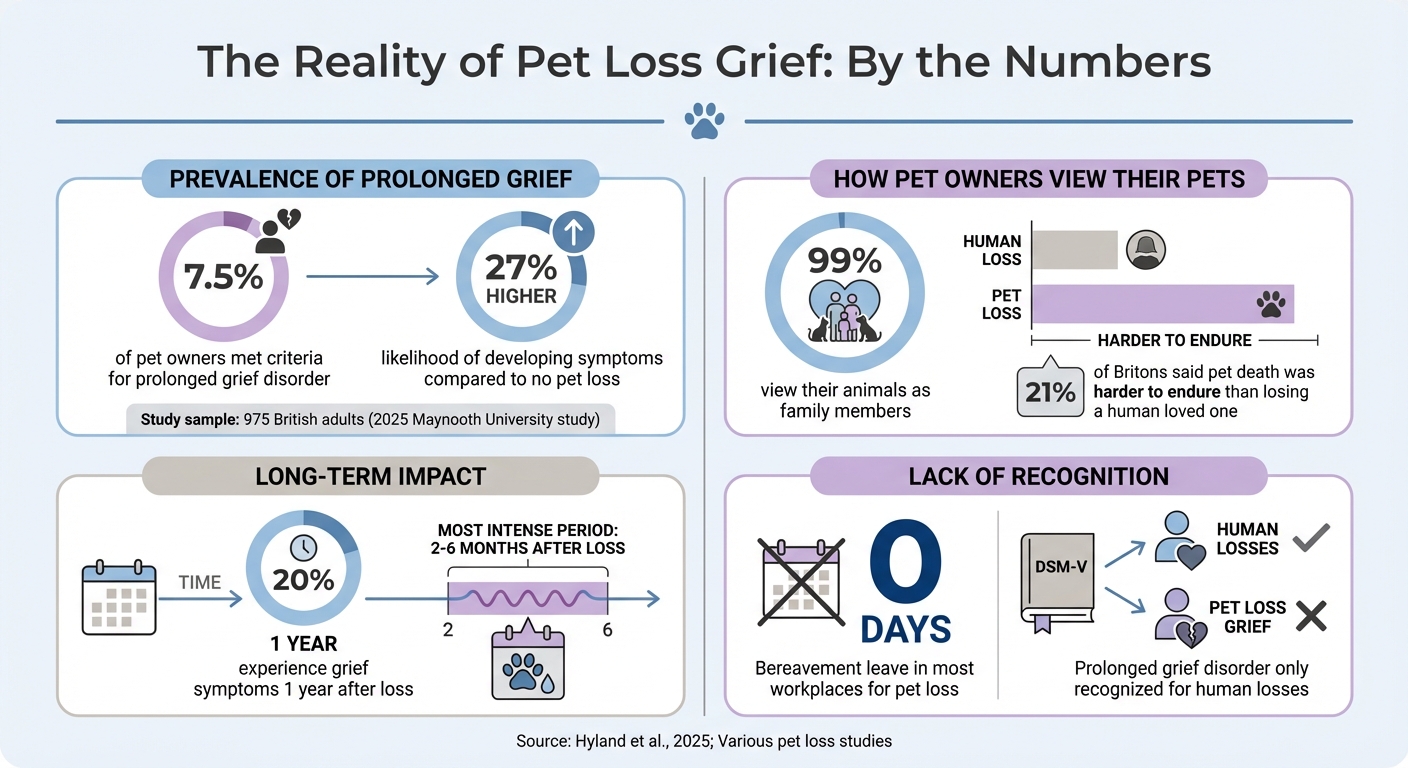
Studies show that 7.5% of pet owners develop prolonged grief, and many report their dog’s death as harder to cope with than a human loss. Despite this, societal support for grieving pet owners is minimal.
Coping strategies include creating memorials, joining support groups, and maintaining "continuing bonds" through rituals and memories. Grieving is a personal process, and acknowledging your pain is the first step toward healing.
More than a Pet: Recognizing and Supporting Grief in Pet Loss
The Psychology of Grief: Why Losing a Dog Can Hurt More
Pet Loss Grief Statistics: How Losing a Dog Affects Mental Health
Disenfranchised Grief and Pet Loss
Losing a dog can spark a form of grief that often goes unacknowledged. You might hear well-intentioned but dismissive comments like, "It was just a dog", or "You can always get another one." These remarks highlight what psychologists call disenfranchised grief - a type of loss that isn't openly recognized or socially validated [1]. When it comes to losing a pet, the lack of shared rituals or societal acknowledgment can make the experience even more isolating [4].
Consider this: most workplaces don't offer bereavement leave for the loss of a pet, and the DSM-V (the Diagnostic and Statistical Manual of Mental Disorders) only recognizes prolonged grief disorder in cases involving human losses. Without these formal validations, the pain of losing a dog is often minimized, leaving many to grieve in silence [4].
The numbers paint a clear picture. A 2026 study led by Philip Hyland at Maynooth University surveyed 975 British adults and found that 7.5% of those who had lost a pet met the criteria for prolonged grief disorder. Even more striking, people who experienced pet loss were 27% more likely to develop symptoms of prolonged grief compared to those who hadn’t faced such a loss [5].
"When a deep emotional bond is met with little social recognition, the result can be overwhelming."
– Millie Cordaro, Expert in Grief Counseling and Psychological Impact of Pet Loss [4]
Attachment Theory and the Human-Dog Connection
Your brain doesn’t just see your dog as a pet - it sees them as a key attachment figure [2]. Psychologists have found that dogs often hold a role similar to that of close human relationships. According to attachment theory, dogs act as both a "safe haven" and a "secure base" [1]. This means they help regulate your emotions, offering comfort and stability. When a dog dies, that emotional anchor disappears, which can lead to anxiety, disrupted sleep, and a sense of imbalance.
What makes this bond so unique is the unconditional acceptance dogs provide. Unlike human relationships, which can be complicated by conflict or unresolved issues, the connection with a dog is often pure and uncomplicated. This daily closeness and unwavering support make the grief especially raw when your dog is gone.
"Your reaction is shaped by attachment, not species."
– Funeral.com[2]
The depth of this bond is evident in how people perceive their pets. Research shows that 99% of pet owners view their animals as family members. In fact, among those who have experienced both types of loss, 21% of Britons said the death of a pet was harder to endure than losing a human loved one [5]. Philip Hyland summed it up perfectly:
"The findings suggest diagnostic criteria may be missing something important. What matters most isn't who has died, but the quality and meaning of the relationship with the deceased."
– Philip Hyland, Researcher, Maynooth University [5]
Brain studies back this up, revealing that the same neural circuits involved in human bonding, reward, and pain are activated when a deeply bonded pet is lost. This means your grief is a direct reflection of the profound attachment you shared. With this emotional groundwork in place, the next section will explore the neuroscience behind this deep connection.
The Neuroscience Behind the Human-Dog Bond
Oxytocin: The Love Hormone
Let’s talk about oxytocin, often called the "love hormone", and its role in the bond between humans and dogs. When you look into your dog’s eyes, something extraordinary happens in your brain - and theirs. Both of you experience a surge in oxytocin, creating a chemical connection that's similar to the bond formed between a parent and their baby [6].
This mutual gaze triggers what scientists call an oxytocin loop. Each shared moment of eye contact strengthens this connection, making the relationship feel as deep and vital as any human bond. Interestingly, this response is unique to dogs. Unlike wolves, who don’t experience the same oxytocin spike when interacting with humans, dogs have developed this trait over thousands of years alongside us [6].
This physical connection also explains why losing a dog feels so overwhelming. Your body and nervous system adapt to your dog’s presence through a process called co-regulation. Simply being near your dog - through touch, proximity, or routine - helps stabilize your nervous system [1]. When that presence is suddenly gone, it creates a real, physical disruption in your body’s equilibrium [1].
"Your bond with your dog wasn't only sentimental - it was embodied."
– Funeral.com [1]
Neural Synchronization Between Humans and Dogs
Here’s where it gets even more fascinating: research shows that humans and dogs experience neural synchronization. When you pet your dog or share a gaze, your brain waves actually sync up, particularly in areas tied to attention [7]. This means your connection isn’t just emotional - it’s happening in real-time at a neurological level.
The more time you spend with your dog, the stronger this synchronization becomes. A study found that over just five days, the brain signals of humans and their dogs became more aligned, deepening the bond and enhancing the co-regulation that helps both manage stress and maintain emotional balance [7].
Dogs also have specialized brain regions for understanding human social cues - something their wolf ancestors lack [6]. Brain imaging studies reveal that dogs process emotional sounds like laughter or crying in their auditory cortex and amygdala, meaning they’re not just hearing you; they’re interpreting and reacting to your emotions. Some studies even show that a dog’s brain responds to owner praise with as much enthusiasm as it does to food [3].
"When you cry, your dog sits next to you like a furry little therapist who works for free... They're not just hearing us. They're feeling it."
– VICE[6]
These discoveries highlight why the bond with a dog feels so indispensable. It’s not just emotional - it’s deeply rooted in the way our brains and bodies connect with theirs. Losing that connection disrupts not only your emotional well-being but also your brain’s natural rhythm.
Why Grief for a Dog Can Feel More Intense Than for a Person
Unconditional Love and Dependence
The bond you share with your dog is refreshingly simple. They don't judge you for a bad day at work, a messy house, or a moment of awkwardness. Their love is constant, free of expectations or conditions, which creates a connection unlike most human relationships [1].
When you lose this bond, you're not just saying goodbye to a companion - you’re losing a source of comfort and unconditional acceptance. This absence can lead to profound emotional upheaval, disrupting your sense of safety and stability.
"Losing a dog can feel like losing comfort itself, not just losing a living being."
– Funeral.com [1]
Another layer of grief stems from losing your role as a caregiver. Feeding, walking, and caring for your dog brought structure and purpose to your daily life. When they're gone, these routines disappear, often leaving behind a sense of emptiness [1].
Daily Routines and Emotional Support
Dogs aren't just pets - they're part of the rhythm of your everyday life. The sound of their paws on the floor, the sight of their leash by the door - these small, comforting details become ingrained in your routines [2]. When they're no longer there, the void can feel almost tangible, as your brain continues to expect their presence.
Dogs also provide what many describe as a constant, quiet sense of security. They're there for the little moments - your morning coffee, late-night reflections, or even just sitting in silence. They witness parts of your life that even your closest friends or family might not. When this ever-present companionship is gone, the loss can feel like a rupture that echoes through your daily life [2].
For those dealing with anxiety, depression, or PTSD, the loss can be even more destabilizing. Dogs often serve as emotional anchors, offering a safe, judgment-free source of comfort. Losing that support can leave you feeling adrift.
"The house is still, and the silence seems deafening. I have lost one of my emotional anchors and I feel a little lost."
– Author, The Conversation[4]
These shared routines and emotional ties amplify the sense of loss, but individual circumstances also play a significant role in how deeply grief is felt.
Individual Differences in Grief Intensity
Grieving the loss of a dog isn't the same for everyone. Studies show that certain factors - such as gender, living situation, or mental health - can influence the intensity of grief. Women, individuals who live alone, and those with conditions like PTSD or depression often report feeling the loss more acutely [9][10]. If your dog was a primary source of emotional support during tough times, their absence can feel even more devastating [1].
Deciding to euthanize a pet adds another layer of complexity. Unlike most human losses, this choice often rests on your shoulders, bringing feelings of guilt and second-guessing. The question of "Did I make the right decision?" can linger long after the loss [1].
Research highlights the long-term effects of pet loss. About 20% of pet owners report experiencing grief symptoms a year after their pet's death, with the most intense period typically occurring 2 to 6 months later [10]. For children, losing a pet can increase the risk of depression and anxiety, especially if they’ve experienced trauma in the past [9][4]. These findings underline how deeply intertwined our lives are with our dogs and explain why their loss can leave such a lasting impact.
Coping Strategies for Navigating Pet Loss
Maintaining Continuing Bonds
Your connection with your pet doesn’t end with their passing - it evolves. Research highlights the concept of "continuing bonds", which involves maintaining a meaningful connection through memories, rituals, and symbolic acts. This approach can help you navigate grief in a way that feels more balanced and manageable[11]. It’s not about pretending your pet is still with you but about finding ways to honor their memory and keep their presence alive in your heart.
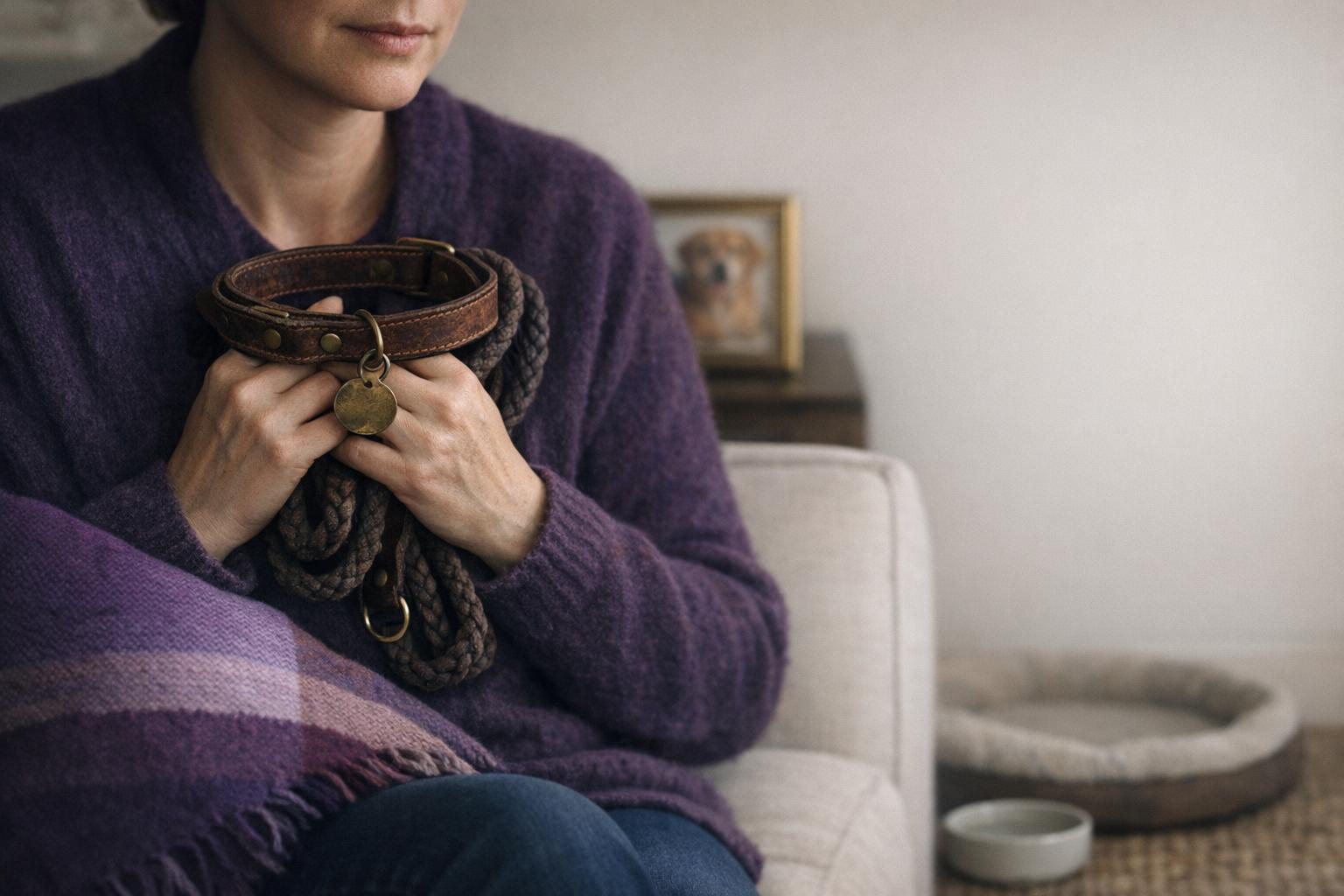
Creating physical memorials can be a comforting first step. Items like a keepsake urn (costing roughly $18.95–$42.95) or cremation jewelry (ranging from $40.95–$165.95) provide a tangible way to hold onto your pet’s memory[11]. Some people dedicate a special space in their home - perhaps a small corner with a framed photo, their pet’s collar, or an urn - to serve as a focal point for remembrance[2].
Simple rituals can also help you process your grief. Lighting a candle near a photo of your pet, taking a walk along their favorite route, or saying a quiet goodbye are small but meaningful acts that can bring comfort. For those looking to channel their emotions into action, acts of service like donating treats to an animal shelter on your pet’s birthday or volunteering your time can offer a positive outlet for your feelings[11].
"Continuing bonds doesn't mean pretending your pet is still alive. It means letting love have a place to land - through memory, ritual, and meaning - while your life slowly grows around the loss."
– Funeral.com[11]
By embracing these lasting connections, you can begin to integrate your pet’s memory into your life in a way that feels healing and supportive.
Practical Tools for Coping
In addition to honoring your pet’s memory, finding practical ways to cope with daily life can ease the transition. The loss of routines - like morning walks or shared quiet moments - can leave a noticeable void. Journaling can help you process emotions, while professional counseling, especially from those familiar with disenfranchised grief, can provide valuable guidance[9].
Connecting with others who understand your pain can also make a difference. Pet loss support groups, whether in person at local animal clinics or through online communities, create a space where your feelings are validated. If your pet played a role in keeping you active or social, consider rebuilding those habits. Scheduling regular walks or joining new social activities can help fill the gaps they’ve left behind[12].
Resources for Support
Accessing the right resources can turn feelings of isolation into a sense of belonging. For example, the memoir To Lose A Dog by Isaac H. explores his relationship with his English Bulldog, Franki, while offering practical advice and science-based insights into coping with pet loss. The hardcover is available for pre-order at $22 (a $6 discount) and includes access to a private grief support community, with shipping expected in early 2026.
There are also immediate support options available, such as pet loss hotlines and specialized grief counseling services. Millie Cordaro, a recognized expert on pet loss, emphasizes the importance of seeking help from professionals who truly understand the depth of this grief[9]. Protecting your emotional well-being by setting boundaries - such as limiting interactions with those who dismiss your pain - can also help you focus on healing with the support of people who genuinely care.
Conclusion
The grief that follows the loss of a dog is a deeply human reaction to a broken bond. Research reveals that losing a dog activates the same neural pathways as losing a human loved one. This happens because dogs hold a unique place in our brains, occupying the same mental "family" category as our closest relationships [8][2]. When your dog is gone, you're not just losing a pet - you’re losing a companion who offered unconditional love, a sense of purpose, and the routines that shaped your everyday life.
Unfortunately, society often downplays the pain of losing a pet, labeling it as "disenfranchised grief." This lack of acknowledgment can leave you feeling isolated, as though your heartache needs justification [2][3]. Psychologist Frank T. McAndrew captures this sentiment perfectly: "Your own pet is never 'just a dog.'" The depth of your grief mirrors the importance of the bond. If your dog was a central part of your life, then the loss will feel equally central [2].
Science offers some clarity on why this bond feels so profound. The release of oxytocin and the way our brains sync emotionally with our pets underscore the depth of the connection. This is why their absence can leave such a noticeable void in your emotional and daily stability.
Moving forward, healing involves finding ways to keep your pet's memory alive. It’s not about forgetting but about transforming your grief into meaningful remembrance. This could mean creating a memorial, seeking counseling, or connecting with others who’ve experienced similar loss. Grieving takes time, and it’s important to allow yourself the space to feel. Your emotions are valid, and your pain deserves to be acknowledged.
FAQs
Is it normal to grieve a dog more than a person?
Yes, feeling this way is completely normal. The bond people share with their dogs can be incredibly deep. Pets often become a significant part of daily life, offering unwavering companionship and unconditional love. Because of this, losing a dog can feel just as painful - if not more so - than losing a human loved one. This emotional response is backed by psychological research and scientific studies that highlight the profound connection between humans and their pets.
How can I tell if my pet grief is becoming prolonged grief?
Prolonged pet grief can manifest as deep, lingering feelings of sadness, guilt, or even anger that persist well beyond the early stages of mourning. It might also interfere with your daily life or affect how you see yourself. Grief doesn’t adhere to a strict timeline and is shaped by personal circumstances, but if emotional pain continues or you find it hard to move on, it could be a sign of prolonged grief.
What do I say when someone dismisses my dog’s death?
When you lose a dog, it’s not just losing a pet - it’s losing a family member. The bond you share with your dog can be as profound as any human relationship, and science backs this up. Studies show that the connection between humans and their dogs is rooted in emotional and even physiological responses, like the release of oxytocin, the same hormone that strengthens bonds between people.
Unfortunately, society doesn’t always recognize the depth of this loss. There’s often an unspoken expectation to “move on” quickly, which can make it hard for others to grasp the weight of your grief. This lack of understanding can leave you feeling isolated during an already difficult time.
By acknowledging these challenges, you can better express your emotions and help others see why your loss is so significant. Sharing how much your dog meant to you might open the door for more empathy and support from those around you.
Frequently Asked Questions
Why do I feel guilty after choosing euthanasia for my dog?
Euthanasia places the full weight of the decision on you, unlike most human deaths where the choice is out of your hands. That responsibility can trigger second-guessing even when the decision was clearly the kindest one. Recognizing that guilt is a normal part of this particular grief—not evidence you did something wrong—is often the first step toward moving through it.
How long does grief after losing a dog usually last?
Research suggests the most intense symptoms typically peak between two and six months after the loss, and about 20 percent of pet owners still report significant grief symptoms a year later. There is no standard timeline, and how long grief lasts depends heavily on how central the dog was to your daily life, your mental health history, and whether you have social support that takes the loss seriously.
How do I support a friend who just lost their dog when I don't know what to say?
The most helpful thing is to name the loss directly—say the dog's name, acknowledge how much they mattered, and resist the urge to offer silver linings like 'you can get another one.' Showing up with practical help, like bringing food or offering to sit with them, communicates that the grief is real and worth your time in a way that words alone often cannot.
What are some grounded rituals for honoring a dog after they die?
Meaningful rituals don't have to be elaborate: walking a route your dog loved, keeping a small dedicated space with their photo and collar, or donating to a shelter in their name on their birthday can all serve as 'continuing bonds'—a grief concept supported by research showing that maintaining a connection through memory and action helps integrate loss rather than simply suppress it.
Does losing a dog affect your physical health, not just your emotions?
Yes—because dogs help regulate the human nervous system through co-regulation, their absence creates a real physiological disruption, not just an emotional one. The oxytocin loop built through daily eye contact and touch is suddenly broken, which can disturb sleep, increase anxiety, and leave the body in a low-grade stress state that feels distinct from ordinary sadness.
Reserve the paperback at the pre-order price, with clear shipping and cancellation terms.
Pre-order price: $24.99 (save $5 off retail price)
First copies out of the print run, estimated to ship December 2026, shipped directly to you
Email updates on the book's progress until it reaches you
$24.99$29.99
Save $5
Charged today · Cancel any time before it ships
US shipping is $4.90. Other countries are calculated at checkout.
Estimated to ship December 2026US shipping is $4.90. Other countries are calculated at checkout.
Not today?
If the timing is wrong, or you are buying for someone who is not ready yet, leave your email. I will write once, when copies start shipping, and that is the only time you will hear from me.