What Makes the First Night Without Your Dog Feel So Wrong?
Your dog's absence registers in your body before your mind catches up. For anyone whose dog slept nearby, on the mattress, at the foot of the bed, or on a crate pad, the bed itself can feel alien tonight. You reach out instinctively and touch only empty blankets. That reflex isn't a sign that something is wrong with you; it's what happens when a body that shared your nights for years is suddenly gone.
The hours that follow often bring numbness, uncontrollable sobbing, anger at the illness or accident that took your dog, and guilt that replays the last hours on a loop: did I do enough, could I have done more. These feelings can arrive out of order, contradicting each other within the same hour.
Numbness, rage, and guilt showing up together in the same night is an ordinary grief pattern, not a warning sign.
Should You Leave Your Dog's Bed, Toys, and Bowl Out Tonight?
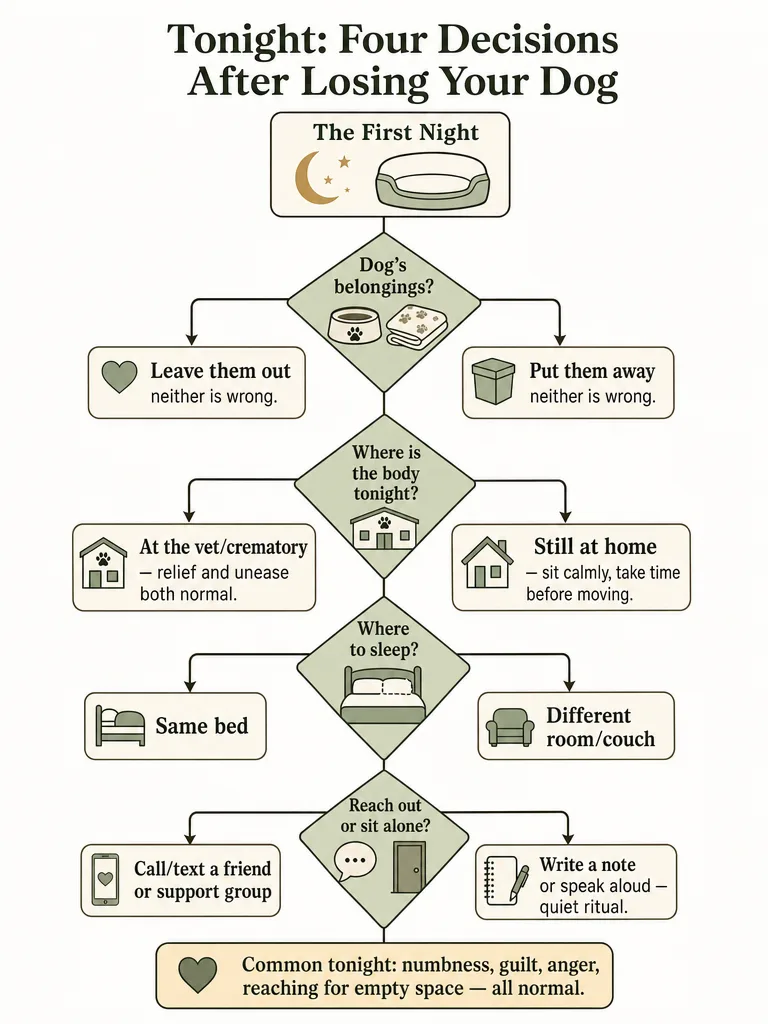
Both instincts are common tonight: gathering everything up immediately, or leaving every item exactly where it was. Some people collect the bed, blankets, toys, and bowl right away, almost as a way to reclaim control in a world that suddenly feels chaotic. Others leave every object untouched because they need to feel their dog's presence in any way they still can. Neither choice is a mistake.
If you're staring at the food bowl right now unsure which camp you're in, you don't have to decide permanently tonight. Move one item if it's unbearable to look at, and leave the rest. You can revisit the fuller decision once the shock eases, using how to handle your dog's bed and toys after they die as a guide for what to keep, store, or let go of later. Tonight's only job is getting through it, not organizing grief into a tidy system.
What Helps If Your Dog's Body Is Still at the Vet or Crematory Tonight?
It's common to feel relief and unease at the same time when your dog's body stays overnight at a clinic or crematory. Relief that they're somewhere safe and cared for pairs with a nagging discomfort at not having them near you, especially if they were rarely out of your sight in life.
That contradiction doesn't need to be resolved tonight. You made a practical decision about their body under enormous stress, and it can be the right decision even if it doesn't feel emotionally settled yet. If you're still weighing cremation, burial, or how the days ahead will unfold, how to choose between cremation and burial for a dog walks through those choices without pressure to decide anything else right now. For tonight, the unease is the price of having loved them enough to feel it.
What Do You Do If Your Dog Died at Home and Their Body Is Still There?
Public guidance on this exact scenario is limited, and no source in our research addresses the practical steps for a dog who has died at home in detail. What's reasonable to say plainly: there is no rush. You are allowed to sit with your dog, say goodbye in your own time, and keep the room cool and quiet until you're ready to call a veterinarian, cremation provider, or pet aftercare service in the morning if it's late at night.
You do not owe anyone speed or composure in these hours. If a decision about cremation or burial is looming once morning comes, how to choose between cremation and burial for a dog can help you think it through when you're ready, not before. Tonight, the only task is staying with what you're feeling, not solving anything.
Where Should You Sleep the First Night Without Your Dog?
Sleeping somewhere different tonight is a legitimate choice, not a step backward. Some people can't bring themselves to sleep on the side of the bed they once shared with their dog, lying on top of the covers instead of under them. Others retreat to a chair, the couch, or wander from room to room, unsure where they can rest without breaking down.
Any of these is a normal response. If your bedroom feels like a wall you can't get past tonight, moving to the couch or a guest room for one night isn't giving up on healing. It's removing a trigger you don't have the capacity to face yet. You can go back to your own bed tomorrow, next week, or whenever it stops feeling like the site of the loss instead of just a bed.
What Can You Do When You Wake Up at 3 a.m. Reaching for Your Dog?
Waking in the night and reaching for a dog who isn't there is one of the most common reports from the first night without a pet. Your body has years of muscle memory built around their presence at that hour, and it doesn't switch off the moment they're gone.
A few concrete things can help in that moment:
- Name what's happening out loud ("I'm reaching for [dog's name], they're gone") to interrupt the disorientation before it spirals.
- Let whatever you're feeling happen, and talk about it. A Reddit response to someone's first night without their dog put it simply: acknowledge whatever comes up, or the lack of feeling, and talk about your dog with the people who love you, or online.
- Keep a support contact ready before you need it, so you're not searching for a number in the middle of the night. Our guide to pet loss hotlines lists real-time options if reaching out to a person isn't enough.
You don't have to fall back asleep right away. Getting through the minutes without adding more distress to them is the actual goal.
Should You Call Someone or Sit With It Alone Tonight?
Both are legitimate, and the right call depends on what's happening in your body right now, not on a rule about strength or independence. The HuffPost writer who lost her dog Peach said one of the best decisions she made was attending online pet loss support groups offered by the veterinary network Lap of Love, finding real comfort in people who understood exactly what she'd lost. A Reddit response to a first-night post gave similar advice: let whatever feelings, or lack of feeling, happen, and talk about your dog with loved ones or online rather than keeping it locked inside.
If you're someone who processes out loud, reach out tonight: to a friend, a group, an online post, or a hotline. If silence feels safer right now, that's not avoidance. It's pacing yourself through something enormous. If you do want company beyond tonight, pet loss support groups online compares formats so you can find one that matches how you actually grieve, not a generic recommendation.
What Simple Ritual Helps on the First Night: Talking, Writing, or Saying Thank You?
You don't need anything elaborate tonight, just something small enough to finish. Speaking aloud to your dog and writing letters or notes are natural, ordinary gestures people reach for when there's nothing else to do with the love that's still there.
The HuffPost writer who lost Peach, a poodle mix rescued as a stray who beat a grim early prognosis, expected to live between 2 1/2 and 16 months but living another 5 1/2 years, described trying gratitude instead of apology. A veterinarian had once told her he wished more people said "thank you" instead of "sorry" when saying goodbye to a pet, so she thanked Peach for her zoomies after baths and for making everyone she met fall in love with her.
If you want a structure to build on later, what are some good bereavement rituals for a dog covers options for tonight and further ahead.
Why Does the First Night Hurt More When People Say 'It's Just a Dog'?
Dismissal from other people can sharpen grief that's already unbearable on its own. The HuffPost writer who lost Peach admitted to wondering, in the middle of her own grief, whether she'd been "irresponsible for extolling the joy of pets when their loss is so devastating." That's a person deeply immersed in pet culture, a journalist who covered dogs professionally, still questioning whether her devastation was allowed to be that big.
If someone around you has minimized what you're feeling tonight, or if you're minimizing it yourself, that reaction is common, and it doesn't mean the grief is smaller than it feels. The intensity you're experiencing, the sobbing, the anger, the inability to sleep in your own bed, is consistent with what other dog owners report on their own first nights. Nobody outside this loss gets a vote on how much it's allowed to hurt.
What Decisions Should Wait Until After the First Night?
Big decisions can wait until you've had real sleep and a few days of distance from tonight's shock. Ashes, memorial plans, whether to get another dog, and any major life change, moving, quitting a job, big financial decisions, all hold up fine until then.
Grief clouds judgment in the first hours in ways that are hard to notice from inside it. If a decision doesn't have a deadline tonight, give it one later:
| Decision | Wait or decide tonight? |
|---|---|
| Where to sleep tonight | Decide tonight, it's temporary |
| Cremation vs. burial | Can wait a day or more |
| Getting another dog | Wait weeks at minimum |
| Scattering or keeping ashes | Wait until ashes are returned |
| Moving, quitting a job | Wait, this isn't the night |
If you're weighing whether another dog belongs in your future, should you get another dog after loss is worth reading once you're past tonight, not before.
What Happens After the First Night Is Over?
Surviving tonight is the only job in front of you. Nothing about tomorrow needs solving right now, and the version of you reading this at 2 a.m. doesn't have to have a plan for the funeral, the ashes, or how you'll feel next week.
The stretch after tonight has its own shape: the first mornings without a feeding routine, the first walk you take without a leash in hand, the birthdays and holidays that used to include your dog. Surviving the "firsts" after losing a dog and the first 30 days after losing a dog cover what tends to come next, so you don't have to figure it out cold when it arrives. For readers who want company through that longer stretch, not just tonight, To Lose A Dog was written around exactly that: the days after the day everyone stops checking in, told through 1,820 days with an English Bulldog named Franki.
Frequently asked questions
Why does the first night without your dog feel so overwhelming?
Grief floods in as numbness, uncontrollable sobbing, anger at whatever caused the loss, and guilt that replays the final hours on a loop, sometimes within the same hour. Reaching instinctively for a dog who slept nearby and touching only empty blankets is a common physical reflex, not a sign anything is wrong with you. These contradictory feelings arriving together is an ordinary grief pattern, not a warning sign.
Should you leave your dog's bed, toys, and bowl out the first night, or put them away?
Either choice is fine tonight; there's no wrong answer here. Some people gather everything up right away to reclaim a sense of control, while others leave every item untouched to keep feeling their dog's presence nearby. Move one object if it's unbearable to look at and leave the rest for later. You don't have to sort your grief into a tidy system at 2 a.m.
What should you do if your dog's body is still at the vet or crematory overnight?
Feeling relief and unease at the same time is normal when your dog's body stays at a clinic or crematory overnight. Relief that they're cared for pairs with discomfort at not having them near, especially if they were rarely out of your sight in life. That contradiction doesn't need resolving tonight; you made a sound decision under enormous stress even if it doesn't feel emotionally settled yet.
Where should you sleep the first night after your dog dies?
Sleeping somewhere other than your usual spot is a legitimate choice, not a step backward. Many people can't face the side of the bed they shared with their dog and move to a chair, the couch, or lie on top of the covers instead of under them. Changing locations for one night removes a trigger you don't have the capacity to face yet, and you can return to your own bed whenever it stops feeling like the site of the loss.
What should you do if you wake up at 3 a.m. reaching for your dog?
Name what's happening out loud, saying your dog's name and "they're gone," to interrupt the disorientation before it spirals. Waking and reaching for a dog who isn't there is one of the most common reports from the first night after loss, built from years of muscle memory around that hour. Let whatever you feel happen, talk about your dog with someone who loves you, and keep a pet loss hotline number saved in your phone before you need it.
Should you call someone for support or sit alone the first night without your dog?
Both are legitimate, and the right choice depends on how you process, not on any rule about strength or independence. A HuffPost writer who lost her dog Peach said attending online pet loss support groups run by the veterinary network Lap of Love was one of her best decisions, finding real comfort among people who understood exactly what she'd lost. If silence feels safer tonight, that's pacing yourself through something enormous, not avoidance.