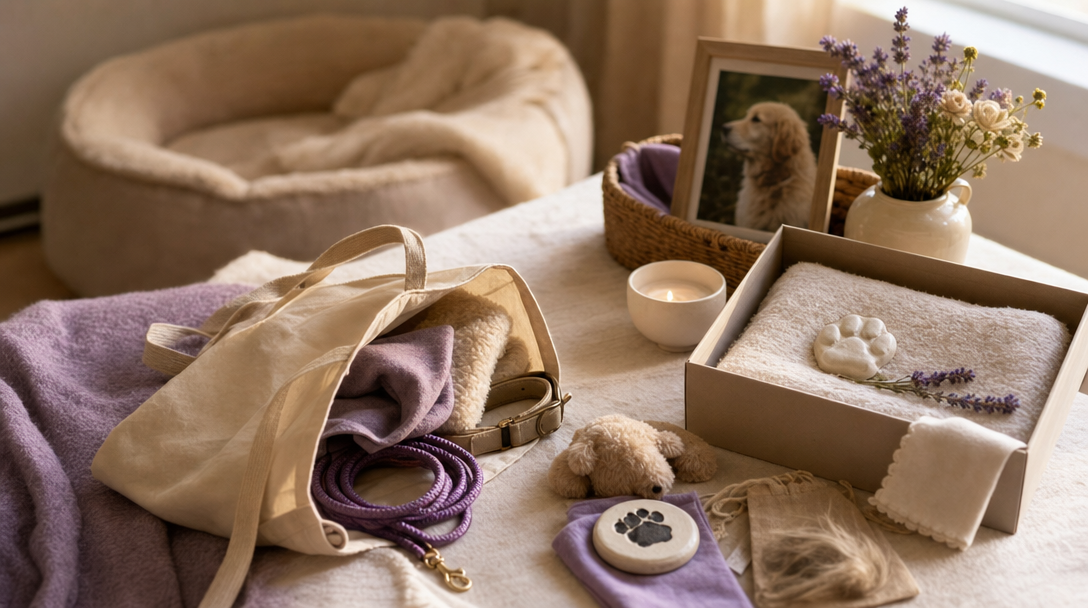
What should you bring to at-home dog euthanasia?
Bring items in four groups: comfort, paperwork, keepsakes, and aftercare readiness. Most of what matters is already in your home. Veterinary providers recommend having your dog's familiar bedding, a favorite toy, current medications, completed consent and aftercare forms, tissues, and a few favorite treats in moderation ready before the veterinarian arrives (Source: Caring Pathways).
You don't need to buy much. The point of a home visit is that your dog can die in the place that already smells and feels like safety. Here is a simple way to sort it.
| Category | Have ready | Notes |
|---|---|---|
| Comfort | Familiar bedding or blanket, favorite toy, quiet space | Gather what your dog already loves (Source: Advanced Veterinary Care Clinic) |
| Paperwork | Completed consent form, aftercare decision | Fill out ahead so you can stay present (Source: Caring Pathways) |
| Medications | Any anti-anxiety or pain meds at home | Mention these when scheduling (Source: Caring Pathways) |
| Treats | A few absolute favorites, in moderation | Too much food can cause nausea with some meds (Source: Caring Pathways) |
| Keepsakes | Paw print kit or fur clip, only if provider doesn't supply | Confirm first (Source: Lap of Love) |
| For you | Tissues, a support person | Have someone present if you live alone (Source: Caring Pathways) |
The best preparation is the kind that lets you stop thinking about logistics and be with your dog.
Everything below breaks down each group, in the order you'll use it.
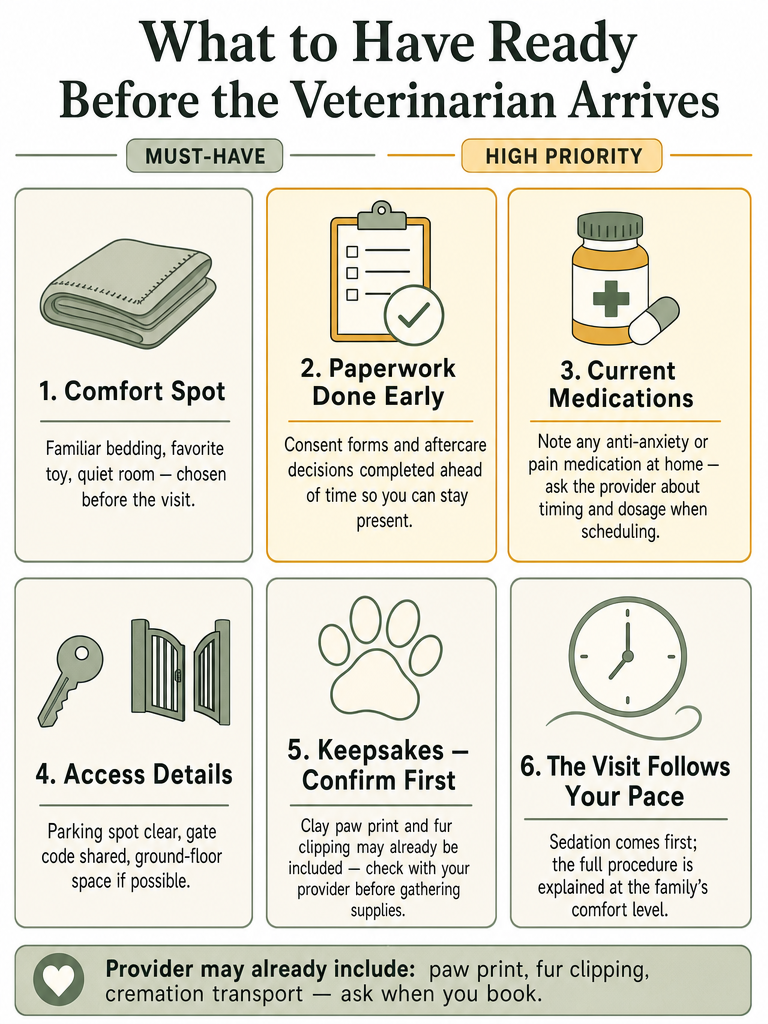
What should be ready for your dog's comfort before the veterinarian arrives?
Your dog's comfort comes from what's already familiar, not from anything new. Gather the bed or blanket your dog sleeps on, a favorite toy or comfort item, and set up in a calm, quiet space where your dog already relaxes (Source: Advanced Veterinary Care Clinic). One dog owner wrote about bringing their dog's own blanket to lie on during the injection, plus a second blanket and a toy (Source: ToeGrips).
Don't over-prepare. You are not staging a scene. You're removing noise and letting your dog settle into a spot that feels like theirs.
A few things help:
- The bed your dog uses most. Familiar smell matters more than clean or new.
- One comfort item. A single favorite toy or worn blanket is enough (Source: ToeGrips).
- A quiet room. Lower the noise, close off busy areas, and let the space feel still (Source: Advanced Veterinary Care Clinic).
- Family and other pets, if their presence brings comfort. They can be included when that helps your dog and you (Source: Advanced Veterinary Care Clinic).
Some dogs choose their own spot when the moment comes. Providers note that a pet may move to a place that feels more comfortable to them, so stay flexible about the exact location (Source: Caring Pathways).
Which paperwork, medications, and aftercare decisions should you prepare ahead of time?
Completing consent forms and aftercare choices before the appointment lets you stay present with your dog instead of making decisions in the moment. Caring Pathways specifically recommends filling out required paperwork, such as consent forms and aftercare decisions, ahead of time so the process moves smoothly and you can focus on being present (Source: Caring Pathways).
Handle these three things in advance:
- Consent forms. Fill them out early so nothing needs to be read or signed during the goodbye (Source: Caring Pathways).
- Aftercare decision. Decide on cremation or burial before the day if you can. The veterinarian discusses aftercare and provides any needed documentation, and having your choice made removes one hard question (Source: Advanced Veterinary Care Clinic). If you're still weighing it, our guide on choosing between cremation and burial for a dog walks through the trade-offs.
- Medications. If your dog already has anti-anxiety or pain medications at home, mention them when you schedule. Caring Pathways names gabapentin or pregabalin, trazodone, alprazolam, and tramadol as examples for dogs, and says the team can advise on dosage and timing so your dog is relaxed and comfortable even before the veterinarian arrives (Source: Caring Pathways).
Public detail is limited on whether you'll need to bring payment, ID, or a printed packet when a provider uses digital forms. Ask your provider directly when you book. For a fuller pre-appointment plan, see what to do before a scheduled dog euthanasia appointment.
Where should you set up for an in-home dog euthanasia visit?
Choose the spot where your dog is already happiest and most relaxed, then make it easy for the veterinarian to reach. Paws at Peace notes the most common locations are a bed or sofa where the pet feels comfortable (Source: Paws at Peace). Think ahead about the location while accepting that your dog may pick somewhere else that feels safer to them (Source: Caring Pathways).
Prepare the access details so no one is scrambling at the door:
- Access information. Communicate parking, apartment numbers, gate codes, or specific entry instructions to the scheduling team ahead of time (Source: Caring Pathways).
- Parking. Try to reserve a spot close to your home for the veterinarian (Source: Caring Pathways).
- Clear pathways. Move anything blocking the route to your dog's spot (Source: Caring Pathways).
- Ground floor if possible. Arrange for the appointment on the ground floor when you can, which matters more for larger or less mobile dogs (Source: Caring Pathways).
- Bathroom breaks first. Let family, guests, and your dog use the bathroom before the veterinarian arrives, so everyone can stay present (Source: Caring Pathways).
These are small details, but on this day they keep the focus where it belongs.
What should you expect from in-home pet euthanasia?
In-home pet euthanasia is a veterinary home visit that lets a dog die peacefully in familiar surroundings. The visit usually follows a set sequence: a discussion of your concerns, sedation, a sedation assessment, the final injection, and time afterward with your dog. Lap of Love states that in almost all circumstances, pets receive a sedation injection before the euthanasia injection (Source: Lap of Love).
Here is the typical order:
- Arrival and discussion. The veterinarian explains the full procedure based on your interest and comfort level. Everything is done at a pace you and your dog dictate (Source: Lap of Love).
- Brief assessment. The vet may review your dog's medical history and current condition and confirm your goals for the process (Source: Advanced Veterinary Care Clinic).
- Sedation. An injection of pain medication and sedatives lets your dog drift into a peaceful sleep before the final injection (Source: Lap of Love).
- Sedation assessment. The vet confirms your dog is sleeping deeply and no longer responds to stimulation (Source: Lap of Love).
- The final injection. The euthanasia medication is given (Source: Lap of Love).
- Time afterward. You can spend as much time with your dog as you need before anything else happens (Source: Lap of Love).
Lap of Love veterinarians say they don't wear scrubs or a white coat; they arrive with warmth and compassion (Source: Lap of Love). If you're weighing whether to stay in the room, our guide on being present during dog euthanasia may help you decide without pressure.
What memorial items should you bring, and what might the provider already supply?
Before you buy anything, confirm what your provider already includes. Many home euthanasia services make a paw print and fur clipping automatically. Lap of Love lists a clay paw print made at home and a lock of fur among its keepsakes, plus a Pet Loss Booklet with your pet's name and date of passing that serves as a death certificate (Source: Lap of Love). Buying your own kit on top of that can mean spending on a painful day for something you'll already receive.
| Keepsake | Sometimes provider-supplied | When to bring your own |
|---|---|---|
| Clay or ink paw print | Yes, e.g. Lap of Love (Source: Lap of Love) | Only if provider doesn't offer it |
| Lock of fur | Yes, if desired (Source: Lap of Love) | Rare; usually included |
| Pet Loss Booklet / documentation | Yes, e.g. Lap of Love (Source: Lap of Love) | Not something to buy |
| Photos | No | Bring your camera or phone |
Paws at Peace notes a home euthanasia vet may recommend buying clay or ink paw print kits in advance while planning the last days, and that the vet often makes a paw print and clips fur (Source: Paws at Peace). The rule is simple: ask first, then fill the gaps.
Confirm what your provider supplies before you buy a single keepsake.
If you want to plan the wider goodbye, ideas for your dog's last day covers photos, rituals, and small ceremonies.
What should you prepare if your large dog will be transported for cremation?
For a large dog being transported for cremation, extra blankets and leak-proof preparation make the handling less distressing. One dog owner who went through this wrote that next time they would bring their dog's own blanket, a large leak-proof suit bag, and a second blanket (Source: ToeGrips). These aren't things every family thinks of until the moment arrives.
Lap of Love handles transportation for cremation if you've selected it, and the doctor will step away to give you privacy while making arrangements (Source: Lap of Love).
Because body-handling logistics vary by provider and by your dog's size, ask directly when you book: does the provider bring what's needed, or should you have blankets ready? Public, step-by-step guidance on this is limited across sources, so the provider's own instructions are your best answer. A ground-floor setup and cleared pathways, covered earlier, matter most here.
Can at-home dog euthanasia be an option when you are still unsure about timing?
Uncertainty about timing is normal, and home euthanasia is built around comfort rather than a precise deadline. The approach centers on keeping your dog in familiar surroundings and avoiding a traumatic crisis at the end. Paws at Peace reframes the question: instead of asking "how do I know when it's time," ask "how do I ensure my dog's last days are happy, surrounded by love, and free of suffering?" (Source: Paws at Peace).
Two questions from Paws at Peace help cut through the fog:
- "How much joy is your dog experiencing in life?" When the answer becomes "not too much," it's time (Source: Paws at Peace).
- "What's the likelihood of a crisis that leads to a traumatic ER visit?" When that likelihood is rising, it's time (Source: Paws at Peace).
If guilt is weighing on you, you're in good company. Dr. Julie Buzby writes that most of the grief she hears is wrapped in guilt, and that owners who let a suffering dog go had given a final gift, not something to feel guilty about (Source: ToeGrips).
How can a vet help decide if it's time?
A veterinarian can turn a fog of worry into an objective read of your dog's condition. The vet reviews medical history, current condition, pain, mobility, appetite, and your family's goals, then helps you see the pattern rather than reacting to a single bad day. A home euthanasia vet often does a brief assessment on arrival that covers exactly this (Source: Advanced Veterinary Care Clinic).
Signs that commonly prompt the conversation include chronic pain, loss of appetite, significant mobility issues, and poor response to treatment (Source: Advanced Veterinary Care Clinic). Dr. Julie Buzby is honest that this is rarely a black-and-white moment; she calls it a "grey zone," even for dogs she knows well (Source: ToeGrips).
Bring what helps the vet see the trend: a symptom log, a good-days-and-bad-days record, and your direct questions. Our guide on how to talk to your vet about dog quality of life shows how to structure that conversation so it stays calm and centered on your dog's comfort.
Frequently asked questions
What should I bring to an at-home dog euthanasia visit?
Four categories cover everything: comfort items, paperwork, keepsakes, and aftercare readiness. Gather your dog's familiar bedding, a favorite toy, current medications, completed consent and aftercare forms, tissues, and a few favorite treats. Most of what you need is already in your home — the entire point of a home visit is that your dog dies in a place that already smells and feels like safety.
Should I fill out consent forms before the at-home euthanasia appointment?
Yes — complete them well before the veterinarian arrives. Caring Pathways specifically recommends filling out consent forms and aftercare decisions ahead of time so the process moves smoothly and you can stay fully present with your dog. Deciding on cremation or burial in advance removes one of the hardest questions from an already difficult day.
What medications should I mention when scheduling at-home dog euthanasia?
Tell the provider about any anti-anxiety or pain medications your dog already takes. Caring Pathways names gabapentin, pregabalin, trazodone, alprazolam, and tramadol as examples for dogs. The team can advise on dosage and timing so your dog is relaxed and comfortable before the veterinarian even walks through the door — mention these at booking, not on the day.
Will the vet bring a paw print kit, or should I buy one myself?
Confirm with your provider before buying anything. Lap of Love includes a clay paw print made at home and a lock of fur as part of its standard service, along with a Pet Loss Booklet that serves as a death certificate. Buying your own kit can mean spending money on a painful day for something you'll already receive — ask first, then fill any gaps.
How do I know when it's time to put my dog down?
Paws at Peace recommends reframing the question: instead of asking 'when is it time,' ask 'how do I ensure my dog's last days are happy, free of suffering, and surrounded by love?' Two practical checks help — how much joy is your dog still experiencing, and how likely is a crisis that forces a traumatic ER visit? When joy is fading and crisis risk is rising, waiting longer often makes the ending harder, not kinder.
Why do I feel guilty for putting my dog down?
Guilt after euthanasia is nearly universal — Dr. Julie Buzby writes that most of the grief she hears from dog owners is wrapped in it. But owners who chose euthanasia gave a suffering dog a final gift; they didn't cause harm. The guilt often traces to lingering questions and the fog of an unfamiliar process, not to having done something wrong. That feeling is real, and it doesn't mean the decision was wrong.
Sources
- In-Home Euthanasiawww.lapoflove.com
- Preparing for Your Dog's Euthanasia: 10 Thoughts for Peacepawsatpeace.com
- A comprehensive guide to pet euthanasia at homecharlotte.caringpathways.com
- Tips to Prepare for Your In-Home Pet Euthanasia Appointmentadvancedvetcareclinic.com
- A Step-by-Step Guide to Pet Euthanasia at Homewww.straitstimes.com