How do you get through the first anniversary of your dog's death?
The first anniversary of your dog's death is usually harder in the days leading up to it than on the day itself, according to guidance from the University of Florida's Small Animal Hospital on coping through special event days. There's no required reaction when the date arrives, and a flexible, chosen plan can help more than any fixed script.
The anniversary of your dog's death is simply the yearly return of the date your dog died, a day when grief tied to that specific date can resurface even if you've felt steady the rest of the year. Still My Dog's guidance on dog-loss anniversaries notes that a date like this can bring back feelings, or changes in routine, sleep, or attention, or it can pass quietly. Neither response is more correct than the other, and you don't have to predict which one you'll get until the day actually arrives.
On the day itself, you decide what happens, not grief, not tradition, not whatever another grieving owner posted online. Still My Dog's guidance says a flexible plan, something you can keep, change, or cancel depending on how you feel, can reduce the number of decisions you have to make on a day you're already carrying something heavy. A plan you feel locked into just adds pressure on top of grief you're already holding.
Why do the days before the anniversary often hurt more than the day itself?
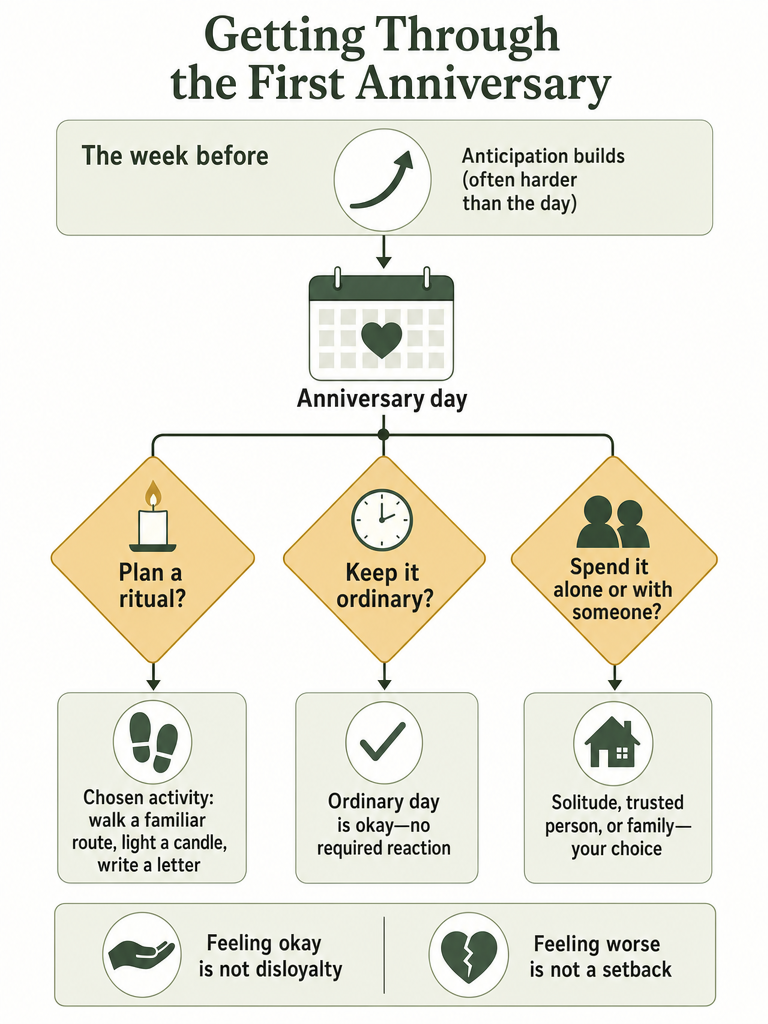
The University of Florida's Small Animal Hospital's guidance on coping through holidays and special event days states that for anniversaries, birthdays, and other dates tied to a pet's death, the anticipation and anxiety of planning for the occasion are usually worse than living through the day itself. Facing one of these dates for the first time, the guidance adds, can be very challenging.
That difficulty tends to show up before the date even arrives, not on it. The same guidance notes that the anniversary of a pet's death can bring back memories of the day your dog died, or of the events leading up to it, and that planning a small memorial activity on that day can be a way of paying tribute, if you want one.
Knowing that the real weight usually sits in the week before, rather than in the 24 hours of the anniversary itself, can change how you use that week. It means less bracing for one specific day and more tending to the days that lead into it: easier mornings, fewer obligations, more patience with yourself if you're distracted or tired before you've consciously registered why.
Do you have to plan something, or can the day stay ordinary?
You don't have to plan anything for the first anniversary of your dog's death. Keeping the day ordinary, work, errands, dinner as usual, is a complete and valid way to get through it. Guidance from Still My Dog on dog-loss anniversaries notes that the first anniversary isn't automatically the hardest one; it can land as difficult, neutral, relieving, or some mix of all three, and there's no expected sense of completion once it passes.
If you do make a plan, hold it loosely. Decide in the morning that you'll retrace a walk at noon, then cancel at 11:45 because you're not up for it. That isn't failure. The reverse is just as valid: you plan to skip any ritual, then find yourself wanting to light a candle at 9 p.m. anyway. Grief doesn't run on a schedule you set at 8 a.m.
There's no fixed grief timetable that says you should feel "better" by the one-year mark, that an ordinary day means you've moved on, or that a hard day means you haven't healed. If you want a structure to lean on rather than invent one from scratch, some good bereavement rituals for a dog cover small, doable options for marking a loss at any stage, not just the first days.
What are some meaningful, not-generic ways to mark the day?
One of the most meaningful ways to mark your dog's death anniversary is retracing a walk they knew by heart, a ritual that Funeral.com's guidance on pet-anniversary remembrance calls one of the most tender options available, bittersweet but grounding. Generic anniversary advice tends to stop at flowers, a card, or a photo post, none of which require knowing anything about your specific dog. The ideas below ask more, and tend to mean more because of it.
- Retrace a walk your dog knew by heart. Walk the same route at the same time of day you used to, even if it's hard. Returning to a place your pet loved, whether a park loop, a beach overlook, or a familiar corner, is tender but grounding, according to Funeral.com's guidance on pet-anniversary rituals.
- Cook what they would have begged for. Still My Dog's suggested evening ritual is cooking something your dog would have loved the smell of, then eating it slowly. If you also want to give something to a shelter or rescue in their name, check the shelter's donation rules first; many only accept specific, unopened food or approved supplies rather than homemade meals.
- Write the year's letter. Write to your dog the way you would have talked to them: what happened this year, what you'd tell them, what you still haven't said. Date it. You can write one every year and watch the letters change.
- Visit the place they loved most. Not just a walking route, a specific bench, a dog beach, the yard they patrolled. Sit there longer than feels necessary.
- Light a candle and say their name out loud. Still My Dog's suggested night ritual is exactly this: light it, say the name, blow it out only when you're ready. It takes under a minute and asks nothing of you afterward, which matters on a day you have almost no energy left.
None of these require you to feel a particular way while doing them. For a longer list of options across different kinds of remembrance, 25 beautiful ways to honor your dog's life covers more ground than any single anniversary can.
Should you spend the day alone, with family, or with one trusted person?
There's no single right answer for who, if anyone, should be with you on the anniversary, but naming the date in advance makes whichever choice you make easier to carry out. Still My Dog's guidance on anniversary planning suggests telling someone you trust ahead of time, something like "next Tuesday is the day my dog died, I might be quieter that week," and specifying the kind of support you actually want.
A short checklist can help you decide:
- Do you want someone physically present, or just someone who knows not to schedule anything demanding that day?
- Is there one person who knew your dog well enough that their company adds comfort rather than requiring you to explain anything?
- Would being around people who didn't know your dog make the day feel lonelier, even in a crowd?
- Do you need to say anything to your workplace, or can you handle the day without that conversation?
If there are kids in the household, you'll need to decide separately whether to include them in a ritual or keep the day low-key for them. How to help kids deal with pet death walks through how children tend to process a dog's death, which can help you think through how much of the anniversary to share with them.
What if you feel less sad than you expected, or far worse?
Feeling less sad than you expected on the anniversary doesn't mean you loved your dog less, or that you're moving on too fast. The University of Florida's Small Animal Hospital addresses this directly in its guidance on special event days: enjoying the day, or simply not feeling as sad as you braced for, doesn't mean you're being disloyal to or betraying your dog. Grief doesn't owe anyone a performance on a specific date.
The other direction is just as real. If the anniversary hits harder than you expected, that's not a sign you've been grieving wrong for the past year. Still My Dog's guidance is clear that this is general information, not mental-health care, and it points to a few concrete signs worth taking seriously:
- Sleep that won't come, or breaks apart repeatedly through the night
- Trouble functioning in your normal routine, missing work, skipping meals, or struggling to manage basic tasks
- Any worry about your own safety, which is a signal to get qualified help, not a sign you're grieving incorrectly
For sleep specifically, what actually helps when you can't sleep after your dog dies covers smaller, more doable steps than "just rest," which tends to be useless advice on a night like this.
None of that means the anniversary broke you. It means a real, heavy date did what heavy dates sometimes do, and you responded by getting the support the moment called for.
How do you tell others what you need when they minimize pet loss?
The people most likely to minimize the anniversary of your dog's death are usually the ones who never watched you build a life around that dog, so the date means nothing to them unless you say what it is. You don't need their agreement that a dog's death deserves this much weight. You need them to adjust their expectations of you for one day.
One way to do that is naming the date directly, without building a case for it: "Today's the anniversary of my dog's death. I'm not asking for anything, I just wanted you to know in case I seem off." Adjust the wording to fit how formal the relationship is; these are simply words you can borrow, not a script anyone has to follow exactly.
If someone responds with something like "it's just a dog," you don't have to argue them out of it in the moment. Repeating what you need, instead of defending the loss itself, usually gets you further: "I know you see it differently. I just need you not to schedule anything heavy with me today."
If the date falls on a workday, dog grief at work: how to get through the first week has more on how much to disclose and how to protect your focus.
If you'd rather spend part of that week with something that already understands this kind of date without requiring an explanation, To Lose A Dog is Isaac's account of losing his English Bulldog Franki, built around the same anticipatory dread that builds before hard dates like this one.
Frequently asked questions
Is it normal to grieve harder on later anniversaries, like year five or ten?
Yes, grief on later anniversaries, year five, year ten, can hit as hard as the first one, and that isn't a sign you've grieved wrong. Pet-loss guidance from Still My Dog notes that a date may feel significant years later or may pass with no particular weight, and neither response says anything about the depth of the bond you had. Grief doesn't flatten out on a fixed timeline tied to how many years have passed.
Is it normal to still be grieving your dog after a full year has passed?
Yes, still grieving your dog after a full year is normal and common, not a sign you're stuck. Still My Dog's guidance on dog-loss anniversaries notes there's no expected sense of completion once the first anniversary passes, and the date can land as difficult, neutral, relieving, or a mix of all three. A year is a calendar mark, not a deadline your grief has to meet.
Should you take the day off work for your dog's death anniversary?
There's no requirement to take the day off, and plenty of people get through the anniversary better by keeping their normal routine. Still My Dog's guidance on anniversary planning suggests naming the date to someone you trust in advance, such as telling a coworker or manager you might be quieter that day, so you can ask for lighter demands without taking the whole day off. Decide based on whether structure helps or drains you, not on what feels expected.
Can grief show up physically before you consciously remember the anniversary date?
Yes, grief can surface physically before you consciously register the date is near, through disrupted sleep, distraction, or low energy. Funeral.com's guidance on pet-anniversary remembrance describes this directly: you can be functioning fine on the surface, going to work, answering messages, and then your body reacts before your mind connects it to the date. Noticing this pattern in the days beforehand, rather than waiting for the day itself, can explain feelings that otherwise seem to come from nowhere.
Should you also mark your dog's birthday or the day you brought them home, not just the day they died?
You can mark any date that matters to you, not only the day your dog died; the day you brought them home, their birthday, or even a familiar season can carry its own weight. Still My Dog's guidance on dog-loss anniversaries recommends adding only the dates you actually want to remember and removing reminders that don't help, since tracking every possible date can turn remembrance into pressure instead of comfort. There's no required list.
Is it okay to include a surviving pet in the anniversary ritual?
Yes, including a surviving dog or cat in a small ritual, like letting them share the treat your late dog loved, is a common way pet-loss communities mark the day together. It acknowledges that grief in a multi-pet household touches every animal in it, not just you, and a shared ritual gives both of you something gentle to do instead of getting through the day alone. There's no rule requiring it.