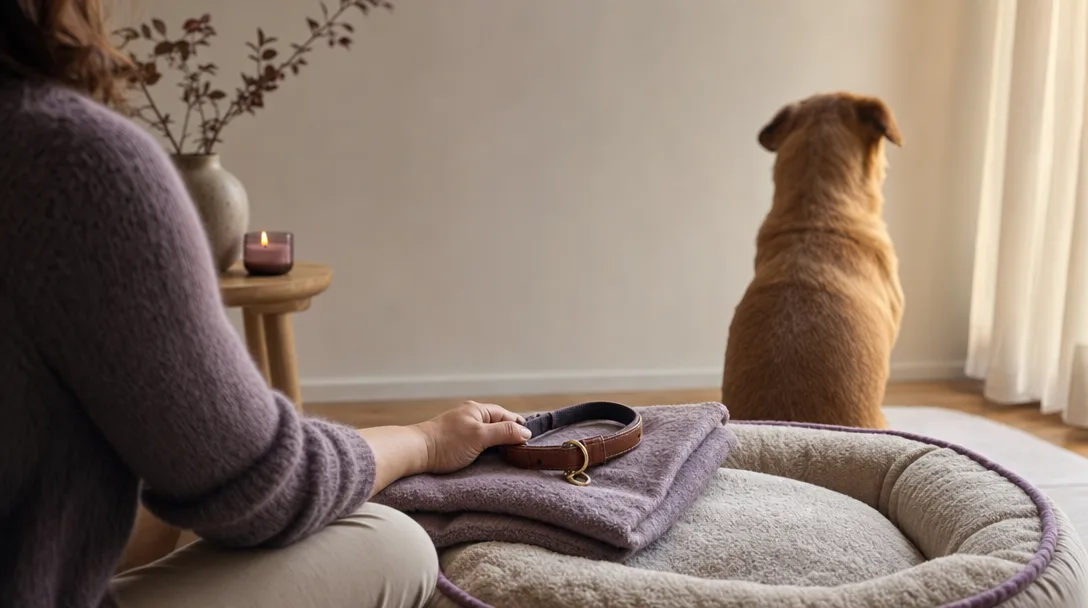
How to tell your other dog their companion died
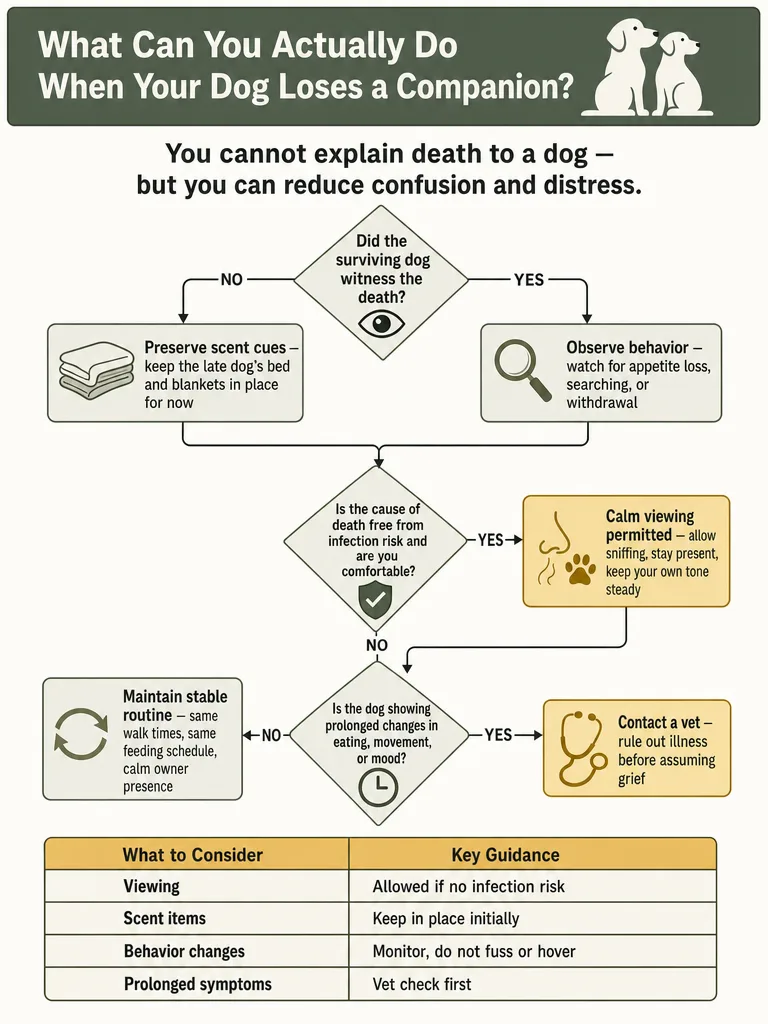
You can't literally explain death to a dog. What you can do is reduce their confusion and distress with steady routines, preserved scent cues, a calm viewing if it feels right, and close attention to how they're coping. The Dogs Trust puts the honest version plainly: experts are still undecided about whether dogs understand the permanence of death, though they do know dogs can feel real distress when separated from a close companion.
That gap between what we can prove and what we can do is where most owners get stuck. You want your surviving dog to understand. That's a loving instinct, and it's also probably not something you can give them.
Here's what actually helps, and the rest of this guide walks through each one:
- Keep the household predictable, so the dog isn't managing two losses at once.
- Leave the late dog's bed, blankets, and scent items in place for now.
- Consider a calm viewing of the body if there's no infection risk and you feel comfortable.
- Watch appetite, sleep, and searching behavior closely, and call your vet if anything changes suddenly.
You may also be carrying your own grief right now. Both things are real, and you don't have to rank them.
Do dogs understand when other dogs passed away?
Dogs don't demonstrably grasp death the way people do, but they clearly register absence and can become distressed by it. The Dogs Trust states that experts remain undecided about whether dogs experience true grief or understand that death is permanent. What isn't in doubt is that dogs feel the loss of a close companion, even if they can't conceptualize the reason.
That distress shows up in observable ways. According to the Dogs Trust, a surviving pet can seem clingy, anxious, or more sensitive to things around them, and may lose interest in playing, sleeping, or eating. Those signs don't require the dog to understand mortality. They only require the dog to notice that someone who was always there is now gone, and that the house feels different.
The RSPCA adds a second layer worth knowing: dogs are, in their words, emotional sponges. Pets may not understand death like people do, but many respond strongly to their owner's emotions. So some of what you read as your dog "grieving" may partly be your dog absorbing your grief.
A change in your dog's behavior after a loss is real information, even though it doesn't prove the dog understands death.
This matters for the next few decisions, because it tells you to respond to the distress you can see rather than the comprehension you can't confirm.
Should I show my surviving dog the body of my dead dog?
Some welfare guidance allows it under specific conditions, but it is not settled science, and you shouldn't feel obligated either way. Blue Cross says that if a fellow dog has died from a cause that doesn't pose an infection risk, you can show the surviving dog the body if you feel comfortable doing so. That's a permission, not a prescription.
The two conditions do the work here. First, no infection risk. If the dog died of a contagious illness, a viewing is off the table, and your vet can tell you which category applies. Second, your own comfort. If the idea distresses you, that reads to your dog too, and there's no evidence a viewing you dread will help either of you.
PetPlace frames the honest uncertainty. Owners ask their vet about this in a sincere effort to "explain" the finality to surviving pets, and whether it helps is genuinely debated. One side holds that dogs lack the cognitive ability to understand death, so a viewing is like showing a two-year-old a deceased relative: the meaning doesn't register. The other side holds that dogs may see death more as we do, and a viewing helps explain the absence.
If you decide to try it, keep it low-key. Let the dog approach on their own, sniff if they want, and leave when they lose interest. Don't restrain them near the body or extend the moment for your sake. Some dogs investigate briefly and walk away; that's a complete and normal response.
Does a viewing help other dogs understand the death of a companion?
The evidence is anecdotal, not controlled, and it points in both directions. PetPlace states plainly that there is little evidence to support either view, and the weight of opinion is that a viewing probably doesn't help a dog understand a companion's death. The author still argues for allowing one if an owner feels it might help, which tells you how thin the ground is.
The stories cited are vivid but inconclusive. Elizabeth Marshall Thomas, in The Hidden Life of Dogs, describes a dog that howled for the first time when it sensed its companion wasn't returning after a final vet trip, with the author speculating the dog might have been less troubled had it witnessed the death. In Dogs Behaving Badly, a dog whose companion was euthanized and buried in its absence returned home, searched every inch of the house, then went straight to the well-hidden grave and sat there for days. And a veterinarian writing to The Veterinary Record granted a client's request to let her setter see a euthanized companion's body, though the same vet noted his own dogs seemed unaffected by such losses.
Those accounts are moving, but they're single cases, not proof. No controlled research shows that seeing the body improves outcomes over not seeing it.
So treat a viewing as a personal choice with possible comfort, not a technique with a guaranteed result. If it fits your situation and your gut, it's reasonable. If it doesn't, you're not depriving your dog of something that's been shown to work.
If your dog was not there when the death happened, what can you still do now?
Focus on the dog in front of you, not on the moment they missed. Many owners face exactly this: one dog is euthanized at the clinic, or dies while the other is elsewhere, and the survivor comes home to a companion who simply never reappears. You can't retroactively give them that moment, and the research doesn't say you needed to.
What you can do now is manage the present distress. Keep the home predictable, respond calmly to searching, and resist the urge to engineer understanding after the fact.
- Keep routines intact. Feed, walk, and settle at the usual times. Predictability is the thing you can control when the dog's world just changed.
- Let searching run its course without drama. If your dog checks the door, the bed, or the yard, don't scold it and don't stage a big reaction. Blue Cross notes it's heartbreaking to watch a dog wait for someone who won't return, but fussing over them while they wait can encourage the waiting behavior.
- Leave scent cues in place for now (more on that below), since the familiar smell of the household is one of the few constants you can offer.
- Watch for the worrying signs and loop in your vet if anything shifts suddenly.
You don't have to fix your dog's confusion. You have to keep them steady while it fades, and for most dogs it does fade as the new normal sets in.
How to help a dog cope with the loss of its companion?
The core of the first week is presence plus predictability, backed by gentle exercise and no big changes. Blue Cross puts it directly: the best thing you can do for a grieving dog is to be there for them and keep their routine as close to normal as possible. Everything else layers onto that foundation.
Here's a practical first-week plan drawn from Dogs Trust, Blue Cross, Old Dog Haven, and RSPCA guidance:
| What to do | Why it helps | Source |
|---|---|---|
| Stay present, especially early on | Try not to leave pets alone in the short term after a loss | Dogs Trust |
| Hold the daily routine steady | Consistency reassures a dog whose world just changed | Blue Cross |
| Add walks, familiar and new | Exercise relieves stress for the dog and for you | Dogs Trust |
| Offer bonding time and calm treats | Honors what the dog is going through without hovering | Old Dog Haven |
| Don't rush major changes | New pets or rearranged spaces add stress, not comfort | Dogs Trust |
| Ask your vet about pheromones | May help calm a dog stressed after a loss | Blue Cross |
Old Dog Haven adds a grounding reminder: recognize that your dog may be grieving and look after their physical needs, because prolonged grieving can bring on physical problems that need attention. The same source flags loss of appetite, lethargy, wakefulness or extra sleeping, house accidents, separation anxiety, and vocalizations like howling and whining as things you may see.
How do you comfort a grieving dog without reinforcing waiting, searching, or clinginess?
Comfort your dog through steady, ordinary presence rather than anxious hovering, so you soothe them without rewarding the distress. Blue Cross draws the key line: it's heartbreaking to see a dog waiting for a companion who won't come back, but you should try not to fuss over the dog while they wait, because attention in that moment can encourage the waiting to continue.
The distinction is subtle but real. Calm presence looks like carrying on your normal rhythm, being available for a snuggle on the couch, and staying relaxed yourself. Anxious hovering looks like rushing to the dog every time they whine at the door, using a worried tone, or making a fuss precisely when they're fixated on the absent companion. The first tells your dog the world is still safe. The second can confirm their sense that something is wrong.
Old Dog Haven's warning against the "you poor baby" game points the same direction. Sympathy is fine. Reinforcing the grief is not.
Timing is the practical tool. Give attention, treats, and affection during calm, ordinary moments, not in direct response to searching or whining. You're not withholding love. You're choosing when to offer it so it steadies your dog instead of feeding the anxious loop.
Reward calm, not searching: give your affection when the dog is settled, not when they're fixed on the door.
Should you leave your late dog's bed, blankets, and scent items in place?
Leave them for now. The Dogs Trust advises against rushing to remove reminders like beds and blankets, because suddenly taking them away could make a grieving pet panic. Those items still carry the companion's scent, and for a dog navigating an unexplained absence, that familiar smell may be one of the few remaining anchors.
There's a caveat the same source is careful to include: reactions vary. Not every dog reacts to removal with panic, and all dogs respond differently. So this isn't a rule so much as a default to start from, with your own dog's behavior as the real guide.
For you, the reminders may be painful, and that's a legitimate reason to want them gone. The Dogs Trust acknowledges having the items around can be hard while you're coming to terms with your own loss. The suggestion isn't to keep everything forever. It's to avoid a sudden clear-out in the first raw days, then watch your dog and decide what makes the transition easier for them.
If you need a longer view on handling a late dog's belongings, our guide on what to do with your dog's collar after they die covers reversible options and timing.
How can you tell whether your surviving dog is grieving or sick?
You can't always tell from behavior alone, which is exactly why a vet call is the safety net. The Dogs Trust is explicit: the changes you see after a companion dies could be a reaction to missing their friend, to picking up on your sadness, or to a disrupted routine, but they could also indicate an underlying medical condition. Talk to your vet if you see any sudden change in your dog's behavior.
The overlap is the problem. Grief and illness can produce the same signs, so you monitor patterns rather than diagnose from a single symptom. Here's what the sources say to watch:
| Sign | What the sources note |
|---|---|
| Appetite | Loss of appetite or refusing food entirely (Dogs Trust, Old Dog Haven) |
| Sleep | Wakefulness or, opposite, sleeping more than usual (Old Dog Haven) |
| Demeanor | Lethargy, depression, loss of interest in play (Dogs Trust, Old Dog Haven) |
| Clinginess and sensitivity | Seeming clingy, anxious, or more sensitive to surroundings (Dogs Trust) |
| Separation distress | Panting, pacing, whining, drooling, howling, barking, not eating treats while alone (Dogs Trust) |
| House habits | Accidents in the house (Old Dog Haven) |
| Personality | Personality changes, especially uncertainty about their new role (Old Dog Haven) |
The Dogs Trust suggests a practical tool if you're unsure how your dog copes alone: use a phone or tablet camera app to monitor them, and contact your vet for guidance or a referral to a qualified behaviourist if you're worried.
For a broader read on interpreting a dog's decline, our explainer on what dogs understand at the end of life walks through comfort signs versus treatable problems.
If euthanasia is scheduled, should your other dog attend or see the body afterward?
Public, evidence-based guidance on this specific choice is limited, so treat it as a planning decision rather than one with a proven right answer. The available welfare sources cover whether to show the body after death, but they don't clearly resolve whether a surviving dog benefits from attending a euthanasia versus only seeing the body afterward. No controlled research settles it.
What the sources do support carries over. If you choose to let your surviving dog see the body afterward, Blue Cross's conditions still apply: no infection risk, and you feel comfortable doing it. And PetPlace's honest verdict still holds, that a viewing is a personal choice with possible comfort, not a technique with a demonstrated result.
If you're mapping out the day, a few things are worth deciding in advance rather than in the moment:
- Whether the surviving dog stays home or comes along, and who manages them if they attend.
- Whether you want the option of a calm viewing afterward, which means asking your provider ahead of time.
- How the body will be handled and whether cremation timing affects what's possible.
Our guides on what to do the day you put your dog down and whether to see your dog's body after euthanasia go deeper on sequencing the appointment and the viewing decision for yourself.
Should you get another dog to help your surviving dog grieve?
Don't rush it. Both Dogs Trust and Blue Cross advise against getting another dog immediately after a companion's death. The Dogs Trust is direct: a new dog might not help your surviving dog feel better, and the change could actually make them feel more uncomfortable.
The logic is straightforward. A grieving dog is already managing a disrupted world. Dropping an unfamiliar animal into that world adds a second big adjustment on top of the loss, rather than replacing the companion they miss. The bond that was lost was specific, and a new dog is not a substitute for it.
The Dogs Trust does leave the door open for later. Another dog might be something to consider in the future, once your surviving dog has settled and you've had time to think it through without the pressure of raw grief driving the decision. The timing question is really about whose need you're solving: yours, in wanting the house to feel full again, or your dog's, which is better served by stability first.
Where can you get support if your dog's grief and your grief are both heavy?
You can reach dedicated pet-loss support by phone, and you don't have to wait until you're in crisis to use it. The Dogs Trust lists the Pet Bereavement Support Service, funded by Blue Cross, at 0800 096 6606, available 8.30am to 8.30pm every day. Blue Cross lists the same number for its Pet Loss Support service, offering emotional support before or after a loss, during the same hours.
This is worth reaching for even when the loss is "just" a dog, because the RSPCA points out that unprocessed grief can sit with people for years, and more than half of pet owners couldn't find the support they needed. Your grief being dismissed by others doesn't make it smaller.
There's also a practical reason your own steadiness matters here. The RSPCA describes dogs as emotional sponges who absorb their owner's feelings. Getting support for yourself isn't separate from helping your dog; it's part of it. If you tend your own grief, you're calmer to be around, and a calmer household is exactly what a grieving dog needs.
If you want company for the harder stretches, our roundups of pet loss hotlines and online support groups compare the options by what each kind of help is good for.
To Lose A Dog was written for exactly this overlap, when your grief and your dog's confusion are heavy at the same time, blending honest storytelling with practical guidance for the days that follow a loss.
Frequently asked questions
Do dogs understand when another dog has passed away?
Dogs don't demonstrably grasp death the way people do, but they clearly register absence. The Dogs Trust states that experts remain undecided about whether dogs experience true grief or understand that death is permanent — yet dogs do feel distress when separated from a close companion. Signs include clinginess, loss of appetite, and searching behavior. Some of what looks like grief may also reflect a dog absorbing its owner's sadness, since the RSPCA describes dogs as emotional sponges.
Should I show my surviving dog the body of my dead dog?
It's a personal choice, not a proven technique. Blue Cross says you can allow a viewing if the dog didn't die of a contagious illness and you feel comfortable doing it — those two conditions matter. PetPlace is direct: there's little evidence to support either side of the debate. If you try it, let the surviving dog approach and sniff at their own pace, and don't extend the moment. Some dogs investigate briefly and walk away; that's a complete, normal response.
How do you help a dog cope with the loss of its companion?
Presence and routine are the core of the first week. Blue Cross advises keeping your dog's schedule as close to normal as possible and not leaving them alone in the short term. Dogs Trust adds daily walks — both familiar routes and new ones — as a reliable stress reliever. Old Dog Haven cautions against hovering or playing the 'you poor baby' game, which tends to intensify distress rather than ease it. Ask your vet about calming pheromones if anxiety persists.
If my dog wasn't there when the death happened, what can I still do now?
Focus on managing present distress rather than recreating a moment they missed. Keep feeding, walking, and settling at normal times. If your dog checks the door or the yard, don't scold or stage a big reaction — Blue Cross notes that fussing over a dog while they wait can reinforce the waiting behavior. Leave the late dog's bed and blankets in place for now, since familiar scent is one of the few constants you can offer. For most dogs, the searching fades as a new normal sets in.
How can you tell if your surviving dog is grieving or actually sick?
You often can't tell from behavior alone — which is why a vet call is the safety net. The Dogs Trust is explicit: changes after a companion's death could reflect missing their friend, absorbing your sadness, or a disrupted routine, but they could also signal an underlying medical condition. Watch for appetite loss, unusual sleep patterns, lethargy, house accidents, and separation distress. A complete refusal to eat warrants a prompt vet call rather than waiting to see if the dog 'snaps out of it.'
Should you leave your late dog's bed and blankets in place for the surviving dog?
Leave them for now. The Dogs Trust advises against rushing to remove reminders like beds and blankets, because suddenly taking them away could cause a grieving dog to panic. Those items carry the companion's scent, which may be one of the few remaining anchors for a dog navigating an unexplained absence. Reactions vary — not every dog panics at removal — so watch your dog's behavior and use that as the real guide rather than clearing everything out in the first raw days.
Sources
- One of my dogs has just been put down. My other dog ...olddoghaven.org
- How to Help a Grieving Dogwww.petplace.com
- Can You Explain a Pet's Death to Another Pet?www.facebook.com
- How to help a dog cope with the loss of its companion?www.dogstrust.org.uk
- Helping a Dog Cope with the Loss of Another Petwww.rspca.org.uk
- Do pets grieve when another pet dies? - RSPCA - rspca.org.ukwww.bluecross.org.uk
- How to help a grieving dog | Blue Crosswww.reddit.com