
To Lose A Dog summary: who this book helps most right now
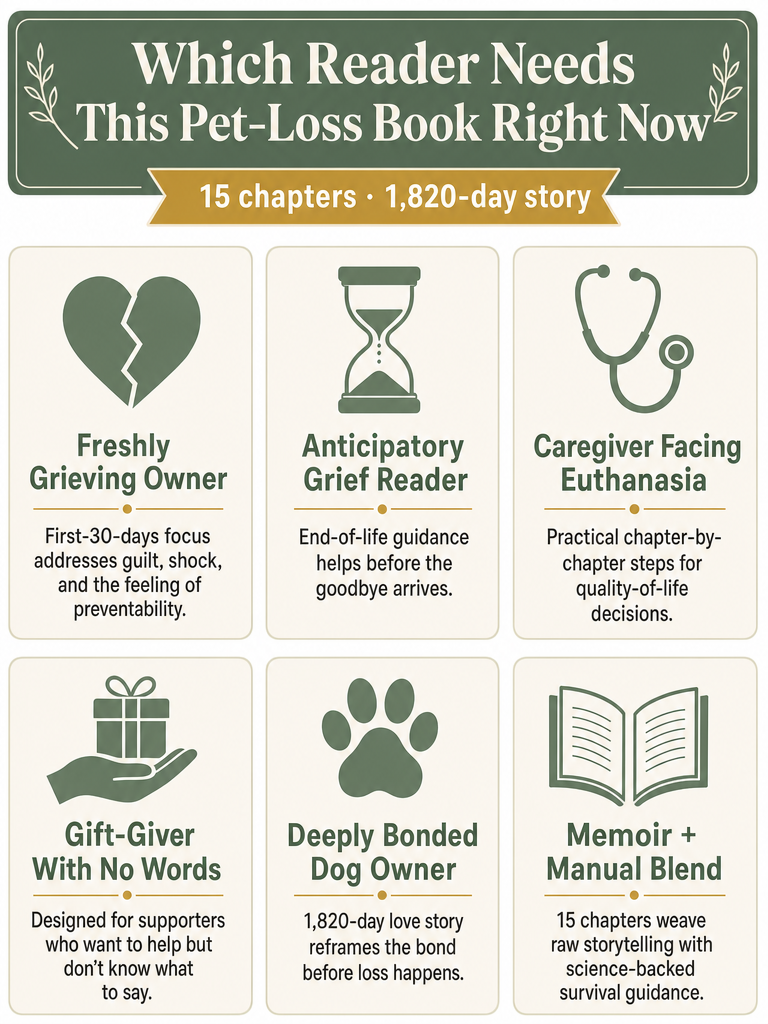
If you just lost a dog and the house feels wrong, To Lose A Dog was written for you first. The book is a dog-loss memoir built around a practical grief structure, following Isaac H and his English Bulldog, Franki, through their 1,820-day bond and its aftermath (Source: toloseadog.com). It speaks most directly to three readers: adults grieving a dog right now, owners facing a goodbye that hasn't happened yet, and friends who want to help but don't know what to say.
That last group matters more than most book pages admit. When someone you love loses a dog, the wrong words land hard, and silence feels worse. The gift page positions the book exactly there, for the moment you want to support a grieving friend but can't find the language (Source: toloseadog.com/gift).
If others have brushed off your loss as "just a dog," this book treats it as real bereavement. That validation, paired with concrete guidance, is the reason most readers reach for it.
What's inside To Lose A Dog?
To Lose A Dog contains 15 chapters across 4 parts, moving through the bond, the loss, the first 30 days of grief, healing, and creating meaning afterward (Source: toloseadog.com/chapters). The spine is Isaac's 1,820-day life with Franki, an English Bulldog the site calls the Mayor of Domino Park, a story it frames as five years of joy, one day of tragedy, and a lifetime of lessons (Source: toloseadog.com).
The book runs roughly 75,000 words, written by someone who lived the hardest days publicly in front of 1.5 million followers (Source: toloseadog.com/gift). It isn't only narrative. Each chapter pairs story with practical help: choosing the right dog, building a strong bond, vetting pet care providers, navigating end-of-life decisions, surviving acute grief, and learning to love again without guilt (Source: toloseadog.com).
The story doesn't sanitize the medical reality either. It includes three pneumonia episodes in Franki's life and a key date, March 28, 2025 (Source: toloseadog.com).
Is To Lose A Dog a memoir or a grief guide?
To Lose A Dog is a memoir with a practical grief-support structure built into it, not one or the other. The site describes it as a survival manual hidden inside a love story, which is the most honest way to read its purpose (Source: toloseadog.com). You get the narrative of Isaac and Franki, and you get usable guidance woven through each chapter.
That blend is the point. A pure memoir gives you company in your grief but no map. A pure advice manual gives you steps but no one walking beside you. This book tries to do both at once, pairing the emotional truth of loss with help on bonds, care decisions, end-of-life choices, and the slow return to loving again (Source: toloseadog.com).
If you want story and instruction in the same book, this is the category it lives in. The structure across 15 chapters and 4 parts reflects that dual aim, with whole sections devoted to the loss itself and the first month after (Source: toloseadog.com/chapters).
Who is To Lose A Dog for?
The book is written for four reader types, and knowing which one you are tells you how to use it. The site and gift page together name grieving owners, people anticipating loss, those facing end-of-life decisions, and supporters choosing a gift (Source: toloseadog.com, toloseadog.com/gift).
| Reader type | What they're facing | Why the book fits |
|---|---|---|
| Adult grieving a dog now | Fresh loss, shock, an empty house | Validation plus first-30-days grief guidance (Source: toloseadog.com/chapters) |
| Anticipating goodbye | Aging or sick dog, dread of what's coming | End-of-life decision guidance and bond chapters (Source: toloseadog.com) |
| Facing euthanasia | Quality-of-life calls, guilt | Sections on navigating end-of-life decisions (Source: toloseadog.com) |
| Friend or family gift-giver | Wanting to help, not knowing what to say | Gift page built for exactly this moment (Source: toloseadog.com/gift) |
The gift page is specific about its readers: people who just lost their dog, who are grieving alone, who feel overwhelmed by guilt after a sudden loss, or who are preparing to say goodbye to an aging or sick dog (Source: toloseadog.com/gift).
If you're an adult whose grief feels dismissed by everyone around you, you're the center of this book's audience.
Will this book help in the first days or first 30 days after a dog dies?
Yes, the first 30 days are exactly what part of this book is built to address. The chapter guide says the grief section covers the first 30 days after loss, when grief is compounded by guilt, distance, and preventability (Source: toloseadog.com/chapters). Those early weeks are the most disorienting, and the book maps them rather than leaving you alone in them.
Acute grief is named directly. The site lists surviving acute grief among the practical help in the chapters, so the focus isn't only on long-term healing (Source: toloseadog.com). For the rawest first hours, you may also want our step-by-step guide on what to do in the first 24 hours after a dog dies and our guide to surviving the first week.
Is this the best dog grief book for someone who feels guilty?
For guilt specifically, To Lose A Dog is built around it rather than around it. The chapter guide names guilt and preventability as forces that compound grief in the first 30 days, and the book treats them head-on instead of waving them away (Source: toloseadog.com/chapters). It also promises help learning to love again without guilt, which is the part many grieving owners get stuck on (Source: toloseadog.com).
Guilt after a sudden or preventable-feeling loss, or after euthanasia, is one of the heaviest kinds of pet grief. The gift page names readers who feel overwhelmed by guilt after a sudden loss as a core audience (Source: toloseadog.com/gift).
If your guilt centers on a euthanasia decision, pair the book with our guide on forgiving yourself after euthanasia. Reading the two together can steady you faster than either alone.
Does the book offer practical guidance for end-of-life decisions?
The book includes end-of-life guidance, not just emotional storytelling. The site lists navigating end-of-life decisions among the practical help in each chapter, alongside vetting pet care providers and building strong bonds (Source: toloseadog.com). That places real decision-making inside the narrative rather than treating the goodbye as a single tragic scene.
How much clinical detail the book offers beyond the story isn't fully described in public material, so treat it as companion guidance rather than a substitute for your veterinarian. For the medical and ethical side of the decision, lean on focused resources.
- For timing the decision: when to put your dog down, a vet-backed guide
- For tracking quality of life: the Lap of Love quality of life scale, explained
- For the goodbye itself: how to say goodbye to your dying dog
- For the grief that arrives early: anticipatory grief in dog owners
Use the book for the emotional and decision-making weight; use your vet and these guides for the clinical calls.
Is To Lose A Dog a good gift for someone who just lost a dog?
It's a strong gift specifically when you don't know what to say. The gift page is explicit that the book exists to help in that exact moment, when you want to support a grieving friend but have no words (Source: toloseadog.com/gift). A book that names the grief honestly can carry the message you can't.
The gift page describes recipients who just lost their dog, are grieving alone, feel crushed by guilt, or are preparing to say goodbye to an aging or sick dog (Source: toloseadog.com/gift). At roughly 75,000 words of personal story and validation, it offers companionship rather than a card's worth of comfort (Source: toloseadog.com/gift).
One caution: a fresh-grief recipient may not read for days or weeks. That's fine. This is a book they can hold now and open later.
How should you choose between a memoir, grief guide, children's book, or support resource?
Match the format to the reader and the moment, not to a bestseller rank. To Lose A Dog fits adults grieving their own dog; children and broader bereavement needs are better served elsewhere.
| Need | Best fit | Source |
|---|---|---|
| Adult grieving their own dog | To Lose A Dog (memoir + grief structure) | toloseadog.com |
| Helping a child understand pet death | Purdue's pet-loss books for kids and families | vet.purdue.edu |
| Broader companion-animal bereavement reading | Association for Pet Loss and Bereavement reading list | aplb.org |
| Real-time crisis support | A pet loss hotline, not a book | internal guide below |
Purdue University College of Veterinary Medicine offers pet loss books specifically for talking about loss with children, friends, and family members (Source: vet.purdue.edu). The Association for Pet Loss and Bereavement recommends books that explore the bond with companion animals and how to grieve them (Source: aplb.org).
For families, our guide on how to help your child understand the death of a pet pairs well with a children's title. If reading isn't enough right now, a hotline beats any book — see pet loss hotlines for when a support group isn't enough.
Where can I buy or reserve To Lose A Dog online?
You can reserve To Lose A Dog directly through its official site, toloseadog.com. That's the place the publisher names for securing a copy. Public detail on retailer availability, price, format options, shipping, and firm release date is limited as of this writing, so the site is the reliable starting point rather than a third-party listing.
If you're buying as a gift, reserving early gives you time to add a personal note before it arrives. If you're buying for yourself in fresh grief, there's no wrong time to reserve and read later, when focus returns.
For independent context on the wider category while you decide, our roundup of books that helped readers survive losing a dog covers options across memoir and guidance.
What should you read alongside the book if you need help tonight?
If the loss is hours old and you need help before any book can reach you, start with the most urgent guides. Grief in the first night is physical, and you may not be able to read for long, so pick one thing.
- Right now, the body: can't sleep after your dog dies, what actually helps
- The first day: what to do in the first 24 hours
- When you can't cope: I lost my dog and I can't function
- A voice tonight: pet loss hotlines
- If guilt is loudest: euthanasia guilt and how to forgive yourself
- Facing the decision soon: the Lap of Love quality of life scale
- When you're ready to remember: dog memorial ideas to honor your pet
Read the urgent guide tonight. Return to To Lose A Dog when you can sit with the whole story, because the book is built to keep company over weeks, not minutes.
Frequently asked questions
What is the best gift for someone who lost a dog?
A book that names the grief honestly is one of the strongest gifts, because it carries the message you can't find words for. To Lose A Dog was built specifically for this moment — the gift page describes recipients who just lost their dog, are grieving alone, feel crushed by guilt, or are preparing to say goodbye to an aging or sick dog. At roughly 75,000 words of personal story and practical guidance, it offers real companionship, not a card's worth of comfort.
What is the best book to give someone after their dog dies?
For an adult grieving their own dog, the strongest fit is a book that blends memoir with practical grief structure rather than pure sentiment. To Lose A Dog pairs Isaac H's 1,820-day bond with his English Bulldog Franki with chapter-by-chapter guidance on shock, guilt, the first 30 days, and learning to love again. For children, Purdue University College of Veterinary Medicine recommends pet-loss books written specifically for kids and families.
Best book for coping after putting a dog down
Guilt and preventability are the heaviest forces after euthanasia, and the right book addresses them directly rather than around them. To Lose A Dog names guilt and preventability as core grief compounders in its first-30-days section and promises guidance on learning to love again without guilt. The book also covers navigating end-of-life decisions inside the narrative, so the weight of the choice is treated as part of the story, not a footnote.
Best dog grief book for someone who feels guilty
To Lose A Dog is built around guilt rather than past it. The chapter guide specifically names guilt and preventability as forces that compound grief in the first 30 days, and a later section focuses on learning to love again without guilt — the stage where many grieving owners get stuck. The gift page also names readers who feel overwhelmed by guilt after a sudden loss as a primary audience, so this isn't incidental to the book; it's central.
Where can I order a dog grief book online?
To Lose A Dog can be reserved directly at toloseadog.com, which is the publisher's official starting point for securing a copy. Public detail on third-party retailer availability, pricing, and formats is limited as of this writing, so the official site is the most reliable place to order rather than a third-party listing. If you're buying as a gift, reserving early gives you time to add a personal note before it arrives.
Is To Lose A Dog a memoir or a grief guide — what's actually in it?
It's both, by design. The book spans 15 chapters across 4 parts and roughly 75,000 words, following Isaac H and his English Bulldog Franki through a 1,820-day bond and its aftermath. Each chapter pairs that story with practical help: choosing a dog, building a bond, vetting care providers, navigating end-of-life decisions, surviving acute grief, and returning to love without guilt. The site describes it as a survival manual hidden inside a love story — that's the most accurate summary.
Sources
- Pet loss books for healing and understanding - Facebookwww.facebook.com
- Amazon Best Sellers: Best Pet Loss Griefwww.amazon.com
- Losing a Dog | What to Read to Your Kidswhattoreadtoyourkids.com